

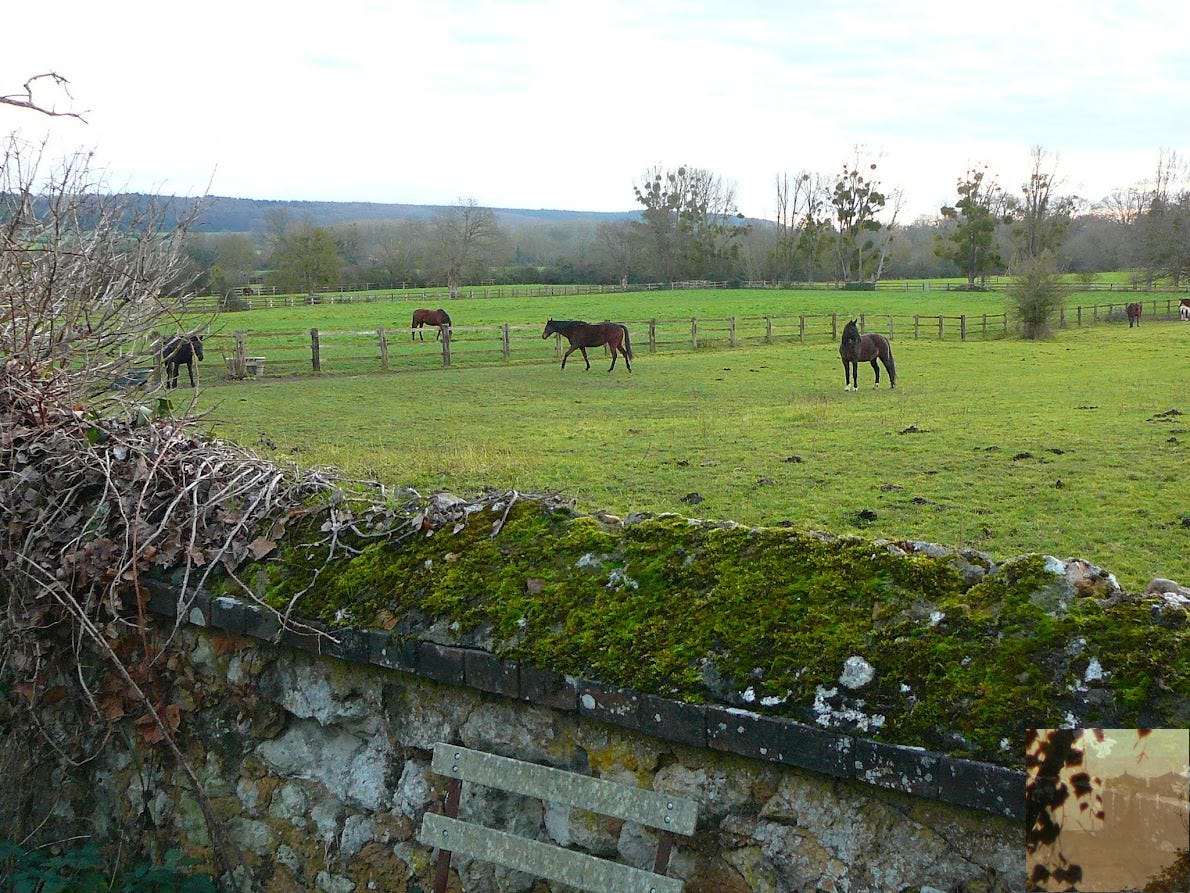
In February 2025, Christine suffered a massive stroke and had to be institutionalized. Bertrand was forced to leave his home. His diabetes had worsened. He had foot ulcers and on most days, his morning trip to the bakery and the café was more than his feet could bear. Without Christine, whom he bullied and beat, abused and used, he could not survive. His sisters took him in. They live far away, in eastern Lorraine, in a coal-mining region along the border with Germany.
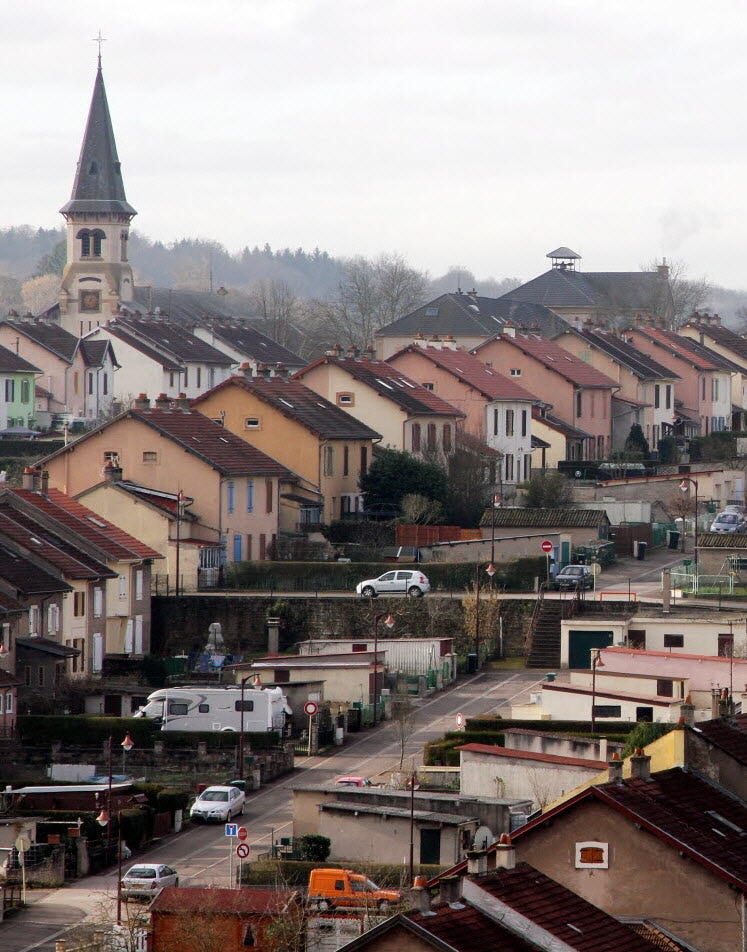
A chapter has closed. The last chapter of Christine and Bertrand, the “incriminating window,” the death threats, the damage to a window pane. This is the coda, a reflecting back on what came before.
In Christine’s case, paralyzed, alone, cared for by strangers, her days are filled with sound and fury, frustration, anger, a disjointed muddle of words. She has lived her life as a woman Frankenstein, reaching out to take the world in her arms and crushing everything she touched. Triste destinée.
Bertrand looks back on a life of combines et magouilles, schemes and shady deals. That’s how he first got to le Perche. He had his own gang, la bande à Gégé. They broke into the vacation homes of wealthy Parisians and carted everything away in moving vans. It was not a discrete operation and eventually Bertrand got caught. Vol en bande organisée, an organized burglary ring.

Criminal court, a hefty fine, from five years to life in prison. The trial judge fell in love with Gégé, as Bertrand was called in the underworld. I am not making this up. He got three years. She visited him in prison. When he was released they lived together in her vacation home in the low rolling hills of le Perche. She died young. It broke Bertrand’s heart.
Christine got him on the rebound.
C’est la vie.
The coda is for thinking about all that.
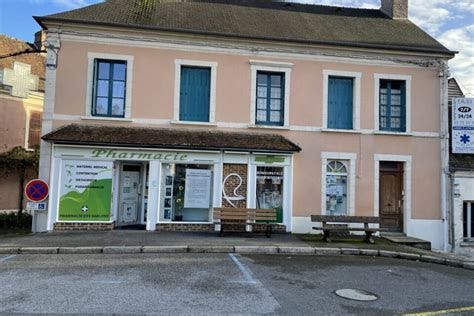
The pharmacy closed its doors in 2023. That was a big loss for the village. Until 2025, Christine continued to live above the empty shop. Then, in February, she left too. The entire building stands empty and her shutters are permanently closed. Bertrand’s house behind the pharmacy looks more like a ruin than ever.
Though I left in 2021, I have kept a finger on the pulse of village life. I left behind true friends whom I visit regularly. When they told me about Bertrand and the judge, I did not believe them, but my friends insist it’s true.
In le Perche, in le département de l’Orne, the administrative jurisdiction where I lived, I had my day in court. And I lost. Pierre lost too.
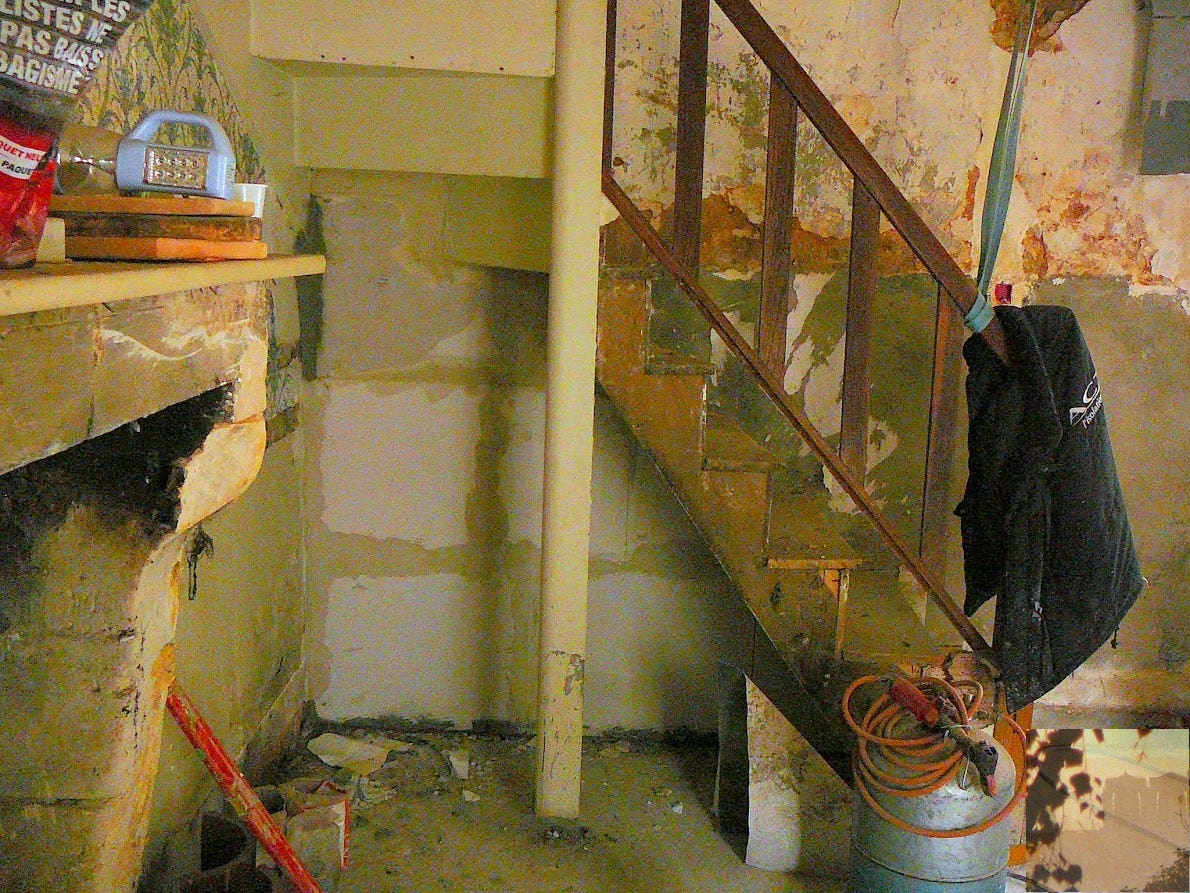
Christine was sous tutelle. She was under guardianship. Bertrand was the guardian, Christine, the ward. She could not be held responsible for her acts. She could insult, defame and even make death threats (after breaking my window, each time she saw me, she took to hissing “je vais te tuer,” I’m going to kill you), there was nothing anybody could do about that.
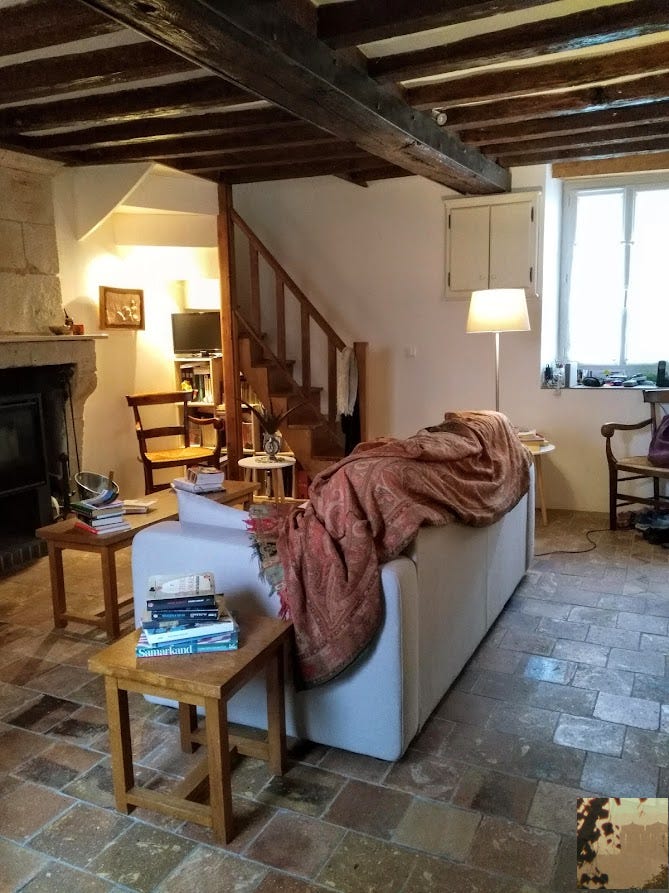
Living in the village meant adjusting to Christine. I think I could have done it if it had not been for Bertrand’s TV, smack up against the “incriminating window,” emitting into my courtyard and every room of my house. I like quiet, the sounds of the outside world, I do not like the blaring of a TV from early morning till late at night. Bertrand was a big fan of documentaries about World War II. Bombs and sirens, battle cries, squadrons of fighter bombers, Sherman tanks on rough terrain.
That, plus Christine. Too much, as the French say, exactly in those words.
One of my dear friends in le Perche, who like me also had a residence in Paris, told me he’d never have bought my place. I’d made a big mistake buying at the very heart of the village. I was asking for trouble. As the owner of the pharmacy and of Bertrand’s crumbling house once said, “Quelle promiscuité!”
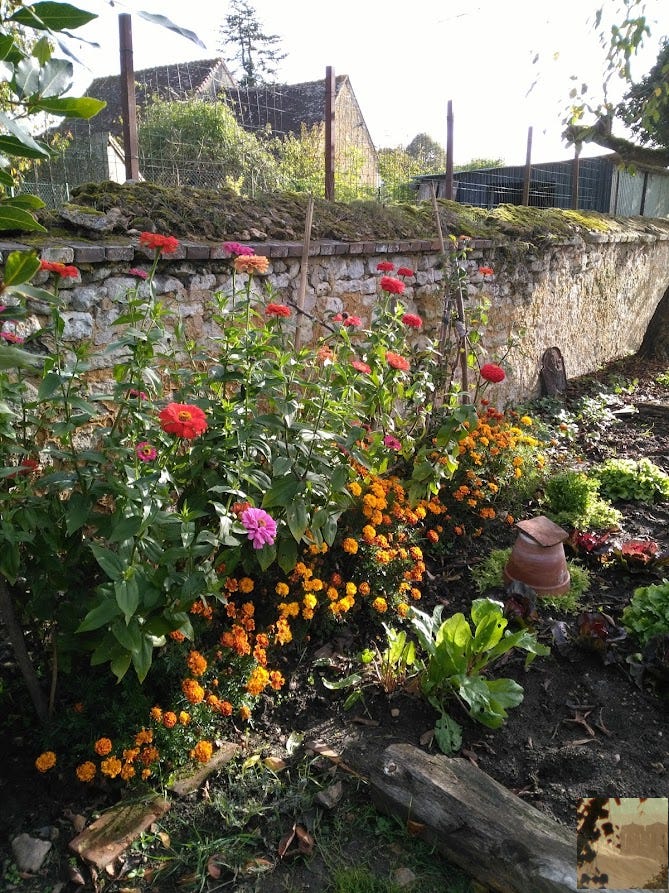
I bought a ruin from cellar to rooftop. I restored it to a beautiful home. I cultivated a bountiful garden. And I gave it all up.
My friend was right. I was closed in on all sides. My triste destinée was to have the life crushed out of me.
And if I were to tell you that Christine and Bertrand were only the tip of the iceberg (an exceptionally big tip, that is)? There was the owner of the superette who had it in for me too. Her husband, a pot-bellied fifty-year old, a talented carpenter who did some work for me, got into the habit of stopping by to chat. J’avais de la conversation. I was interesting to talk to. It was not just constant gossip about whoever crossed the village parking lot.
I lived next to the superette. From one of its plate-glass windows his wife could see my front door. When she saw her husband go in, duties permitting, she stood at that window, arms crossed against her chest, hands tucked beneath her armpits, and glared. When she saw him exit my home, she rushed out the store, heading him off at the pass, and gave him a tongue-lashing. Which he submitted to, head bowed, hands protecting his private parts.

I ended up dubbing her “Superette,” though her name was Karine. Superette told everyone I was “fausse.” This was a word I understood, but no one used it quite this way in Paris. It was a hard condemnation. She was calling me two-faced—to anyone who would listen, which was just about everybody in the village. We all made occasional purchases at her store and from her strategic position at the cash register, she broadcast her opinions far and wide.
Then I got another new neighbor, this one a Parisian, in the house right next to mine, separated from my courtyard by a high cedar hedge. At first she came only for weekends or vacations with her companion and his son (Covid would change that). She was charming, extremely seductive. Her father was a Sicilian architect, who worked with Oscar Niemeyer in Brasilia, and she inherited his raven hair, his regal bearing and his striking good looks.

I remember the first time she approached me. I was sitting at a table beneath my cherry tree. The sun was setting on a cool summer’s evening. She came towards me haloed in golden light, and I had a strange sense of déjà vu.
She introduced herself. I invited her to sit down. We shared a glass of rosé. As we talked, the feeling of déjà vu grew stronger. I asked her where she lived in Paris. She answered, rue des Annelets.
Next to the public stairway?
Yes.
With a view of rue de Crimée?
Yes again.
We’re neighbors, I said. I see you sitting on your balcony. I live on the other side of that stairway, but I enter my building from the rue de Crimée.
We were both taken aback.
Then her little dachshund Happy ran into my yard.
I know him too, I said. And you also have a cat.
No, my neighbor told me. The cat is only a visitor. She comes over from the apartment next door.
The coincidence was uncanny. Neighbors in Paris, neighbors in le Perche.
We had to knock back another glass of rosé to take it all in.
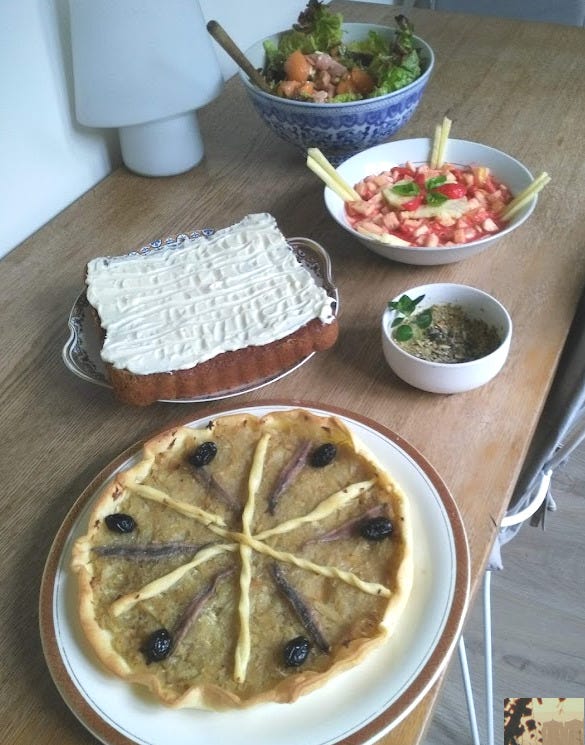
That first summer was our honeymoon. Her friends became my friends, my friends, hers. We shared meals, barbecues and many apéritifs. She was a wonderful cook, her companion, a champion at the barbecue. The stuff dreams are made of.
Then this neighborly friendship also began to fray. Promiscuité or basic incompatibility?
I’m going to have to think about that.