


Magali, la patronne of the village café, warned me: Don’t ever let her in your home.
I didn’t listen. Christine wanted to see my new kitchen. I opened my front door and invited her inside. From then on in, she was back every day. First she knocked on the door. Then she pounded. If still she didn’t get an answer, she moved to the front window and peeked in. Convinced she was being ignored, she pounded on the glass.
That’s how it happened.
Bertrand, her companion, was in the hospital. He went in for periodic stays. Too many chaussons aux pommes, apple turnovers, too many morning beers, too many glasses of rosé from late afternoon to bedtime. For someone suffering from diabetes, this was a lethal cocktail that could lead to insulin shock.
But a few days in the local hospital soon set him right. Once back home, he returned to his table at the village café and promptly ordered a beer to wash down his chausson aux pommes.

That’s how it started with Pierre: Bertrand away, Christine off kilter and home alone. With her brain working overtime, in no time she decided Pierre had killed his grandfather.
In my case, things began harmlessly enough. No one would take her to the hospital for a Sunday afternoon visit to Bertrand. I said I’d do it and we fixed a time.
It was early December. A cold wind was whipping in from the north. The sun was shining, the sky, intensely blue, a perfect day for a brisk walk in the surrounding woods and hills. Christine and I were meeting at two. Until then, I was going to take advantage of a beautiful day.
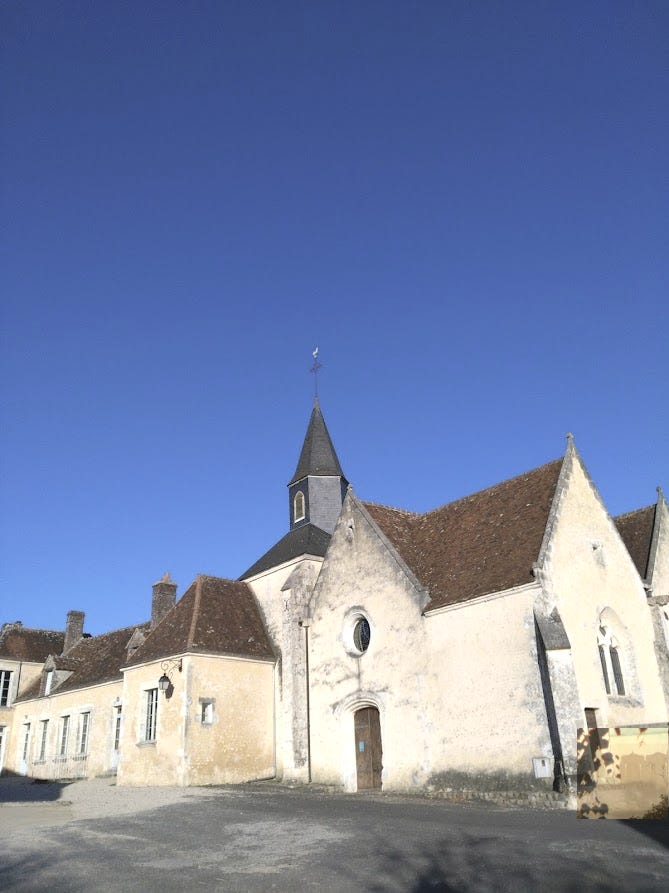
Here I must insert an explanatory note. The French consider themselves great individualists, yet when it comes to meals, all over the country, everyone observes the same culinary rituals and eats at the same time (give or take an hour—countryfolk eat earlier than their city cousins).

On Sunday mornings, bakeries, butcher shops, supermarkets are open, but they close for the noontime meal and remain closed for the rest of the day. By one o’clock on a Sunday afternoon, village squares all over France are as deserted as Tombstone, Arizona on the day of the gunfight at the O.K. Corral.

The day of my rendezvous with Christine, the village parking lot was empty, and dried leaves, driven by the wind, rolled across like tumbleweed. When I walked into town a little before two, there was not a car on the road, no one in the streets, except for Christine sitting on a bench in front of the pharmacy. She was wearing a sheepskin coat and gloves.
She called to me from across the square: “Ta fenêtre est cassée. Ce n’est pas moi.” Your window is broken. I didn’t do it.
Then she added, “J’ai plus besoin de toi. Quelqu’un d’autre vient me chercher.” I don’t need you anymore. Somebody else is picking me up.
As I was walking towards my house, a car pulled into the parking lot and whisked Christine away. When I got to the front door, I saw it. One of the panes of my front window had been punched out.
There is an explanation of sorts for this. Christine is French. All French people eat at noon, especially on Sundays. She expected me to do the same, but when she went to my front door for a security check before departure time, I did not answer.
It was beyond her wildest imaginings that I would not be at home at noon. This was the one hour of the week, where all over France, people were à table, slicing into the Sunday roast, spooning creamy scalloped potatoes onto their plates.
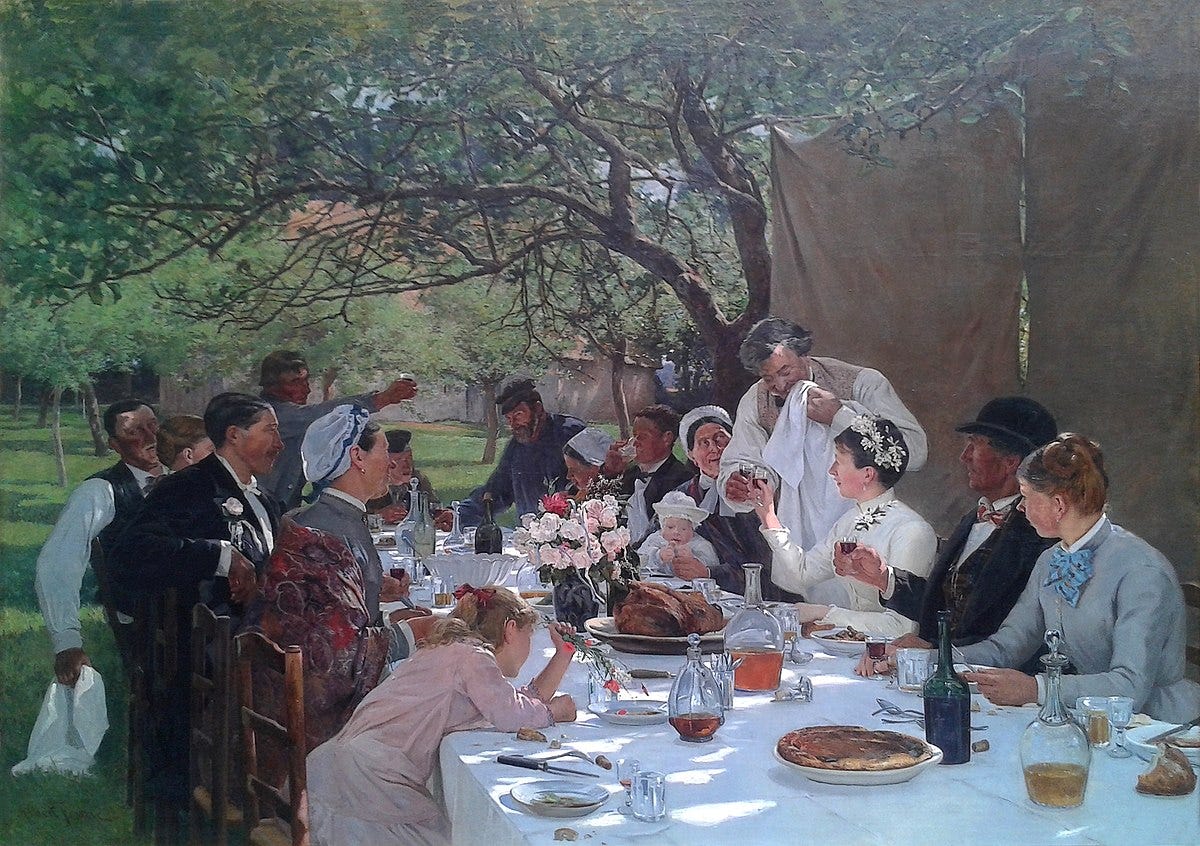
She was convinced I was inside. I was not answering. In her fury, she knocked so hard that her fist, protected by her thick sheepskin glove, went through the glass.
The window was facing north. Glacial air was rushing into my living room. Christine, the culprit, had vanished into thin air. The village was deserted. I did what I thought best. I took my phone and called the gendarmerie. I wanted it on record that there had been “effraction.”
Article 132-73 of the Criminal Code: effraction: the forcing, degradation or destruction of any sort of fence, door or window.
Wasn’t I within my rights?
The gendarmes arrived, a senior officer and a young rookie, two people I remember fondly. The older officer was fatherly, reassuring. The young rookie, her hair pulled back in a ponytail, was keen and observant. I explained the situation with my neighbors Christine and Bertrand. Like me, they were outsiders. They understood.
We even went into my courtyard and examined what I’d taken to calling “the incriminating window,” that evil eye spying down on me from Bertrand’s wall.
That afternoon, their blue patrol car was the only vehicle on the village square. Pierre and Michelle saw it and were quick to understand what was going on. They came outside and joined us at the scene of the crime. Pierre recounted his recent run-in with Christine. The senior officer encouraged him to file a complaint.
Taking in the damage to my window, Pierre proposed to cover the gaping hole with several layers of carboard and tape them down. It was the best solution until a glazier could replace the pane.
Pierre, Michelle, the gendarmes and I got along well. We laughed about the incident but did not lose sight of its seriousness. It was an effraction. Nor did these two gendarmes, not the same ones who had showed up about six weeks earlier at Pierre’s door, take his incident with Christine lightly. Un délit de dénociation calomnieuse is a crime (Article 226-10 of the Criminal Code!).
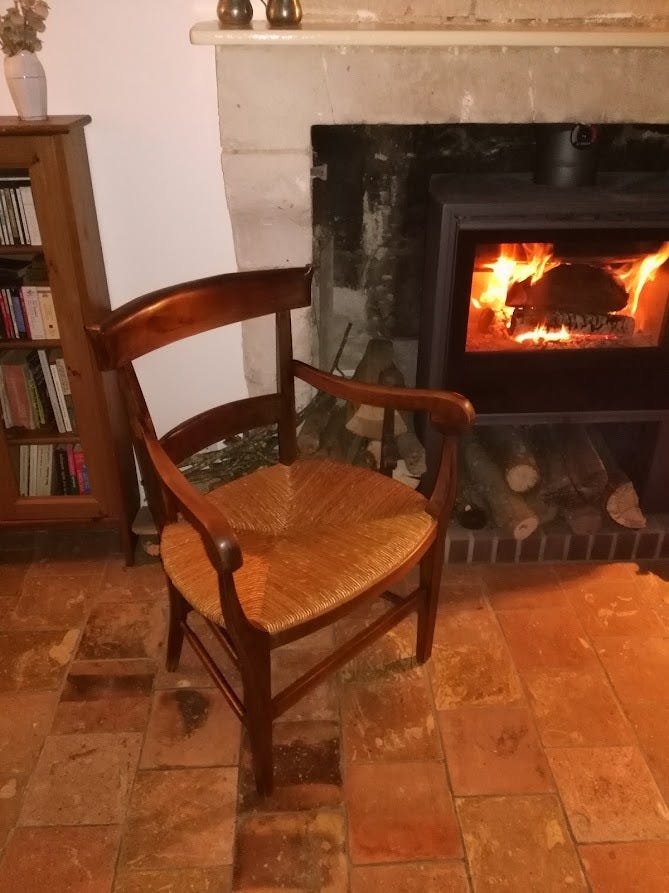
In early December, night falls early. The gendarmes left. Michelle and Pierre went home. I went inside and made sure to lock the door. The cardboard kept out the wind, but it did not keep out the cold. I made a fire in my wood-burning stove and pulled a chair up close.
The next day, as splendidly beautiful as the day before, Pierre and I got into my car and drove across le Perche to the caserne of the gendarmes who had showed up at my home. We filed our complaints. It was official. Now we’d have to wait. L’affaire Christine was in the hands of the Law.
We drove back to the village, sûrs de notre bon droit, sure the law was on our side.
That very afternoon, the husband of the owner of the superette who, incidentally, thought I was trying to steal her “homme,” replaced the pane of glass. I told him I’d pay, but I wanted Christine and Bertrand to pay me back.
The North Wind was still blowing strong. This time, I could feel it transporting me to victory. Neither Christine nor Bertrand were going to get the best of me.