

What’s in a word? What’s in an accent? What’s in a name? How much truth is in a memory?
Fastnacht, that’s the word. The accent is Danish. The name is “The Danish Bakery.” The memory is food.
Food played a big role in my childhood. I loved to eat, I was chubby, and I measured time in seasonal treats.
Summer was ice cream at Heisler’s Dairy Farm, a bundle of pleasures, because there was also miniature golf and a view of the sunset over fields and wooded hills that filled my young soul with awe.
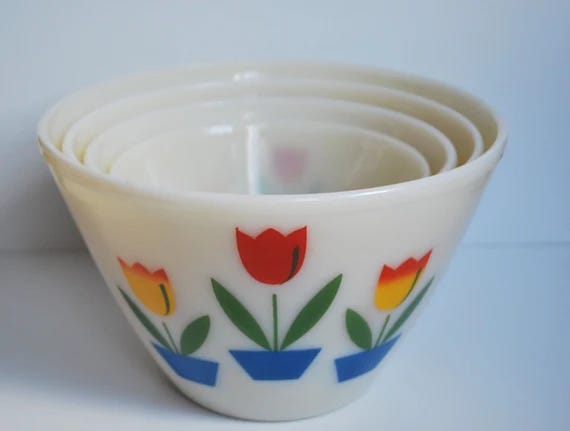
Autumn was my favorite time of year. Was it the colors I so love today or simply the perspective of Halloween? In those bygone days, we learned a poem (“Black and Gold” was mine) and dutifully recited it before holding out a shopping bag or a basket for the candies that were sure to drop inside. My mother had a big mixing bowl decorated with tulips. When I got home, that’s where I emptied my bag, stepping back to admire my wealth before plunging in.
Thanksgiving was just OK. Too few sweets and I liked neither pumpkin nor mince pie.
Christmas, a festival of abundance, homemade cookies, candy crabapples on tiny birch stems, peanut rolls from Mootz’s, candy canes, clear-toy lollipops. On Christmas Day, we children even got to drink sweet eggnog sprinkled with nutmeg.
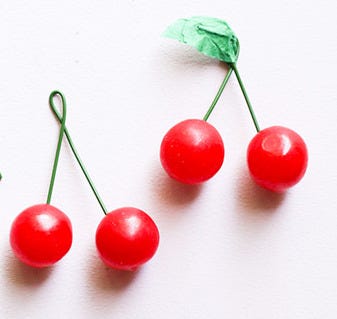
For every holiday, its treat. On George Washington’s birthday we went downtown to Grant’s Five-and-Ten, the store with the best candy counter. We bought bags of red candy cherries on green plastic stems. For Saint Paddy’s Day, we ate a sweet made with cornstarch and sugar and then rolled in cinnamon. These were our Irish potatoes, and I liked them better than any other potato in the world.
Then came Fastnacht. Of all the holidays that sweetened my life and made of each year a garland of cyclic delights, Fastnacht, which lasted one short day, was my favorite.
In French, Mardi gras. In English, Shrove Tuesday. In German, Fastnacht.
Fastnacht, though a moveable feast, always precedes Ash Wednesday, which means my mother, a teacher, worked that day. She had to get up extra early to pick up our special Fastnacht order at the Danish Bakery at 20th and Market Streets in Pottsville.
The bakeshop was small. At one time it had been the living room of a wooden, three-story house, half of a double, as we say in the coal region, one of two houses sharing a common structure, this one built at the end of the 19th century, when Gothic gables and turrets were the rage.
The Danish Bakery, though, stood out. There was no other house in Pottsville painted orange with bright blue trim. To enter, we first had to climb three blue steps to the front porch. When we pushed open the door, a bell jingled and instantly the baker’s wife appeared. Her name was Mrs. Frederickson.
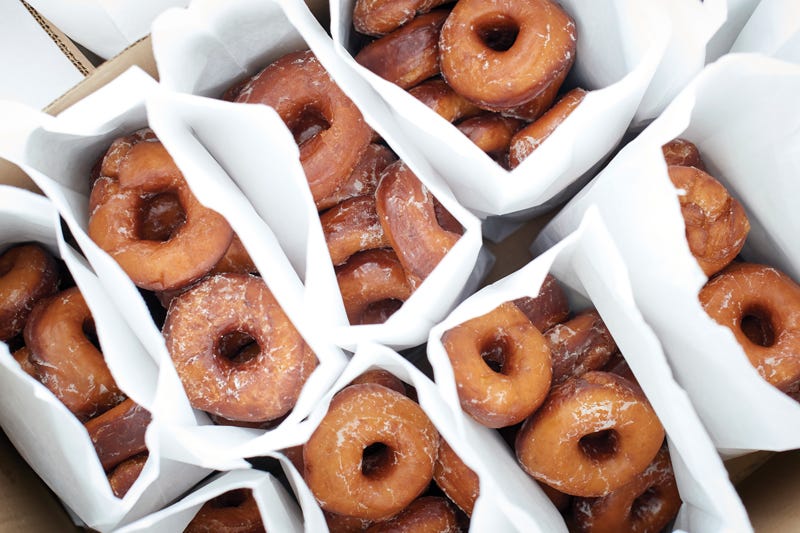
On Fastnacht Day, my mother was surely one of the first customers. She had to be at school before 8 o’clock. She picked up our order and returned home with at least two dozen fresh donuts, light and fluffy, iced with a light glaze, making sure we had them for breakfast. I wouldn’t be surprised if I didn’t down a half-dozen before leaving for school. They were and they remain the best donuts I’ve ever tasted in my life.
The owners of the Danish Bakery were…Danish. They had emigrated from Denmark to Pottsville and brought with them an entire smorgasbord of Danish delights. My mother’s favorite was the crusty Vienna loaf, and her favorite springtime treat, a couple of slices of fresh buttered bread, salt, and a bunch of spring onions. My sisters liked the shortbread pretzel cookies sprinkled with sugar. We all loved the glazed donuts.
Years later, in the city of Strasbourg on the banks of the Rhine, a city as German as it is French, I entered a bakery and there it was: the almond ring of my youth, my other favorite from the Danish Bakery, much more exotic than donuts.
Crullers, plain or rolled in powdered sugar, glazed donuts shaped like pretzels, cream- or jelly-filled, though this was before the days of Dunkin’ Donuts, when it came to sweet, fried dough, I had experience.
Nowhere else than at the Danish Bakery had I every tasted the lightly sweetened almond filling, the buttery pastry that formed a circle around the puffed center of an almond ring. The pastry was both delicate and rich, the almond filling, naturally aromatic, and there was the same white icing as on the donuts. I could sit and eat an entire ring all by myself.
Which is exactly what I did in Strasbourg. I bought it and returned to my hotel room and, sinful, secret pleasure, I ate it all.
Years later, I returned to the same bakery. It had changed hands and the almond ring was gone.
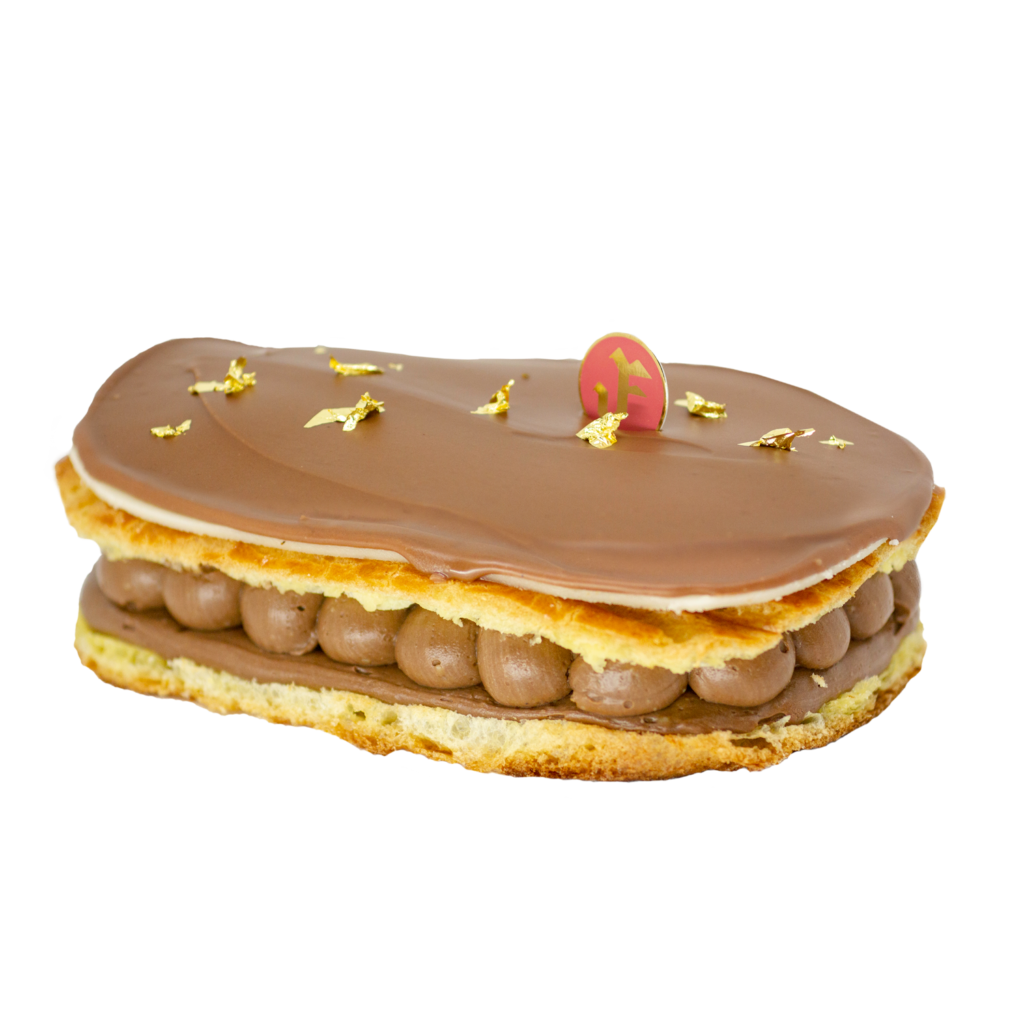
Puff pastry filled with just about any sweet cream you can imagine (though chocolate and café remain the standards), that’s an éclair. A mille-feuilles, also known as a “Napoleon,” has 729 layers of light, flaky pastry, according to one 18th century recipe. In between the layers, vanilla pudding, what the French call “crème anglaise.” A Paris-Brest, inspired by a bicycle wheel, is puff pastry, split like a bagel, and filled with praline-flavored buttercream.
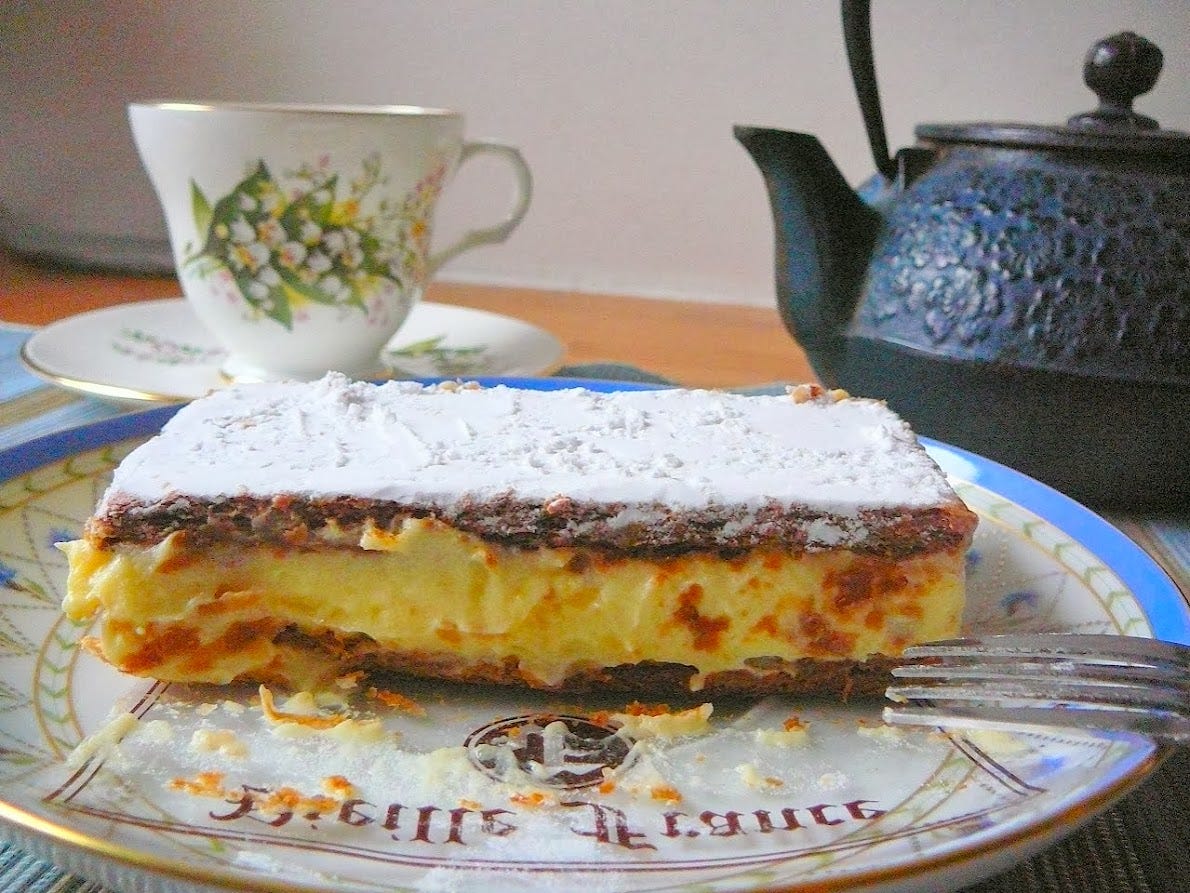
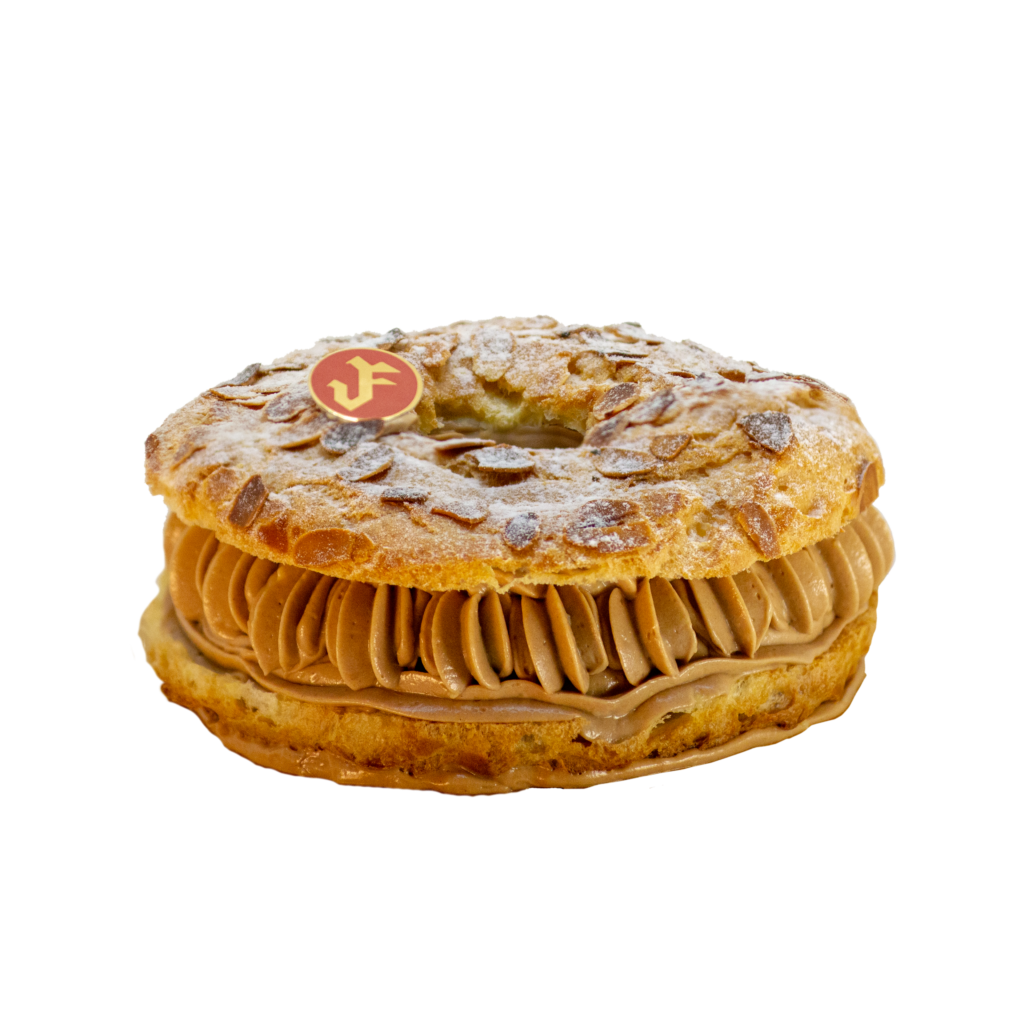
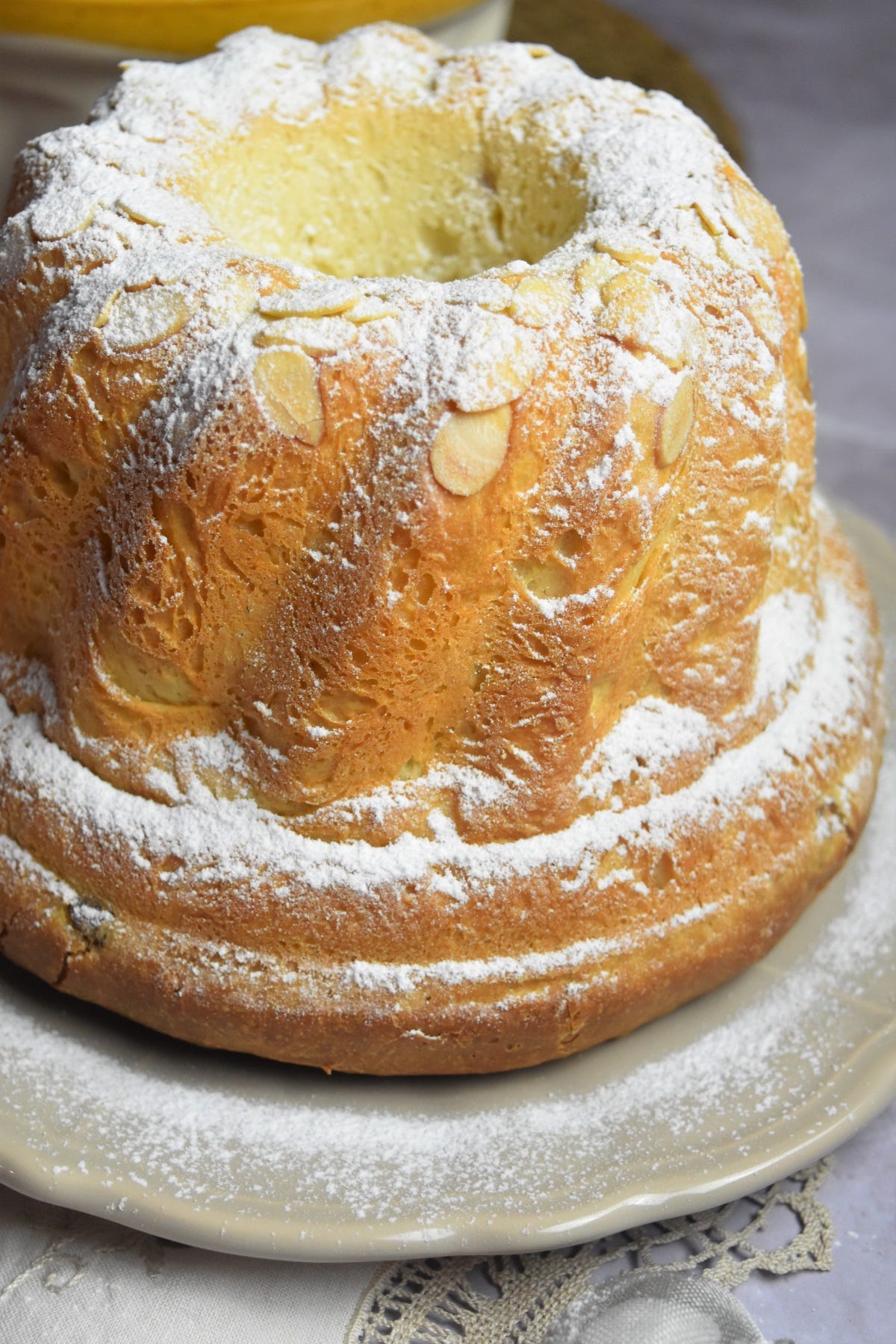
That’s French pastry. In Strasbourg, local tastes head east and north across the Rhine, fluffy brioche, a preference for fruits and nuts, much less sugar and cream. It’s not surprising that in Strasbourg I found a Danish almond ring. Not surprising either that my own tastes run that way. The Danish Bakery in Pottsville formed my palate and taught me good taste.
When I was a child, foreign accents had the power to freeze me in my tracks. Hidden behind the accent was another world, a world where everything was different because everything had a different name. The Fredericksons had a daughter about my age. When she was with her parents, they formed a tight cocoon, language raising a barrier between them and me that was impossible to scale.
Now I’m the one with the accent, an insider and an outsider all at once, a participant and the fly on the wall. I’ve never got used to attracting attention just because I open my mouth.
These days AI can translate just about anything. No need to learn foreign languages anymore, some might conclude, but they’d be wrong. Nothing but the hard work of learning a language can give us another world.
The computer insists on Perelmans. It is Peelmans
I believe it was Perelmans. I grew up in Port Carbon. Linda Davis was my best friend
Regarding donuts, Nancy you left out Fat Tuesday. Here in Philadelphia the Amish come to the Reading Terminal and make FRESH donuts and they are wonderful.