

I put the Skook in a suitcase and carried it across the ocean. I did it for the first time in 1970. How did my mother manage to pay for that trip? My father had been dead for two years and we had downsized in many ways, smaller house, smaller car, one salary where there used to be two. Richard Nixon was President. Inflation and unemployment were on the rise. But she did it. She sent me to France. I was away for six weeks. I had just turned seventeen.
Our chaperone was Mrs. Alice Ney. She taught at the Middle School, where my mother worked. We got our picture in the paper, Mrs. Ney, her daughter, other girls from my high school class. One of them has died, I’ve lost track of the others, but I remember who they were. We were oblivious to our great good luck, to the opportunities being offered us. We were probably just too young.
We were supposed to be learning French. I did not work hard. I didn’t get it. My imagination was not yet ready to let in another world where everything has a different name and where the mind and language travel a different figurative path. When I did try to speak, in a shop, in the street, I was constantly putting my foot in my mouth, except that the French put theirs in their plate, their imaginations stimulated by les arts de la table and la gastronomie.
I did not study. I did not learn, except for a song, “A la claire Fontaine,” “By the clear Fountain.” I can sing it still today and have not forgotten a single word. And I can still see my teacher, his dark hair slicked back with some greasy hair cream, his brown gabardine suit, the same one every day, much too heavy for the summer heat. He had body odor at a time when we Americans were using spray deodorant and recklessly destroying the ozone.
But he took singing seriously and taught us the song. We could even sing it in harmony. It is a song that young women in 1970 could understand. You love a boy, you resist him. You do not give him the precious rosebud that is your glory and your prize. You take a risk. You lose. He rejects you. You marry another, but you do not forget your first love.
Nana Mouskouri sings "A la claire fontaine"
My mother wanted me out of the country because, in the open, in direct defiance of her, I was seeing a man too old for me. I was a minor. He was twenty-three, already an army veteran, speaking perfect German, which had everything to please me. He was also African American. At that time neither my mother nor most people in Pottsville, white or black, were ready for this.
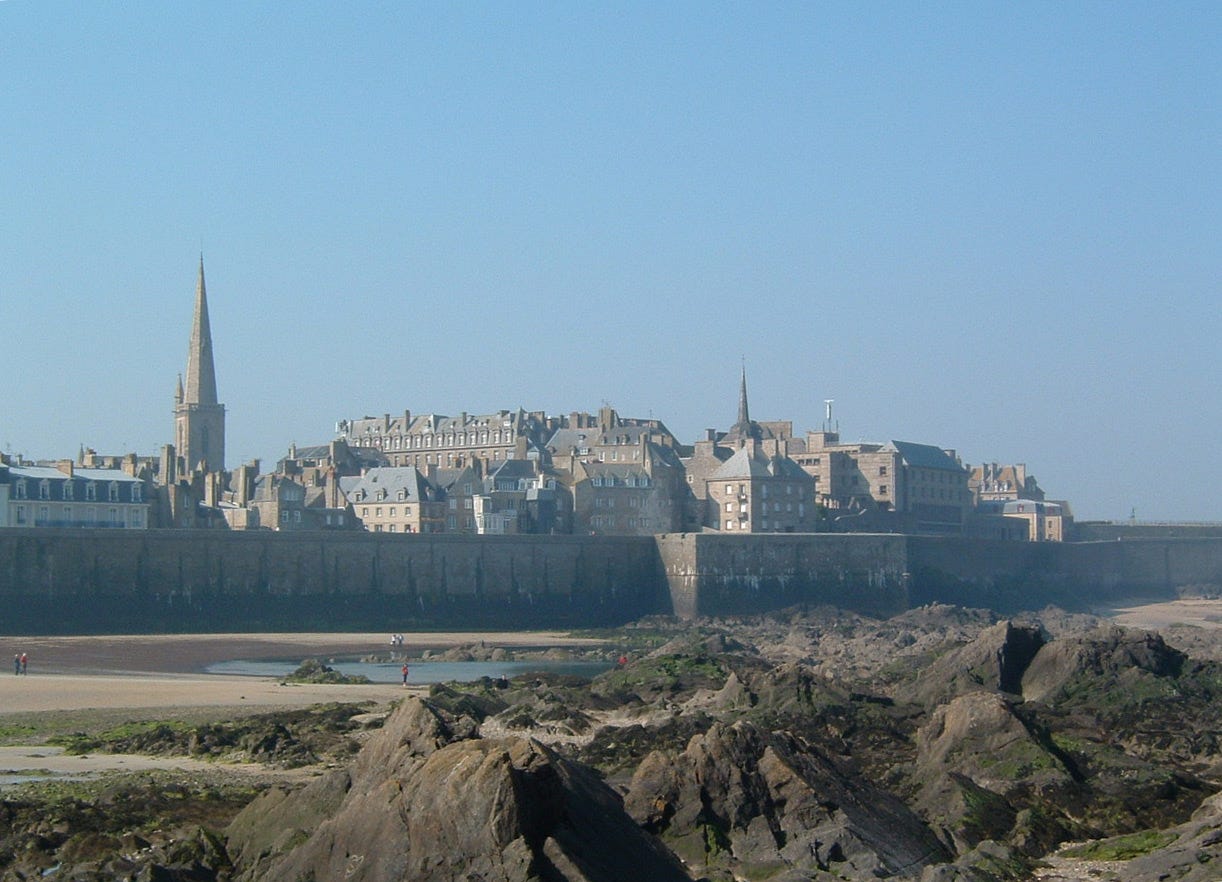
In France my group had joined many other groups of young Americans to study French in Saint Servan, a neighborhood of the French port city of Saint Malo. We were living at a boarding school whose French students had abandoned it for the summer. Just like Madeline, we slept in a dormitory where each side of the long, austere room was lined with cots.
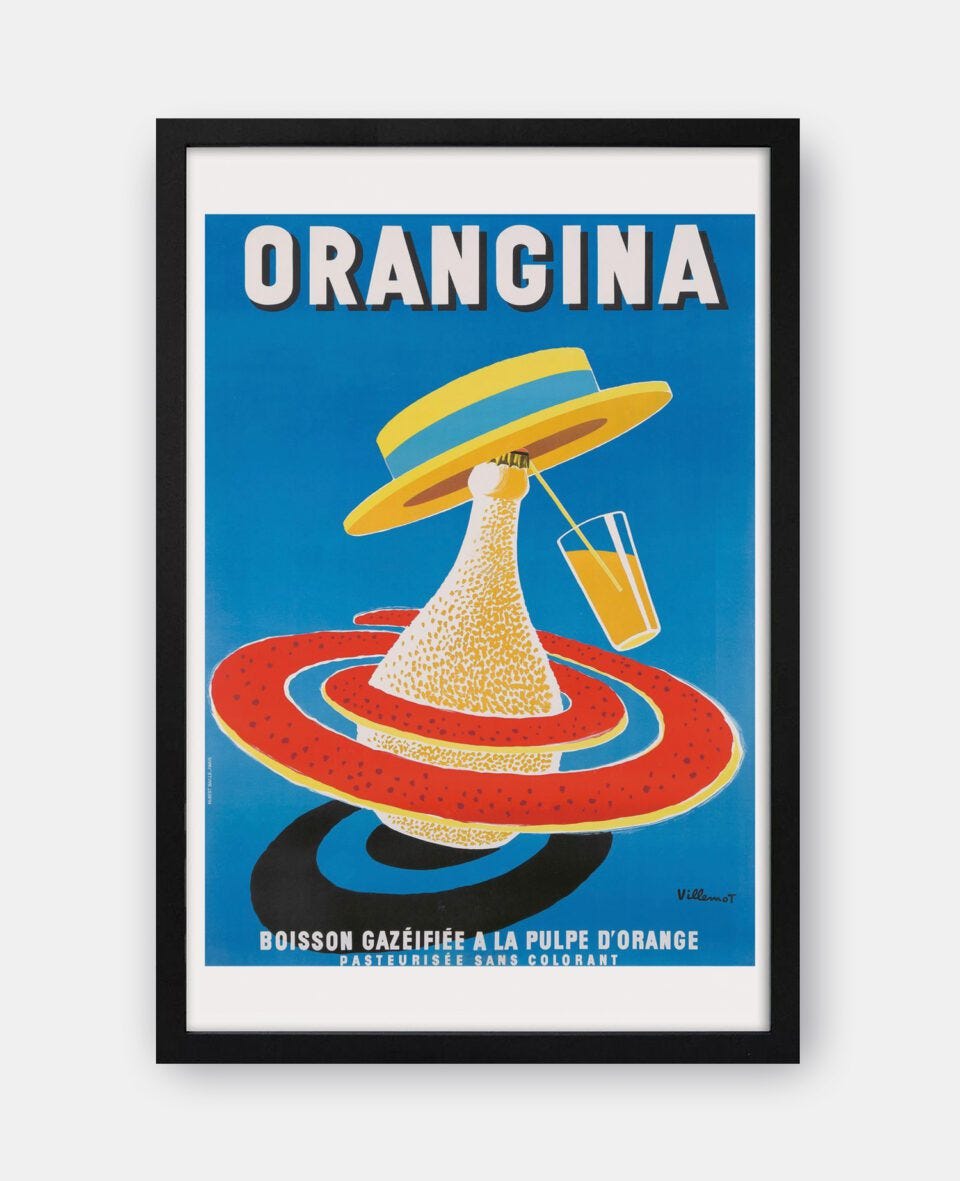
Unlike Madeline, we had no Miss Clavel, and outside of class hours, we were free to roam. Nearly every day, we bypassed a cove near our school in Saint Servan and walked to the main beach beneath the ramparts of Saint Malo. Sometimes we stopped in a café, feeling very grown up, ordering an Orangina in its nubby frosted-glass bottle or a Cacolac, a small bottle of chocolate milk. Some of us even ordered a glass of wine or beer. The waiter never said no.
Everywhere we heard the same song, the summer’s biggest tube, which is the French way of saying “hit,” Mungo Jerry’s “In the Summertime,” a clinking, hurdy-gurdy, honky-tonk kind of song:
“In the summertime, when the weather is fine, you got women, you got women on your mind.”
Listen to Mungo Jerry's "In the Summertime"
My friends had men, or rather boys, pimply, skinny boys, wearing those skimpy nylon French bathing suits, no more than a bikini bottom that made private parts much too evident, the kind no American boy (except for serious swimmers) would be caught dead in. We spread out our towels on the beach. They swarmed around us like flies.
Click on the link and visit France in the 1970's

My friends abandoned me and went off with these boys. From what they told me, they actually had sex. There’s no accounting for taste, yet in that way, they probably learned more French than me. I sat primly on my towel, writing aerogrammes to my older man back home and to my mother, my aunt and my sisters. My mother had raised us to be letter-writers, and I was devoted to the art.
Except for the intense effort to describe what I saw, I’d turned off my mind. Nature loves a vacuum. My senses rushed in to take its place.
At breakfast time, we filed into the cafeteria. Breakfast was already on the tables, stainless steel pitchers of steaming milk and hot coffee, baskets of fresh sliced baguette, and deep green glass bowls of apricot jam. We grabbed a coffee bowl and a spoon. We dug into the best meal of the day.
First the café au lait, dosed to our liking. We picked up the heavy pitchers and poured, more milk for some, more coffee for others. I knew I’d got it just right when my coffee turned a warm cinnamon brown.
Next, we tried to snatch the best pieces of bread, those we could slather with a thick layer of apricot jam. In the green bowl, the jam was a dusky orange. When we spread it on the bread with the back of our spoons, it turned translucent and rosy, just like a ripe apricot.

When I bit in, first my tongue tingled, a delightful tart prelude to what would come next, the “parfum,” as the French call the flavor of foods, of fresh apricot rising to my palate. At home, I’d only ever experienced this fruit canned in heavy syrup. The intense combination of fruit, acidity, sweetness, the crunch of fresh breadcrust, the yeasty softness of the “mie,” the airy white innards of the baguette, exploded, blanked out words, filled me with pure sensual pleasure. Surely this was better than whatever my friends were doing with those boys they met on the beach.
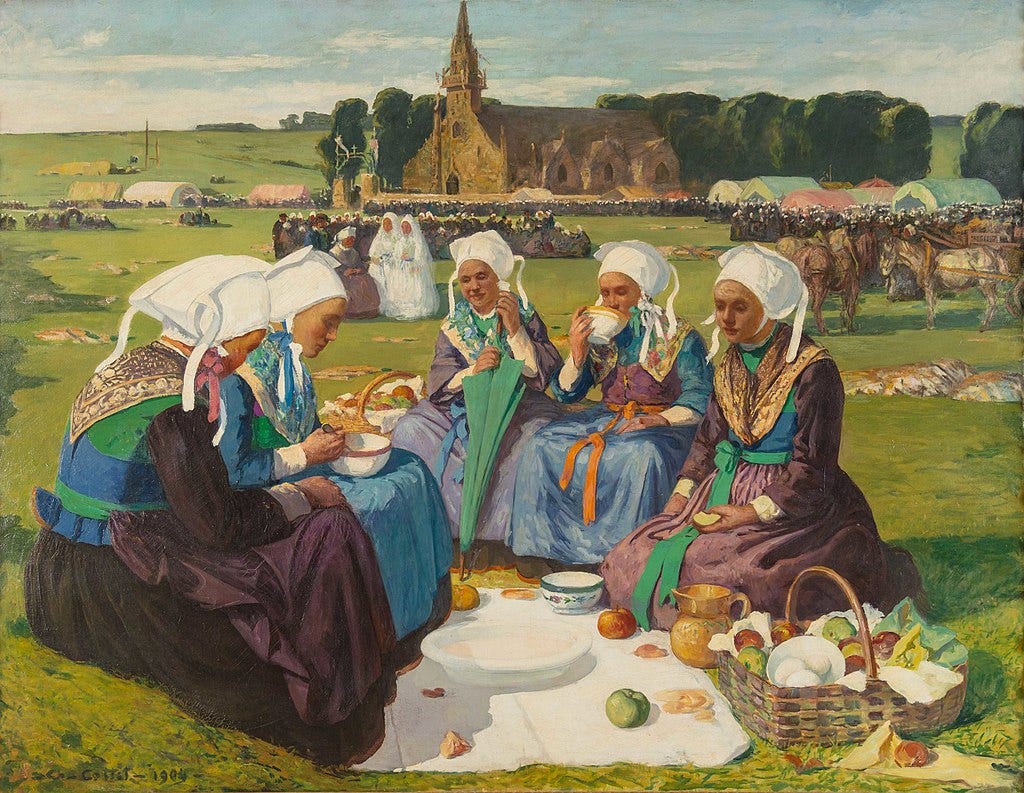
My eyes and ears I poured into my letters home. Food I kept to myself. My first taste of cassis, ripe black currants; fresh oysters bought for a couple of francs on a glistening beach, the taste of oyster and seawater all in one; my favorite pastry, une tête-choco, meringue and buttercream covered with a thin layer of dark chocolate, purchased in a pastry shop where the woman who served me wore a lace Breton coiffe.
My mother’s gamble paid off. I returned to Pottsville with a suitcase filled with gifts and buried among my crumpled clothes, the awakening of a true desire to learn French. I forgot my older man.
I was set on France and knew I would return. Next time I’d give my brain a chance to catch up.