

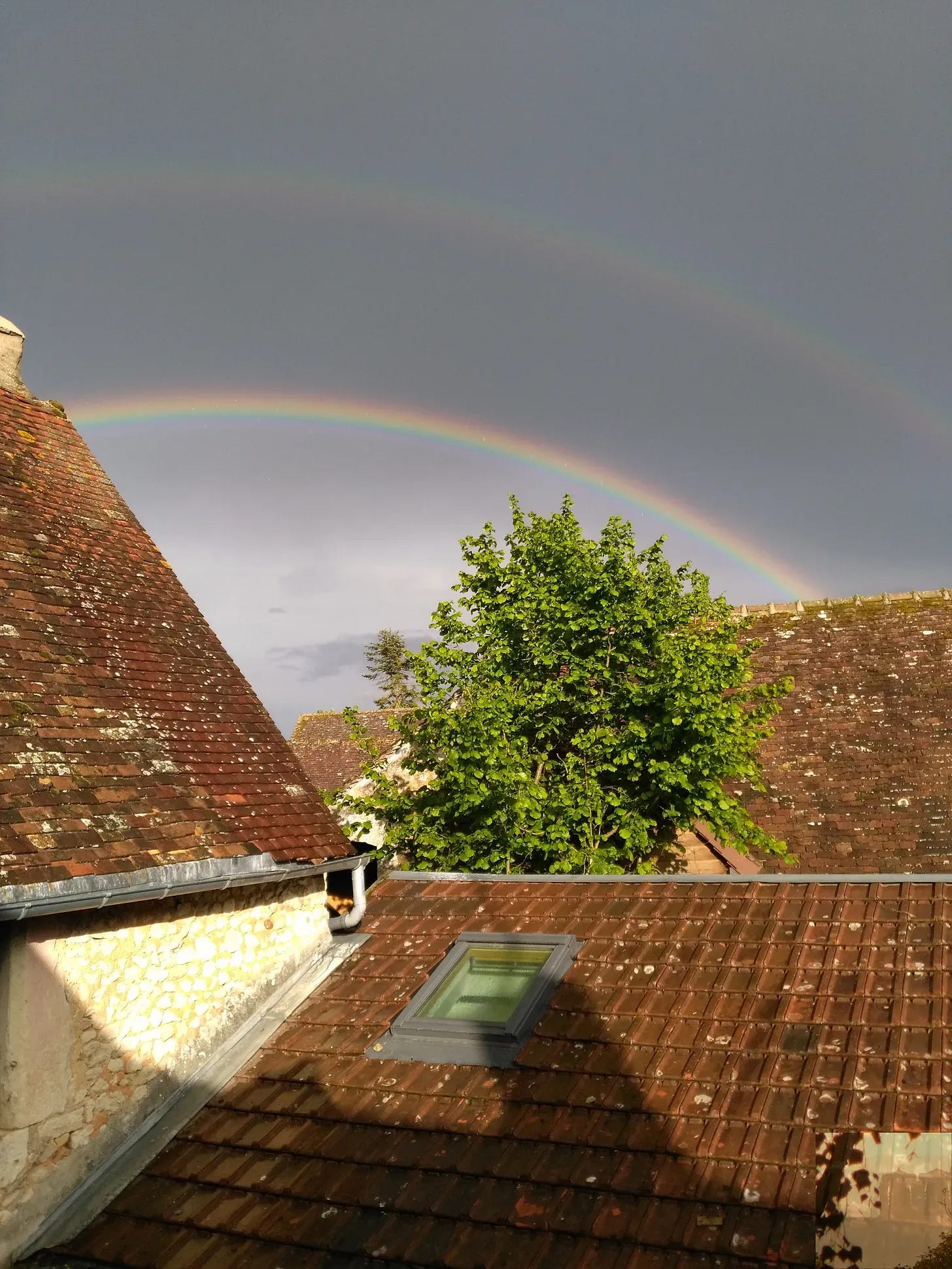
When I first looked up at the window, I knew it was not right. I knew, but knowing did not stop me from buying a stone ruin in a village in the French countryside.
The window was carved out of a high wall overlooking the small courtyard of the abandoned house I was about to buy. It was a 20th-century afterthought, shabby workmanship, a hole knocked out of the wall so a window could be inserted where it had no place to be. Back in the early 19th century when the house was constructed, builders had too much good sense and good taste to put a window there.
The deep recess hollowed out of the wall was a perfect roosting place for the pigeons that flocked to the roof of the village church. To keep them out, someone had crudely inserted a piece of crumpled chicken wire.
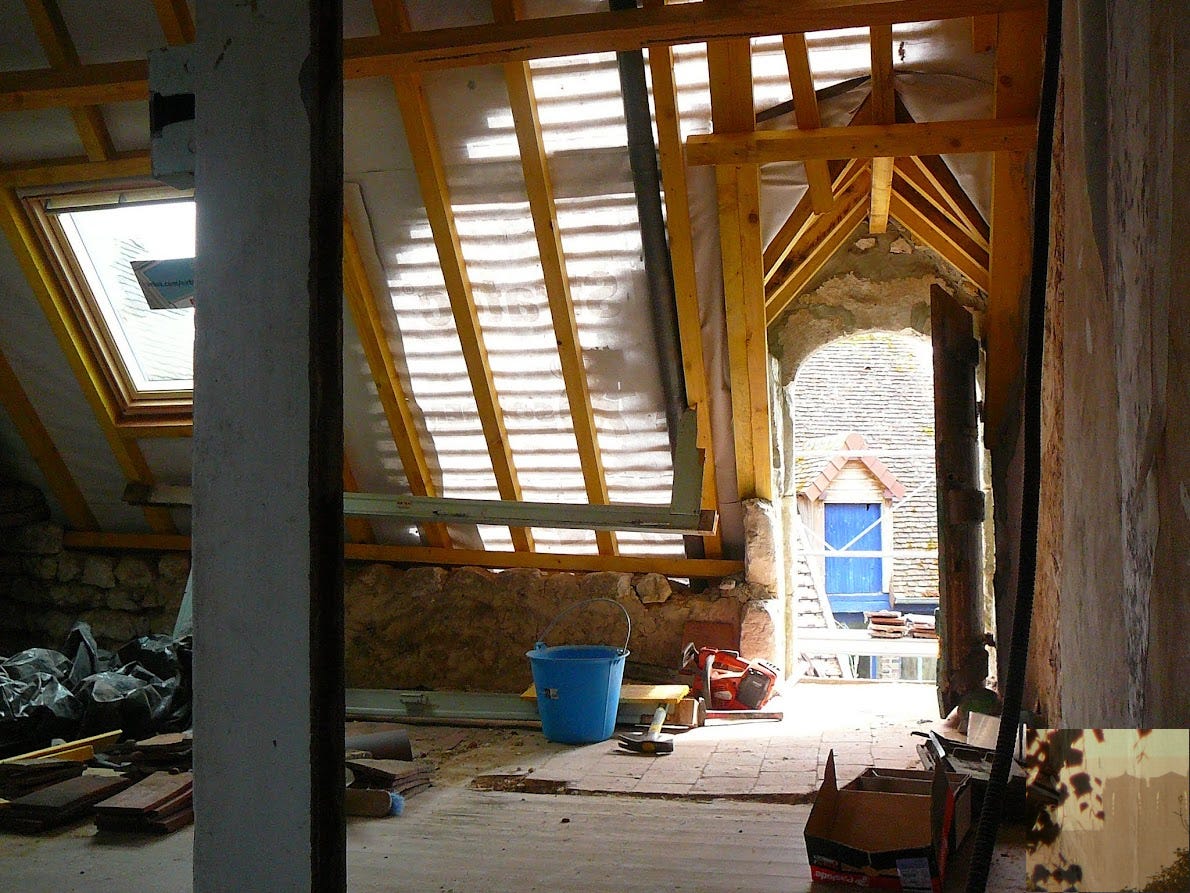
Later, once I’d undertaken work on the property, the landlords of the adjacent house, a couple from the village, came to my courtyard to observe, not the window, but the rain gutter hanging above it, so rusted that when it rained, water gushed onto my roof and leaked into my home.
Upon entering the courtyard and glancing at my house, hers, and another, all three in close proximity, Madame winced.
“Quelle promiscuité!”
Madame was a village notable, une bourgeoise, the recently retired village druggist. She owned the pharmacy too and had a foot in local politics as a long-time member of the village council.
Monsieur, her husband, who, by a strange twist of fate, had been my colleague in a provincial university where I once taught, was intimidated by me. In the French public university system, salaries are low, so we cling to prestige and hierarchy. I was much higher up on the totem pole. He kept his mouth shut and let Madame do the talking.
Starting with her remarks on “promiscuité.” In English, think “loose sexual conduct.” In French, though the sexual lurks just beneath the surface, the word expresses a distaste for overcrowding.
Madame was expressing hers. Such piling up of people was not good for body or soul. You might as well live like animals, the sour look on her face inferred.
Oui, Madame, je comprends.
Her second remark, directed not to me but to my contractor, on hand to provide expertise, was a lament: “Oh, j’espère que ce ne sera pas trop onéreux.” I hope this is not going to cost me too much.
My contractor did an excellent job explaining that zinc rain gutters were expensive, and it would cost what it would cost.
She was ready to accept this. The contractor was a local. When we had first spoken by phone, she had expressly told me she would not deal with “étrangers,” foreigners.
Madame lived in the biggest house in the village proper, but on its outskirts, there was an even bigger home, a converted mill, a beautiful stone structure on the banks of the River Huisne. In the last decades of the 20th century, it had been converted into a house of prostitution, devoted to the English definition of promiscuité, catering to a wealthy clientele with special tastes, many coming all the way from Paris. The place had scores of rooms, each one thematic, each one with a small sink and a bidet.
Later it was bought by a wealthy, ageless woman whose boyfriend was a gigolo. She turned the grounds into a beautiful park, but it was not a place meant for peace. The mill’s waterwheel, artfully restored, constantly turned and churned the river’s waters, a roar, a keen, a banshee’s wail. The ageless woman did not stay.
Madame’s house, the family home where she was born, was massive, une maison bourgeoise, as it is called in French, sitting pat in the center of a walled park. I would guess it was built in the early 20th century, when the village reached a peak of prosperity thanks to the junction of two rail lines. Its white stone façade had a few classical flourishes, but mostly it projected solid, carefully accumulated wealth.
Together we worked out the problem of the rain gutter. It was replaced.
The window was something else. It was my problem, not theirs.
Before embarking on the restoration of a ruin in the French countryside, even before moving to Paris, I had lived in another village, in the foothills of the Maritime Alps. In fact, I had lived in paradise, a place so beautiful that even in memory, it takes my breath away.
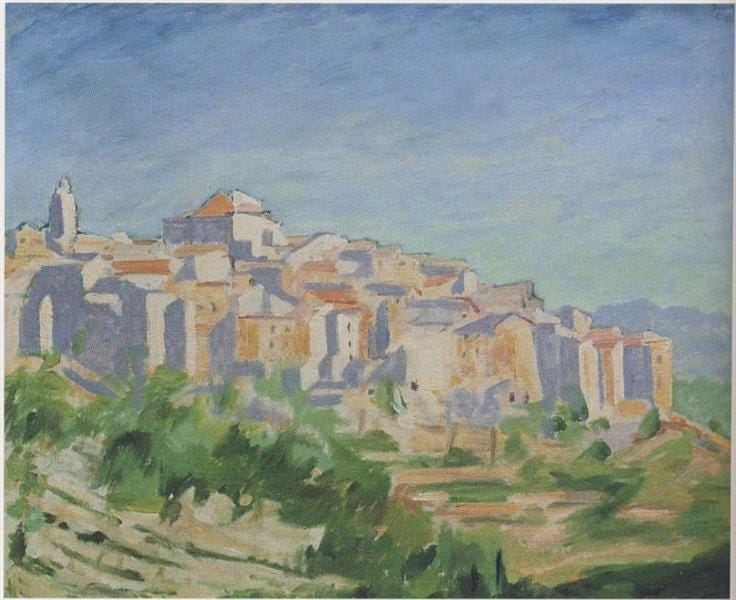
Imagine a white villa with a terra cotta tile roof. Imagine a parasol pine so big that in its shadow, you could throw a family reunion or organize a banquet. Imagine terraced hills, olive groves, scrub oak, wild thyme growing between the rocks, hills purple in the evening, overlooking the pearly waters of the Mediterranean Sea at sunset.
Imagine I’d never been so unhappy in my life. So much for breathtaking views as an antidote to pain.
I eventually fled to Paris, but my apartment beneath the eaves was too hot and stuffy in summer, which led to my quest for a country home.
None of the above, however, prepared me for what came next. I’d been around, knew France well, but this was my first trip to “la France profonde.” It was like a return to the Skook, except here everyone spoke French.
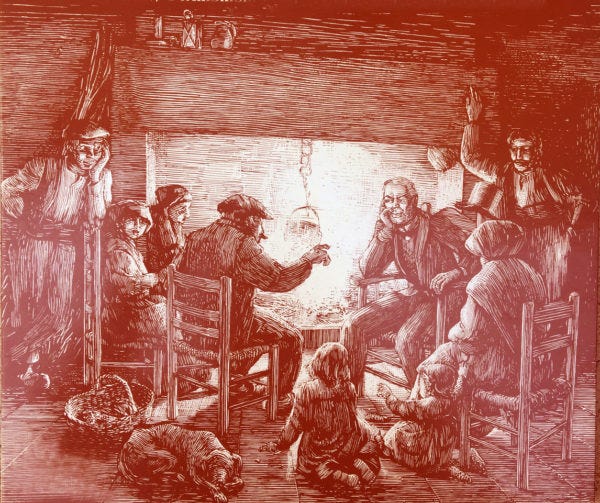
Once upon a time, deep in the French countryside, after the day’s labor and the evening soup, families gathered around the fire for la veillée. As the flames dwindled, toddlers crawled onto welcoming laps, older children huddled close to the hearth. Mother took up her mending, Father repaired his tools. And everyone listened. Les anciens, the elders, sitting on wooden armchairs, told tales passed down through the ages, where elves and fairies and magic inhabited the dark night outside their cottage door.
By the mid-1960’s, la veillée had been replaced by le poste de télévision, its flickering light more enticing than any flame. Today, it’s still that way: A wide-screen TV turned on to full volume is the heart and hearth of many a French country home. As for les anciens, they’re watching TV too, dozing to the sounds of war, natural disasters, and sordid crime.
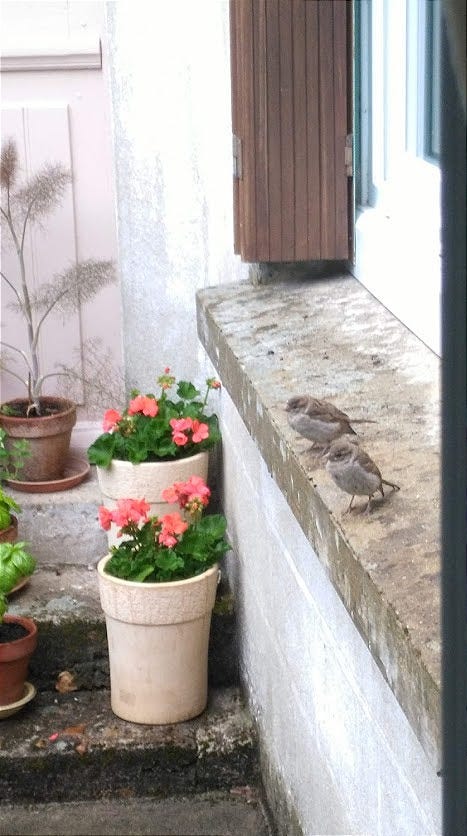
Behind that window, the one that had instantly sent me a message that I refused to heed, sat a wide-screen TV. Summer or winter, the window was left ajar. At 6:30 every morning, the TV was turned on. It often blared till after midnight.
That window, high up in the wall, what and who were behind it, overpowered me. They also taught me a lesson. In la France profonde, a wide-screen TV is a vital necessity.
That lesson was the first step in learning to love my neighbors even as they set out to tar and feather me.
This one seems quite differently set out/up than your former posts--less of a narrative, and more impressionistic, punctuated with a sharp image here and there. It drew me in, but did not so much tell a story as make me wonder what story was in the telling, how all the details would come together. In retrospect, it feels like an introduction, samples or fragments of a larger, longer story: puzzle pieces spread out on the table before we begin to snap them into place, and the picture gradually comes into view. Will there be a "Love Thy Neighbor (3)"?
My favorite photo/visual fragment? "Birdies on the Windowsill with Flower Pots". It stands on its own as a photograph, but would also work wonderfully as the basis for a painting or pastel.
Nancy - I now realize I posted this comment to the wrong essay!! It was intended for the blue bubble gum essay. I'll copy it over there....