

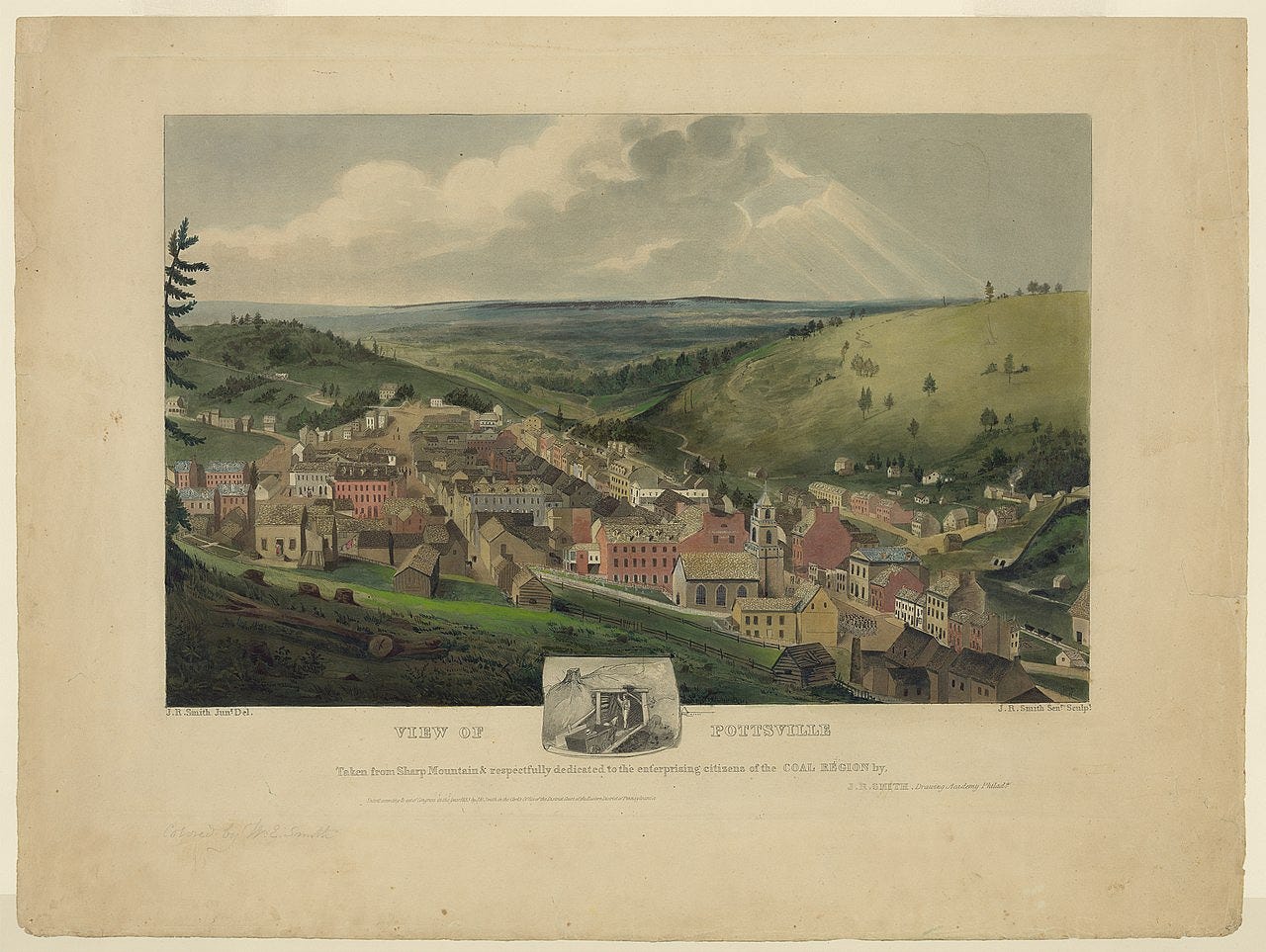
Where does history begin? My history, your history, the history of the place we’re from? How do my story, our story, interweave and interlace with History, the kind we learn in school, the kind that’s being written before our eyes. Are we writing it too? We used to think it was enough to vote to participate in the great adventure of democracy, government by the people through free and fair elections. Now we know we were wrong. We should have been doing more.
Sometimes History gets stuck. Chronos stops marching forward. We flail our arms in a vacuum and can’t get on with life. Now seems to be one of those moments, when our country is reeling out of control, like a planet spinning off its axis, about to disappear into the abyss.
Now was a long time in the making.
The Pennsylvanian Period, named after our state because its geological heart is beneath our feet, began 323.2 million years ago. This subdivision of the Carboniferous Period stretched over 24.3 million years, less than one percent of geologic time. These numbers baffle the mind. In our narrow human timescape, to live a century is a feat.
During the Pennsylvanian Period, swamp forests covered what became the five-hundred square miles of anthracite, a region delimited by Pottsville to the south and Scranton to the north. Back then, dragon flies had a wingspan of five feet and cockroaches easily measured one foot in length. Imagine coming nose-to-nose with such a creature, its antennae thrashing, on a kitchen counter or atop the washing machine.
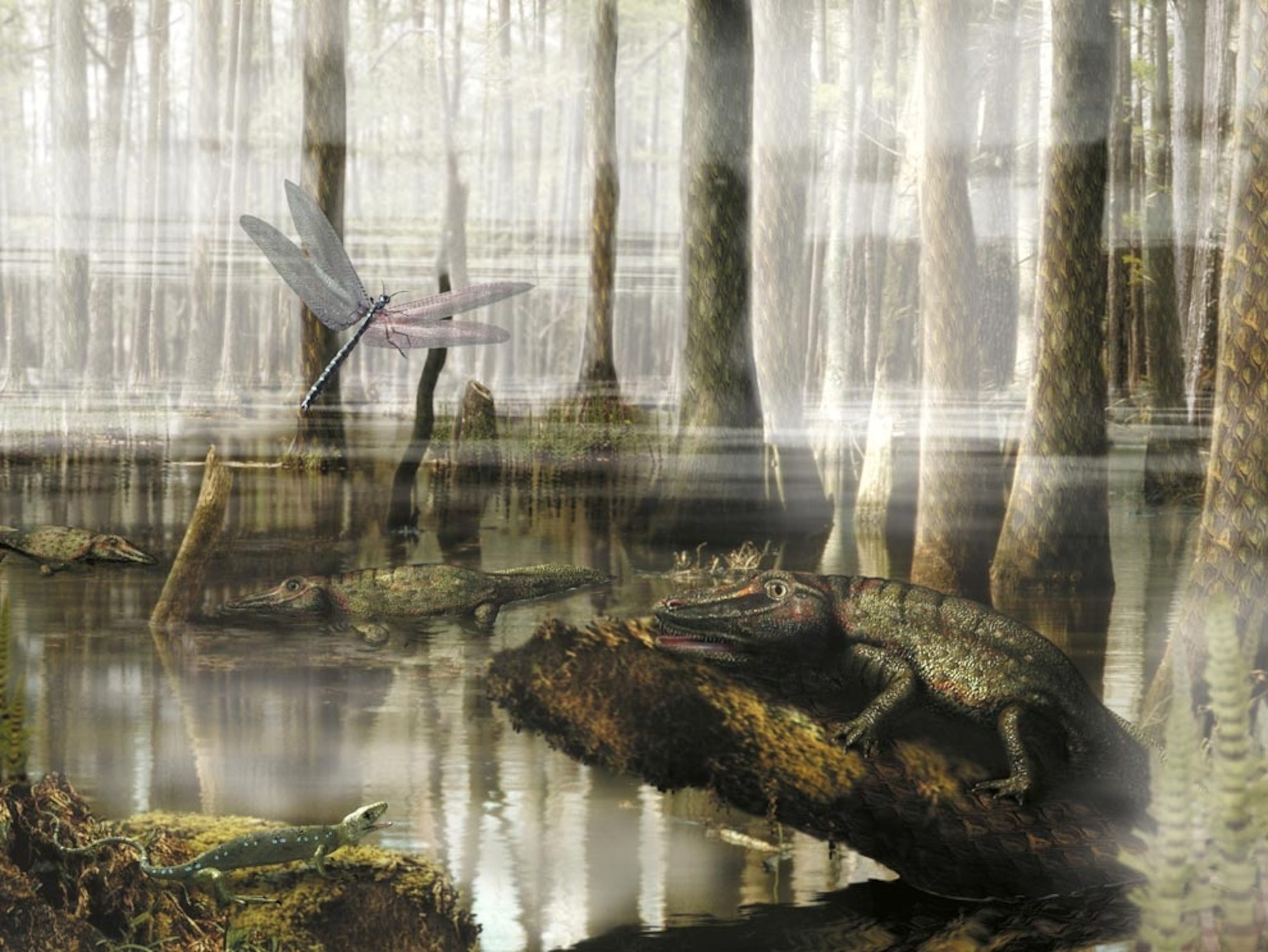
The swamp forests, their decay, gave us coal. It took millions of years, plus glaciation, followed by the advancing and receding of seas. When seas covered the swamps, marine sediments covered the peat. Heat, pressure, tectonic movement, millions of years, and then coal. In the final phase, anthracite, in its purest form, 90% carbon.
This too is history. It is certainly “prehistoric” in the sense there was no one there to record it, but geologists have fathomed those depths. They are continually writing the history of planet Earth.
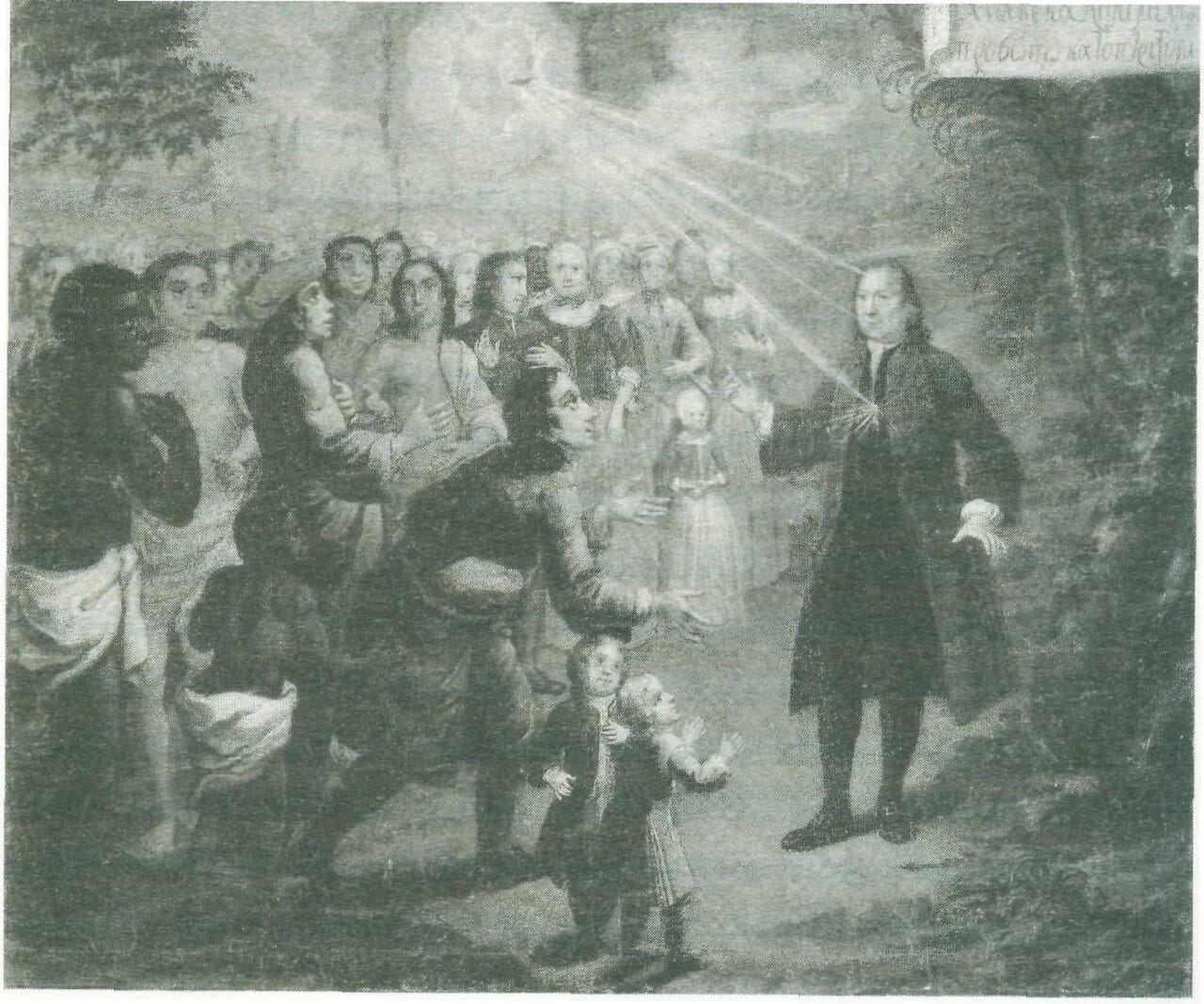
A cosmic leap forward in time to 1790. Necho Allen, a New Englander by birth, was travelling on foot, hunting, trapping, in Saint Anthony’s Wilderness. That’s how the anthracite region was called before coal defined its identity. The followers of Count Nickolaus Ludwig von Zinzendorf, a German proponent of religious freedom, an opponent of slavery, a bishop of the Moravian Church, chose that name. The Moravians were following the example of Saint Anthony, Abbot, a poor orphan who sought refuge in the wilderness to pray.
Anthony was a simple man. He neither wrote nor preached, but raised pigs and blessed the wild animals that shared his daily life. Yet, he became a light to the world. The Moravians, ready to brave the wilderness and inhabit in peace with native peoples, crossed the Atlantic from Bohemia and Germany, to follow in Anthony’s footsteps. Aided by Conrad Weiser, a go-between and interpreter for Europeans who wished to negotiate with Native American nations, Zinzendorf obtained for Moravian missionaries and settlers free passage in the colony of Pennsylvania.
That happened fifty years before Necho Allen stopped for the night at the foot of Broad Mountain, prime hunting ground for the Lenni-Lenape, who had inhabited these lands for well over ten thousand years. They called the Schuylkill River, the only route into the wilderness, Ganshowahanna, Falling Waters. Arendt Corssen, a trader for the Dutch East India Company, rebaptized it “hidden river” (Skokihl). The Schuylkill’s mouth was camouflaged by reeds, swamp grasses and sedge when he passed that way in the mid-17th century.
Corssen sought furs and riches. If only the river were navigable, if only the wilderness were hospitable. They were not.
A century later, such daunting conditions did not stop the Moravians from heading into the wilderness to pray and serve God. Nor did the near impenetrable forests prevent fortune hunters, trappers, intrepid farmers, and adventurers from heading further west from the river’s mouth at Philadelphia, to seek land and improbable wealth.
Was Necho Allen such a man?
He was a trapper, a hunter, a wanderer. He walked alone. At night he set up a makeshift camp and made a fire. Perhaps, over its flames, he roasted the meat of a squirrel shot during the day. Was Necho Allen a crack shot? Did he know how to shoot a squirrel in the head and not destroy the meat or hide? Or were squirrels so abundant that he could shoot indiscriminately, killing five, six, a dozen?
Squirrel meat is good, nutty, earthy, gamier than rabbit, more flavorful than chicken, when cooked over an open fire.
After eating, alone in the darkness, Allen spread out his bedroll next to his waning fire and went to sleep for the night.
He woke up in the morning surrounded by a glowing bed of coal.
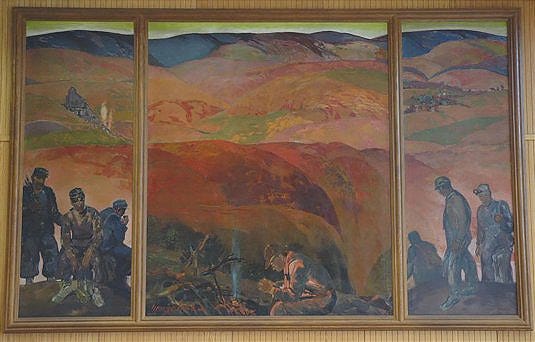
If you’ve grown up in Schuylkill County, you’ve had the experience. Walking in a peaty pine forest, you kick at the ground and unearth coal. It’s there, at the surface, for the taking.
To Necho Allen goes the distinction of having discovered coal near what would become Pottsville, the capital of the southern fields of anthracite. Coal, the town’s blessing and its curse.
After his discovery, Necho Allen did not leave the region. At the time of the War of 1812, he teamed up with Colonel George Shoemaker, Pottsville’s first burgess or mayor. Together they bought up land around the settlement and began extracting coal. In 1812, with no adequate roads, no navigable river, no canal, no railroads, Colonel Shoemaker transported nine wagonloads of coal to Philadelphia, where he was promptly driven out of town as a “swindler” because the coal would not ignite. Despite a serious fuel shortage in the city, Shoemaker sold only two wagonloads and gave the rest away.
Wilkes Barre’s first postmaster, Jacob Cist, was more successful. He sent coal down the Lehigh and Delaware Rivers, and in 1814 patented a stove to burn anthracite.
Anthony F.C. Wallace, in his 1987 book devoted to the mining town of Saint Clair, PA, where my father and his parents were born, describes coal mining as a “disaster-prone industry.” That it certainly was and those who first sought to exploit “black gold” often lost the shirt off their backs.
In the end, Colonel Shoemaker did alright for himself. He established Pottsville’s first luxury hotel, worthy of any establishment in Philadelphia or New York. In 1831 Penn Hall opened its doors at the corner of South Centre Street and Howard Avenue and remained in continuous operation until it was torn down in 1966. When I was a child, I remember wanting to sit on its second floor porch, running the entire length of the hotel’s façade. From that vantage point, I longed to look down on all the action on Centre Street, but I never even got inside. The Necho Allen Hotel, separated from Penn Hall by Sears Department Store, was only a few steps away.
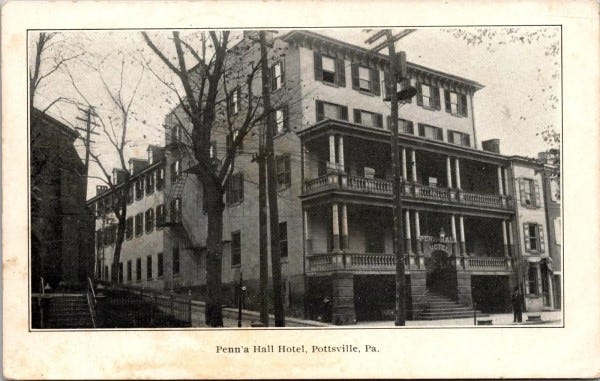
By 1831, Pottsville had placed itself firmly on the map, and Penn Hall often posted no vacancy. Businessmen and investors from up and down the East Coast and as far away as England were coming to town to observe Burd Patterson’s furnace, a marvel. Anthracite, hard to mine, hard to burn, required innovation. Already in 1833, Patterson had developed a slope method for getting at coal below the water table, proving it was possible to mine the deep and irregular veins. In 1839, he fired up his Pioneer Furnace, the first successful smelter of anthracite, proof to skeptics that it could be used in the production of iron.
Is it any wonder, then, that in 1845, Pennsylvanian historian I. Daniel Rupp wrote, “For anyone from Cape Cod to New Orleans, to say he had not heard of the renowned town of Pottsville would sound as marvelous as if an Arabian were to declare he had never heard of Mahomet.”
Construction of the Schuylkill Canal began in 1816 and by 1845, Rupp could write of Buckley Basin, Pottsville’s canal port, “From this port…, there is a fleet of more than four hundred vessels—a fleet more formidable than that which bore the Greeks to the Trojan War…”
Pottsville had it all: “The glory that was Greece, and the grandeur that was Rome,” to quote a line from Edgar Allan Poe’s 1845 poem “To Helen.”
In the 1950’s when I was born, Pottsville already had a whole lot less, but we didn’t know it yet. We believed in progress and prosperity. We believed the ads on TV and the pictures in glossy magazines. Excelsior! Ever upwards! That’s the only way life could go.
Geology, swamp forests, glaciers, advancing and receding seas, heat, pressure, millions of years, that’s what it took to produce anthracite.
The Kingdom of Coal rose and fell in one short century. Too much risk, too many hopes, surely too much greed. Those of us born in the kingdom have inherited a complex legacy.
I want to explore it, explore “my” Pottsville, my story, because they too are History.
I can't help wondering what that opening view from Sharp mountain would look like today. Is there anything of similar perspective by a contemporary regional artist? Once again, I love the blending of painting, photography, literary quotation, history, geography, and geological fact with personal remembrance and reflection offered here. This unique, yet ever-changing combination, along with deep appreciation and knowledge of place, is Nancy's special gift to us, and the hallmark of her writing.
Hi Nancy,
Love your site and think you might be interested in my work. You can see it on rayklimek.com.
The series Transatlantic Seam might be of particular interest