

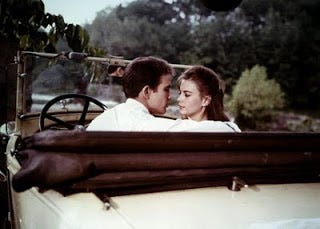
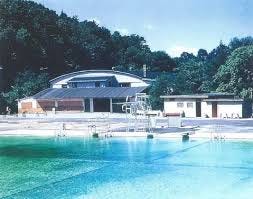
How do people fall in love today? Many do it without the play of chance, without the formal introductions organized by well-meaning relatives or friends, without the dances at the Y or the high school gym. For people from Schuylkill County about my age, we had the dances with the Jordan Brothers at Willow Lake. Inside the pavilion we would grind in our partner’s arms to “Heart, I hear you beating” (thump thump thump thump) and then make out in the dark.
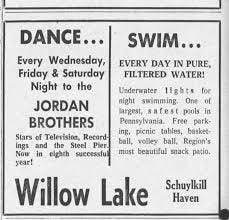
Back then, no internet, no deluge of pornography at the swipe of a finger, no selfies, no AI. Sometimes we peeked into the pages of Playboy, but it was not easy to get our hands on one. In a pinch, the family’s one-volume medical encyclopedia had to do if we wanted to figure out how things worked.
The first time I ever kissed, it was during a game of “spin-the-bottle,” I met my first boyfriend at the Pottsville pool. I fell in love for the first time at Willow Lake. It was late September, we were on the cusp of autumn, but summer’s humid heat was still in the air. I remember what I was wearing, a red-white-and-blue dirndl skirt, a sleeveless white top. I had wanted to stay home. My two best friends dragged me out. He grabbed my bare arm just as I was entering the dance.
The line, a classic: “How come I’ve never seen you around here before?”
I ended up abandoning my girlfriends and he drove me home in his red MG convertible meant to sweep any girl off her feet. When he dropped me off, we agreed to see each other again.
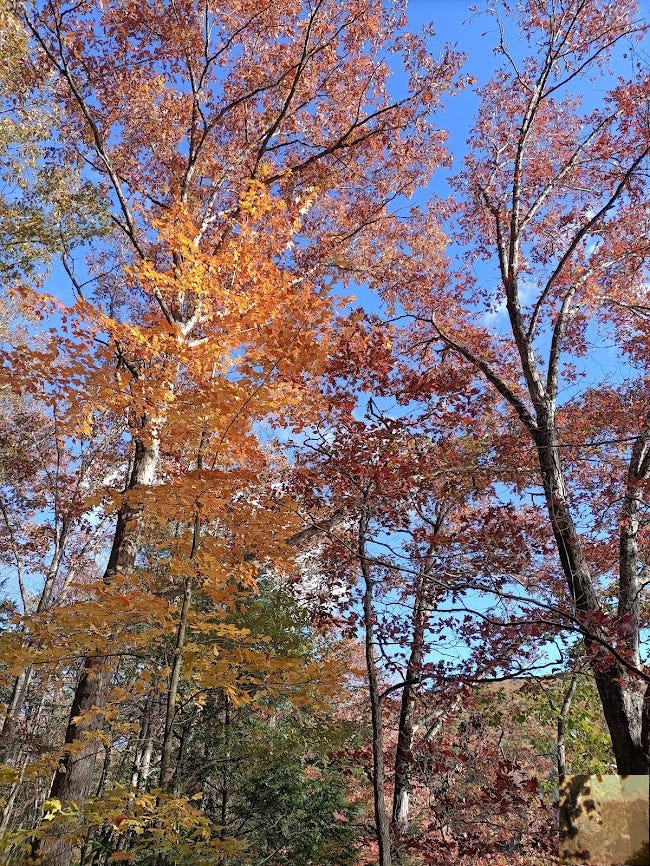
Our love began in autumn. I was a senior in high school, he was already in college. Falling in love was suffused with golden sunshine, brilliant blue skies, hillsides ablaze with color, fields of drying, rattling cornstalks, and haystacks, the old-fashioned kind, pitched with a fork and tufted on top, long dark shadows stretching in the burnt-orange light of sunset.
We were young. We loved each other. I believe today our love was sincere. It filled us with energy and creativity. He wrote folk songs. I drew his portrait with pastels. We took the bus to New York City and visited art museums. We listened to music on his stereo, Neil Young and Loudon Wainwright III, whose songs gave a tint of nostalgia to a love that had just begun. Elton John had his first hit, “Your Song,” and we made it ours.
Inspired by the spare prose of Ernest Hemingway, he wanted to become a novelist. I was less sure, less confident, but I knew I wanted more, more world, more life. He was surprised when, a couple of years into our love, I announced my choice to travel to France on my own for a year. I thought he’d wait for me.
He didn’t. He met someone else. She got pregnant. They married. She lost the child and a year later they divorced. I found out about the marriage in a phone booth in a post office in Paris on Christmas eve 1973.
First loves are made to end and often they do not end well. Happily, there are exceptions, life-long loves that begin young, and there’s nothing better than love that lasts. Ours didn’t, and as naively as I set off alone to France, just as naively my heart was broken and it took a long time to put it back together again.
Meanwhile I found solace in a movie and in poetry. The poem I have reread many times: William Wordsworth’s “Ode on Intimations of Immortality.” The movie’s title, also the title of this article, is composed of a few words of a line of verse taken from the poem.
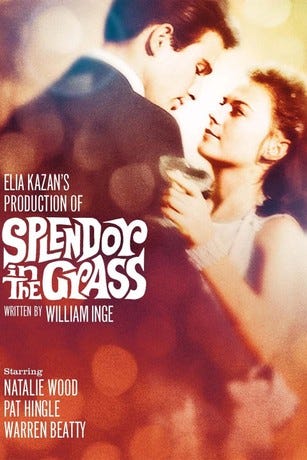
How would I feel, I wonder, if I watched “Splendor in the Grass” today? At the time, it seemed to be reaching out to me, talking to me and about me. The film tells a simple story. A girl and boy are in love. The girl comes from a middle-class family, the boy is the son of the richest man in their Oklahoma town in the year 1929. He is the handsome Warren Beatty in his first cinematic role. She is the beautiful and fragile Nathalie Wood.
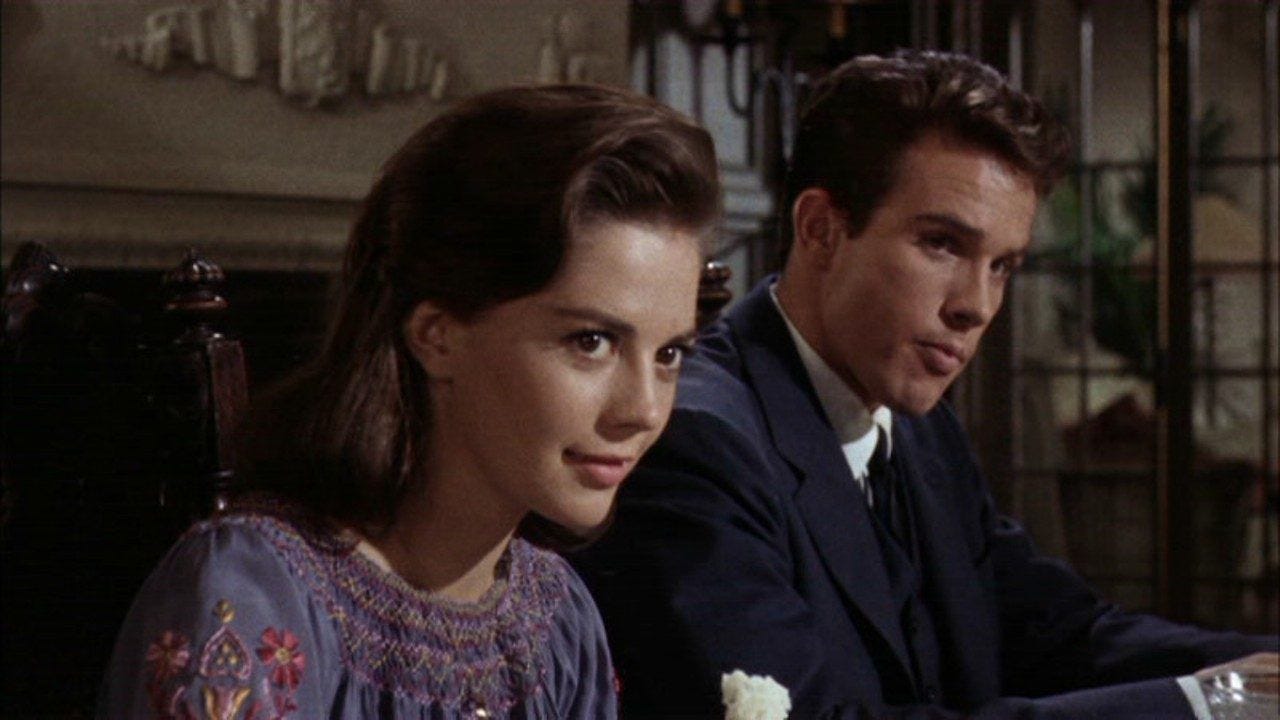
The film was first released in 1961 to mixed reviews, some critics finding the story exaggerated, even maudlin. Viewing it as a young woman, it didn’t seem that way to me. Bud (Warren Beatty) breaks up with Deanie (Nathalie Wood), feeling things are going too far. Deanie falls apart and her parents place her in an asylum. Bud goes off to Yale, does poorly, and his wealthy father commits suicide after having lost everything in the crash of ’29.
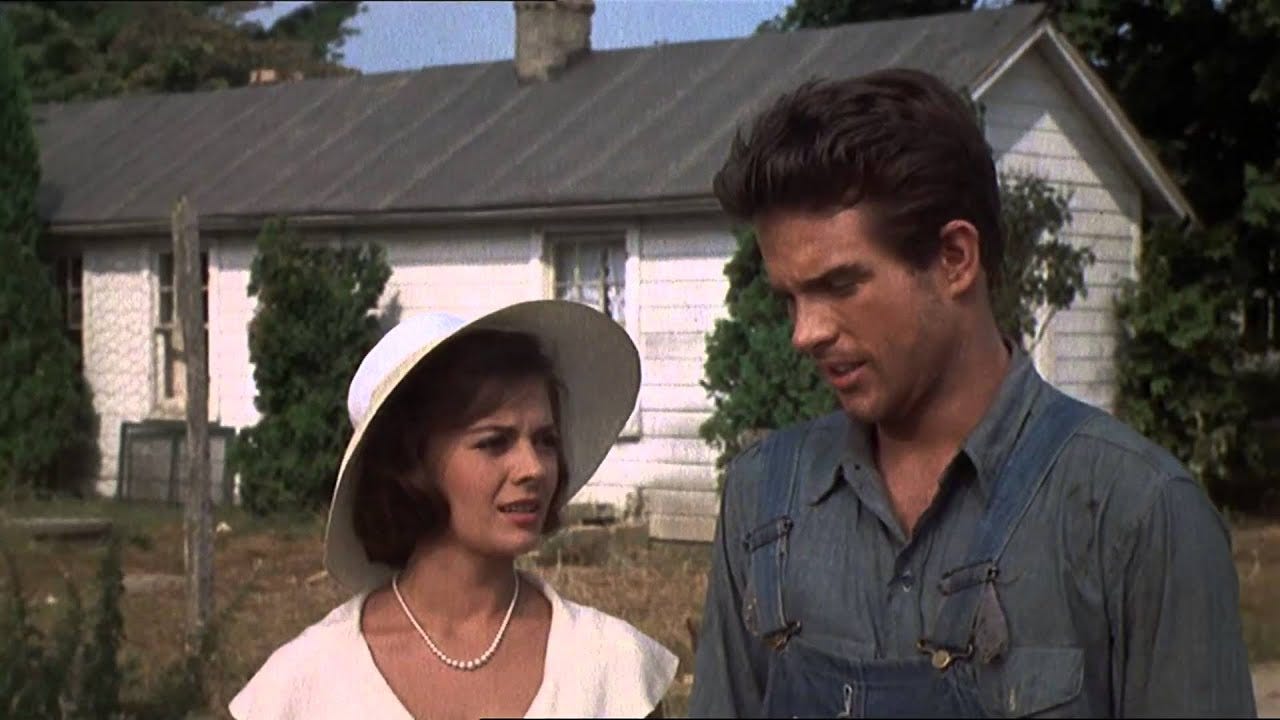
When Bud returns to Oklahoma, he is a father, married to Angelina, the daughter of the owner of the family-run Italian restaurant where he sought refuge while at Yale. He takes over a small family farm, all that remains of his father’s fortune. Deanie returns home too, “cured,” engaged to a doctor, a fellow patient met at the asylum.
They meet one last time before Deanie heads East to join her husband-to-be.
“What’s the point,” says Bud. “You gotta take what comes.”
Both agree they “don’t think about happiness very much anymore.”
It is a moment of poignant beauty, of young love laid to rest.
The movie ends with a voice-over of Deanie reciting words from Wordsworth’s poem:
Though nothing that can bring back the hour
Of splendour in the grass, of glory in the hour;
We will grieve not, rather find
Strength in what remains behind…
I mourned my first love for a long time, too long perhaps, but I realize now that losing him came quickly upon the loss of my father, who died two years before that young man grabbed my arm at the Willow Lake dance.
Wordsworth, writing his recollections of youth, expressed pain for what is gone, but in nature he found even greater beauty than when he was a child.
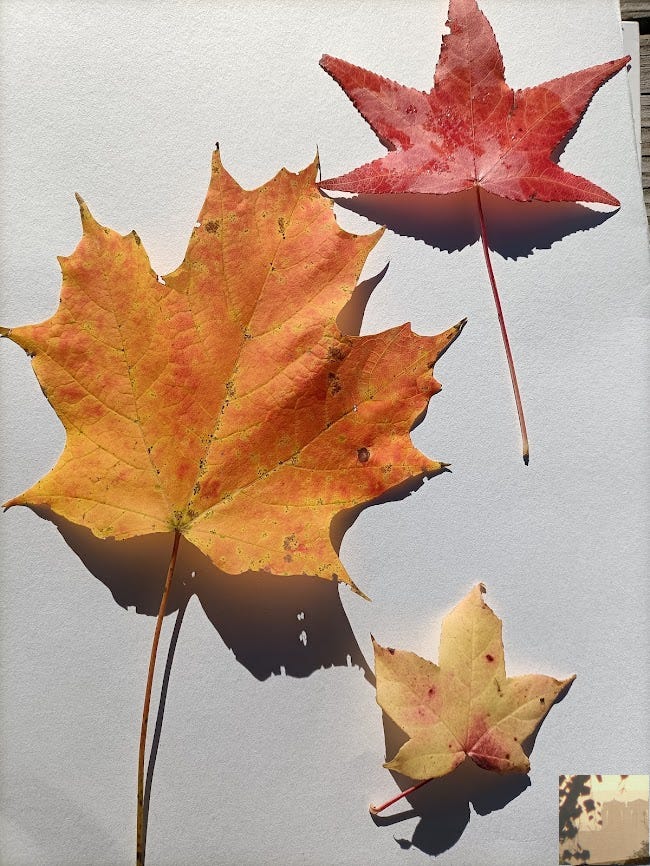
I remember my first love as I experience a Pennsylvania fall for the first time in nearly 40 years. The golden, blazing, almost violent beauty sometimes takes my breath away. Yet a single fallen leaf, yellow speckled orange, purple spots bleeding red, is a promise of beauty till I die.
And I’ll leave the last words to Wordsworth:
To me the meanest flower that blows can give
Thoughts that do often lie too deep for tears.