

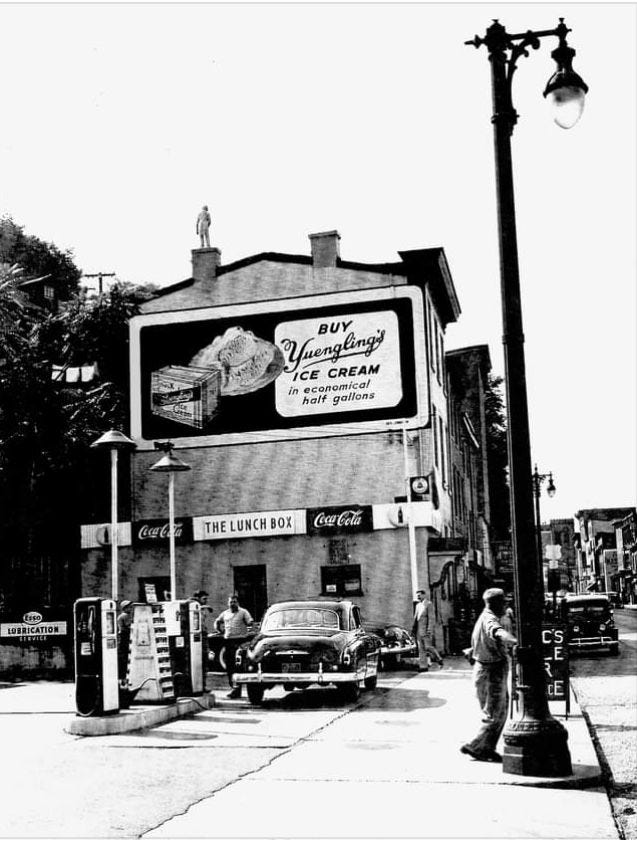
People used to go for rides. It was an activity for a Sunday afternoon, after the roast beef, mashed potatoes and frozen peas, jello mixed with whipped cream sprayed from an aerosol can; after cigarettes and coffee for the adults, as children watched, impatient for the coffee cups to empty, fearing parents might light up another cigarette.
Gas cost 30 cents a gallon though there were places where you could get it for 25. Competition was fierce. You pulled up to the pump, an attendant rushed out.
“Fill ‘er up?”
You sat back and relaxed, the window rolled down, an easy arm resting on the door. Remember, those of you who were alive back then, the beautiful tan on some men’s left arms? In summer, they drove, the window down, their forearms soaking up the sun, their flesh tawny, their Fruit-of-the-Loom t-shirt, its sleeves rolled up, pristine white.
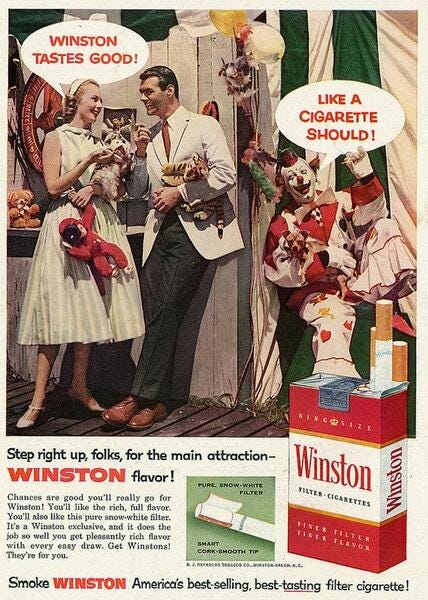
Windshield washed; oil checked; for longer trips, the attendant whipped out the pressure gauge and checked all four tires. All the while, you don’t budge from your seat, unless you need a pack of cigarettes. You root in your pants pocket, take out a quarter, walk to the machine conveniently located between the open garage (a car raised on a hydraulic life, a “grease monkey” working underneath) and the office, a counter, a cash register, a desk, behind plate glass. You drop in the coin, pull on the knob corresponding to your brand (Winston tastes good like a cigarette should); a pack falls into a trough. You pick it up. You’re set.
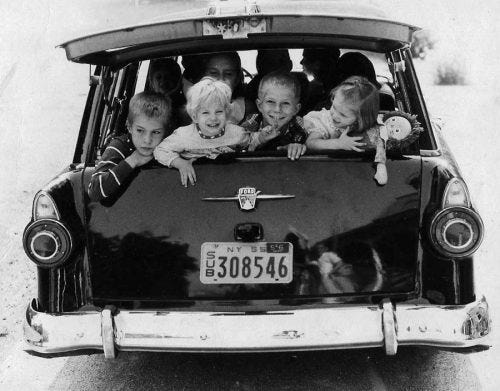
When you return to the driver’s seat—by this time the kids bouncing in the back, your wife, her shoulders twisted, straining her neck, as she tells them to calm down, the attendant, as deferential as a valet, helps you close the door. You hold out three ones. He gives you your change. You slip him a dime for his trouble.
That’s how it used to be, the Sunday ride in the Ford Galaxy, the Chevy Bel-Air, the Rambler Cross-Country wagon. The V-8 engine purred, the car floated on its suspension, the ride, smooth and effortless. No seatbelts, no airbags. A bad accident, dead or maimed for life.
The 1950’s, a carefree time—at least on the surface. Custom-made kitchens, automatic washing machines, each summer a week at the shore. For men, a great time for forgetting what they had seen in the war. Nothing like normalcy to numb the brain. Alcohol and cigarettes help too.
In my family there were tensions. My father stayed out late on Saturday nights. He went to roadhouses with his war buddies. They stayed out all night, had breakfast, finnan haddie, home-fries, eggs, at the Sheridan Diner on South Centre Street. My father slept off Saturday nights on Sunday mornings. My parents’ bedroom smelled like beer. My mother got up early, drove us to Sunday School, and then went home to put the roast in the oven.
Sometimes my father had Sunday dinner in his pajamas. My mother did not like that. My mother did not go for the ride. She kept my younger sisters home too. Most often my dad and I set off alone. No ice cream, no sodas in a diner—that would have been unfair to the others, but lots of miles.
My father and I did not talk a lot during those rides. We did not talk a lot in general, and sometimes he was unfair to me. I was overweight and tall for my age. I think this made him ashamed. He wanted a daughter who was petite. But he bought me books—or borrowed them from the store where he worked, and when I asked for a piano for my ninth birthday, he bought me one for 25 dollars.
We visited the giant steam shovel somewhere to the north of Pottsville. It was at the bottom of a stripping pit. The landscape was bleak, no trees, no brush, icy bare ground, merciless wind. We got out of the car and stood at the edge. Down below the giant shovel lumbered on caterpillar tracks, the bucket swinging on its dipper. When it dug into the slate, earth and coal, it took a monstrous bite out of the rock, setting off a landslide of rubble, an echoing rumble. I had never seen a machine so big.
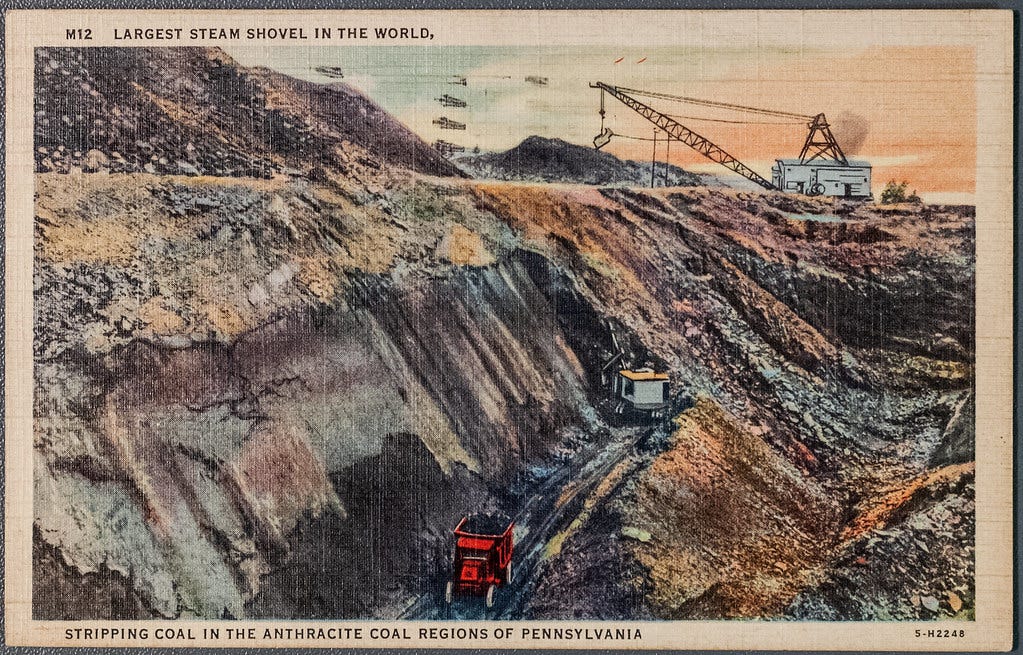
Sometimes my father talked to me as if I were a child. He told me the steam shovel was alive. It worked alone, in no need of human assistance, day or night. The sides of the open-pit mine were sheer. No matter, that shovel could scramble up and down any incline with the weight-defying ease and grace of a common spider.
I believed him. I lay in bed at night fearing the giant shovel. I saw it creeping in eerie silence, its caterpillar tracks advancing as if on thin air, buoyed by the stuff nightmares are made of, until outside my bedroom window, it stopped. Who says the giant bucket couldn’t melt, steel turning molten just the time it took to grab me from my bed? Then it would carry me away, back to the dark pit, a metaphor for hell if there ever was one.
We did not go to a diner or the Tastee-Freeze, but often at the end of the ride we went to a bar, dark even in the middle of the afternoon, the only light coming from the rainbow colors of the big Wurlitzer jukebox. My dad had a Manhattan. He ordered a Shirley Temple for me. Grenadine syrup turning 7Up red, an almost florescent maraschino cherry (what kind of red food dye were they using back then?) with a bright red stem, speared on a plastic cocktail pick. I felt very grownup.
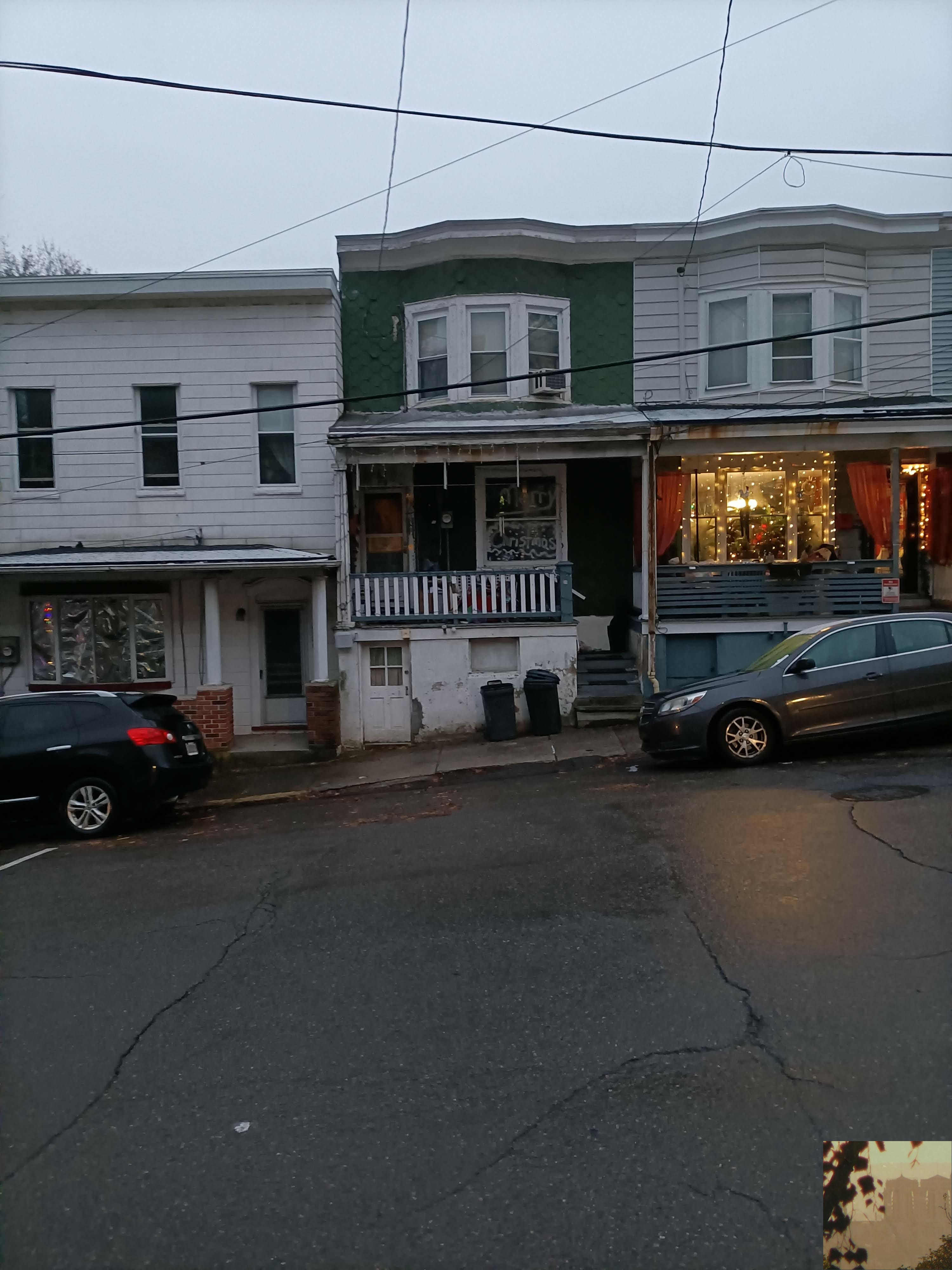
My paternal grandfather was a coalminer. He got Black lung. Retired early on a meager pension. My father’s family was poor. Standing today in front of the home where my grandparents lived, I wonder why I never noticed as a child.
My grandfather went down into the pit, into the darkness, the only light provided by the lamp attached to his Coal King miner’s helmet. He knew the bowels of the earth.
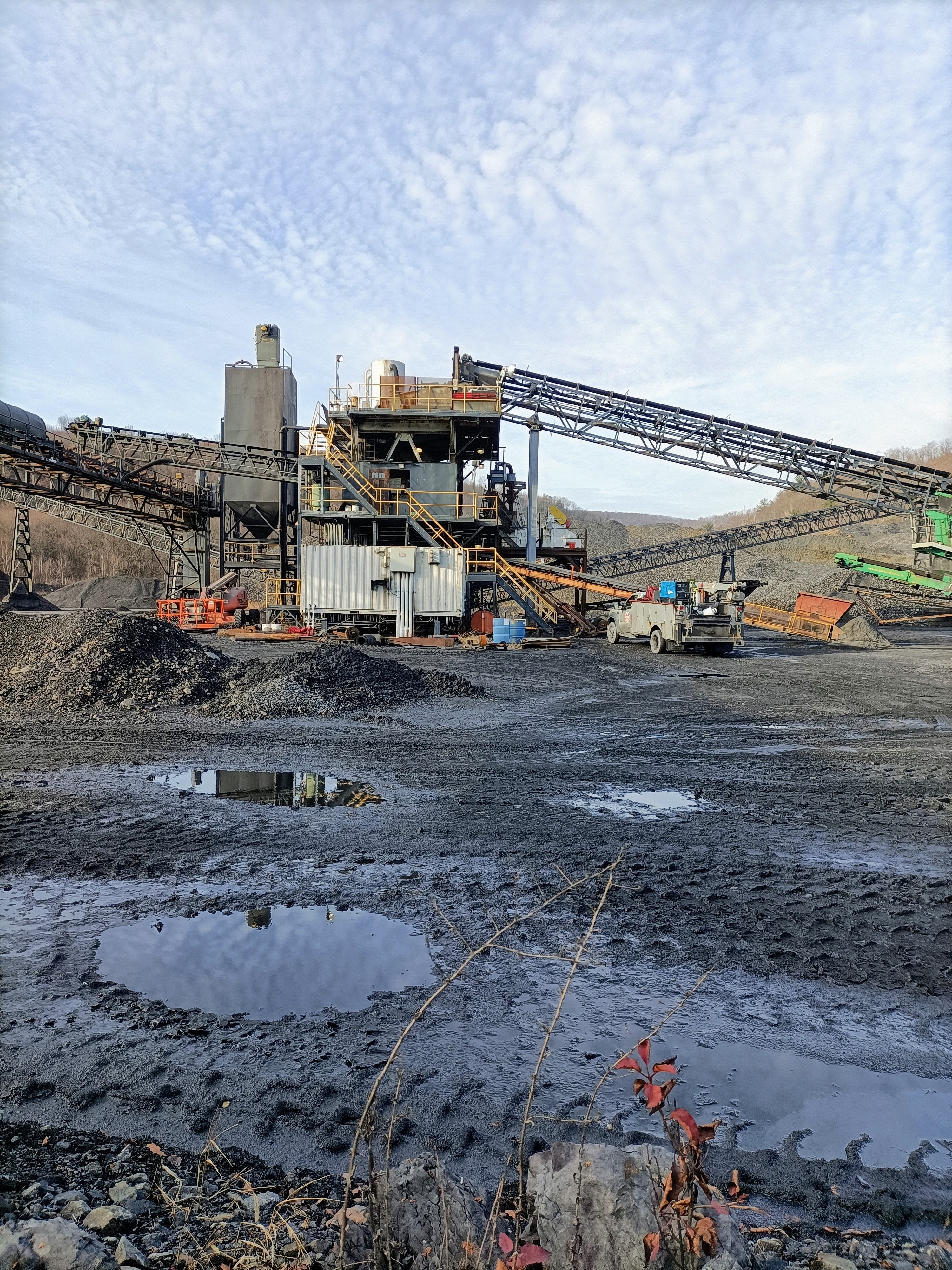
Strip-mining got rid of the proud miners. Shovel operators, truck drivers, automated breakers, the need for fewer men, gashes on the surface of the earth visible for miles around.
The war sent the men home and abruptly they returned to normal life (whatever that means!). For some, the war, the best days of their lives. For others, unspeakable horrors. My father talked about it with his buddies but not with us.
Except once, riding in the car, after a visit to the pit.
“After what I saw in the Philippines, it doesn’t really matter if I live or die.”
My father died young and, at least to me, he never said anything more about the war.
Nancy, I am consistently in wonder at your visual recall, and how precisely, yet evocatively you call up even the smallest details. I was at that Sunday roast beef dinner, on that Sunday drive, and could see the dim light, smell the beer, at the bar with you and your father. And from there, I could not help but taste the special treat of orange soda I was served at the bar my grandfather (the only drinker in our family) would secretly take me to on Saturday afternoon drives in his big, black Edsel. What I am trying to say is that the exactitude of your descriptions, their very specificity, conveys your own experience in a way that sparks deep memories within me, too. Yes, it is true that we shared a small-town Pennsylvania childhood, had fathers who fought in WWII, and coal minor grandfathers. BUT--and this is probably the most exceptional quality for me--the very specificity of time and place in your work not only causes me to recall telling details and moments of my own past, but opens up a much larger picture--a whole time and generation now gone by, revealing the universal in the particular. I cannot but believe that this would be true for many readers, not only those whose backgrounds are similar to ours. How, I wonder, would your French readers respond, or younger readers born in very different times, with very different memories and childhoods? This is incredible work, Nancy. Keep writing. Gayle
“Sunday Drive” brings back wonderful memories and made me smile. Thank you.
Lillian