
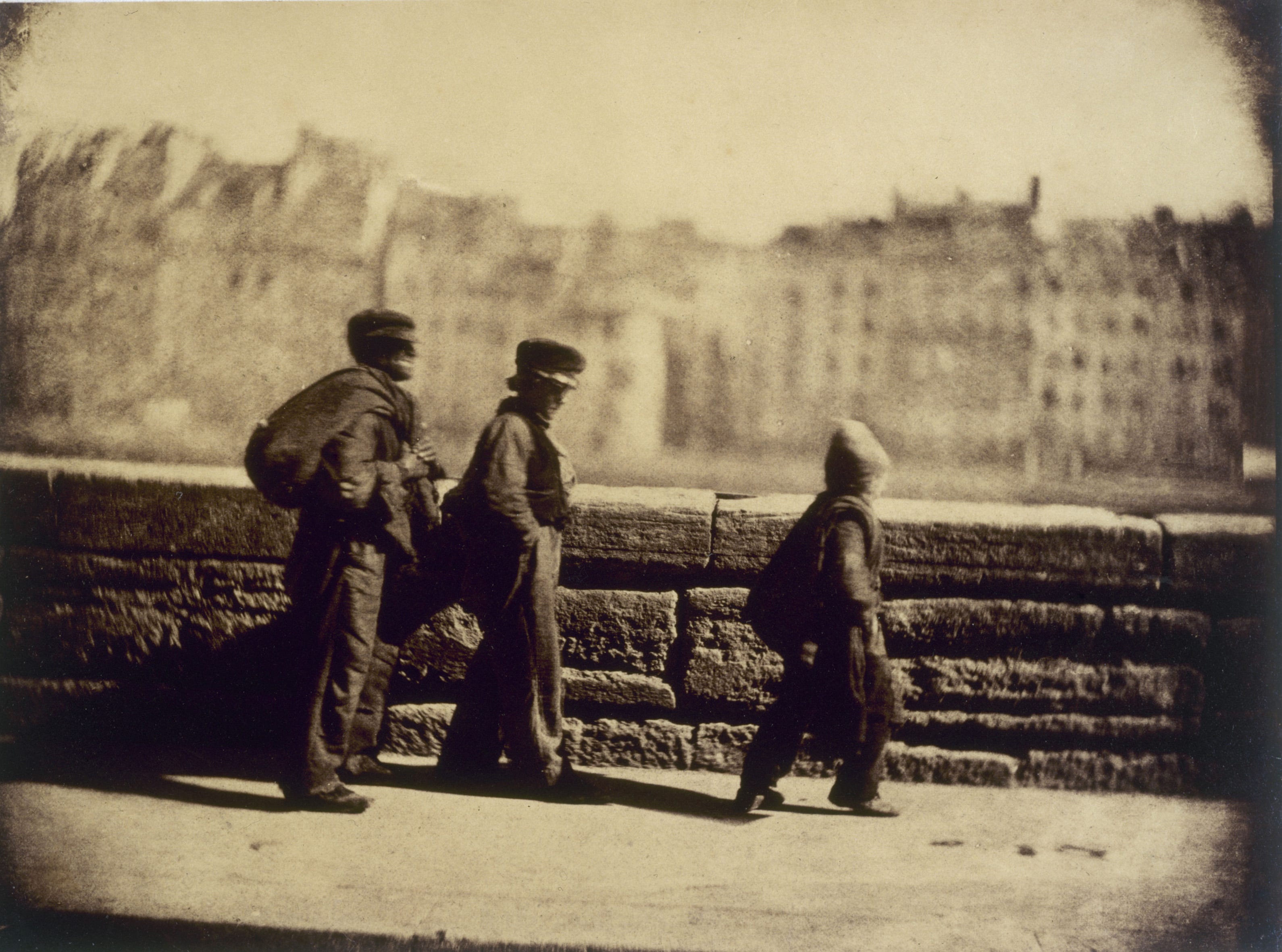
The Chimney Sweep
Keeping a fire burning in the chimney is hard work, but a glowing hearth is the perfect place for revery.

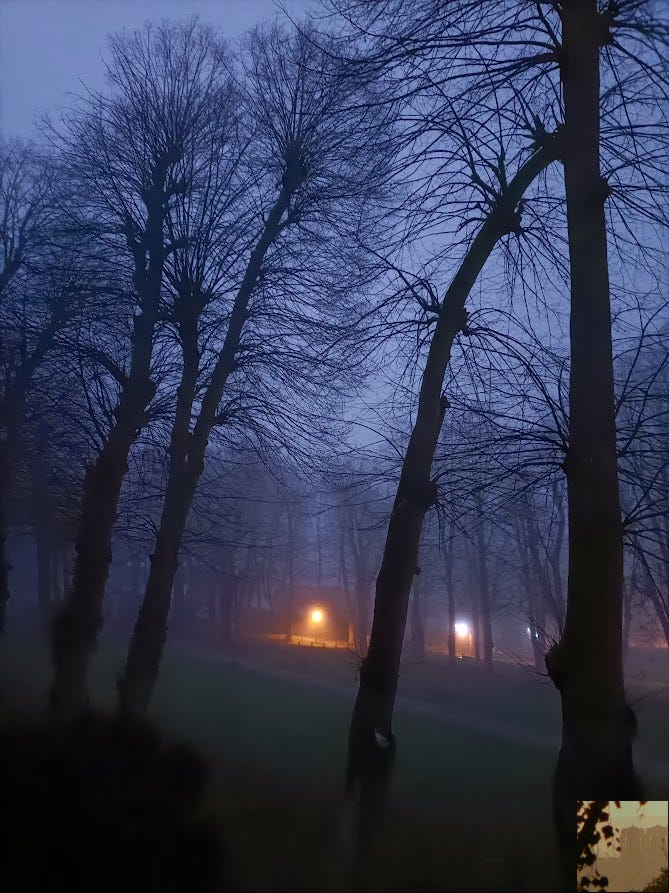
The icy fog descends to the ground. The linden trees, bare spindles, steal their way into view and reveal themselves for what they are. They tower, some, six stories high, but their naked trunks, without the protection of leaves, look sickly and frail. Years ago, they were trimmed by a team of bungling tree surgeons. Since then, the trees grow ever higher, but they do not fill out.
In its full mid-June glory, when its branches buzz with bees seeking nectar from the sweet flowers that smother us in scent, the linden tree looks like a fat ripe pear sitting on a trunk.

Today those outside my window look more like an army of black chimney brushes scratching at the sky.
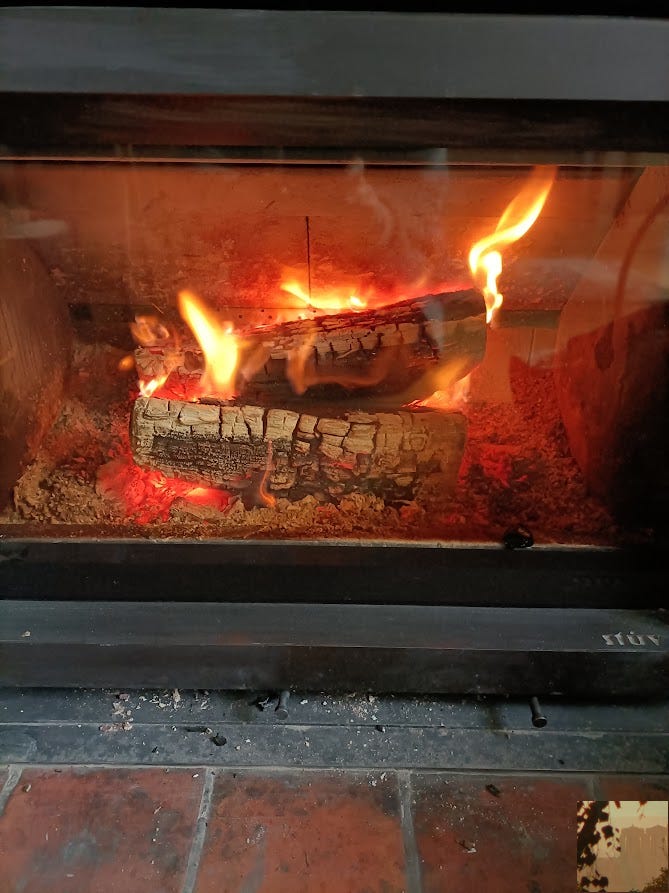
I sit in front of the fire. I had no trouble starting it today. By early morning I had a radiant blaze, the result of the routine I follow every winter day. First I sweep up yesterday’s ashes and clean the grate. Next I put a lot of elbow grease into removing the soot from the glass window of the chimney insert. I cannot imagine starting the day without a clear pane of glass, without a view of logs aflame. To clean I use ash and wet paper, recycling the thin paper bags I get at the boulangerie where I buy bread. I used to depend on newsprint. These days, I read “the paper” on my phone.
No fire without wood. Mine is stored in a well-aired basement, my cave, as it’s called in French, a strangely appropriate term for a place, in this case, traversed by underground streams gushing from an underground spring. You could also call it a grotto, which comes from the Latin word for crypt. To descend into its depths, I must first go outside and down the entrance steps of le Domaine, the name of the residence where I live. Today my feet almost flew out from under me. The steps were covered with black ice.
I took a pause from la corvée du bois, the thankless task of lugging wood, to salt and cinder the stone stairs.
Then I had still another flight of stairs to descend and salt before I reached the basement, a long drafty corridor with several gray doors. Mine is solid wood on the bottom, but on top, it is slatted, letting in a steady stream of air. Before I finally descend three more steps to the floor of my cave, I gingerly step over a cement ledge meant to keep the overflow of the underground stream out. At that stage, I never forget to lift my feet high. One moment of inattention and I’m a goner! I fill my caddie—that’s the French name for a personal shopping cart—with wood. Then I drag it up all the stairs and empty it in my apartment, which, happily, is on the first floor.
At this time of year, with many below-freezing days, I go through a lot of wood. I love the fire, but it takes its toll. My hands are dry and rough, my knees hurt from so much bending, and sometimes I feel like a beast of burden, hauling caddie after caddie filled with logs. All of the above, plus the distinctly 19th century feel of my apartment, make me feel as if I were living in another age.
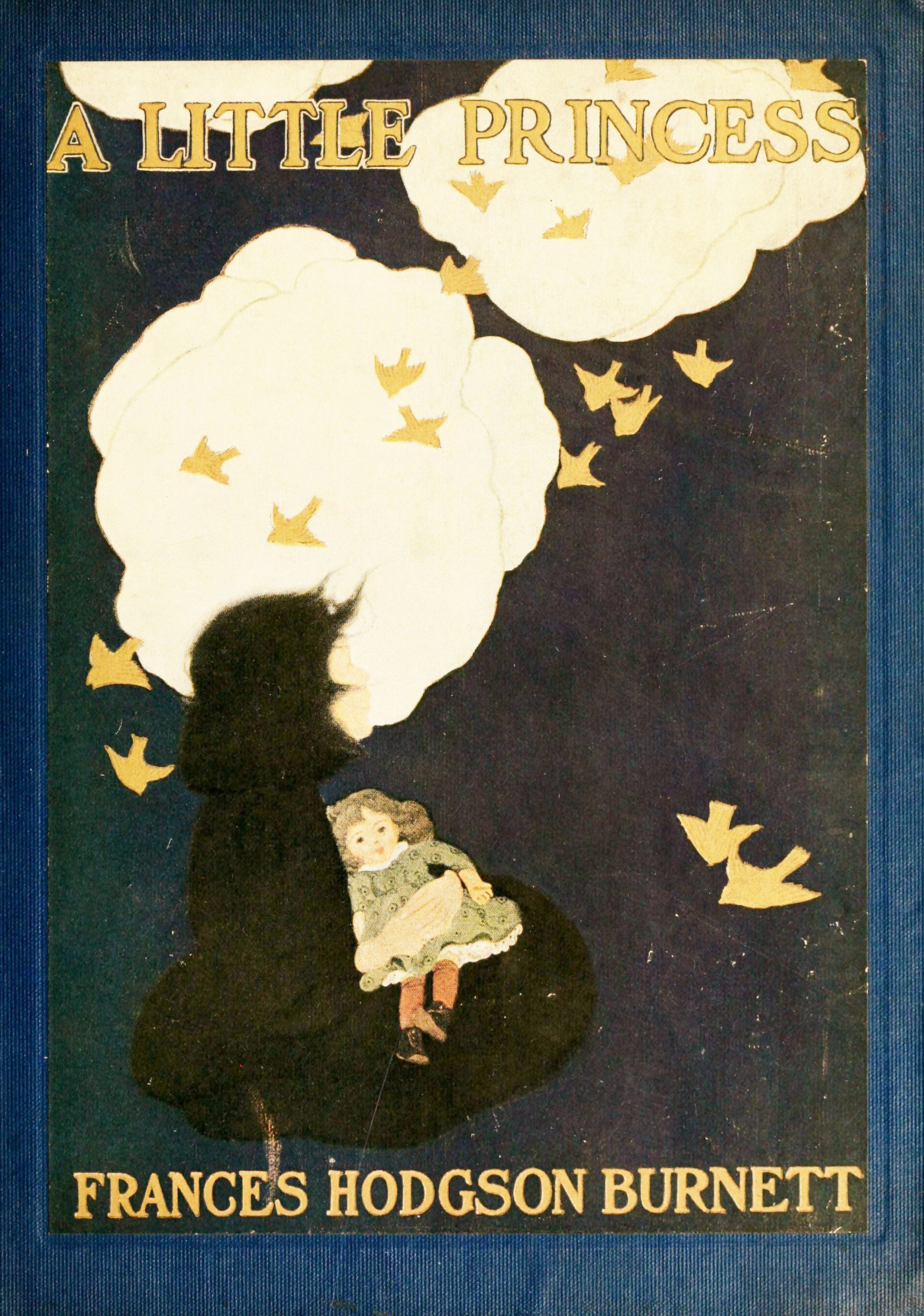
When I was a little girl, one of my favorite books was A Little Princess by Frances Hodgson Burnett. It was also made into a movie, “The Little Princess,” with Shirely Temple in 1939. It is the story of a motherless girl, very wealthy, very kind, placed in Miss Minchin’s London boarding school for girls while her father serves Queen Victoria in India. When he disappears and there’s no one to pay the bills, Sarah Crewe, his daughter, is made to clean the grates and carry buckets of coal to her recent schoolmates still ensconced in a world of warmth, comfort and privilege.
Sitting next to me, I have the first American edition of the book published by Charles Scribner’s Sons in 1905, with stunning illustrations by Philadelphia-born artist Ethel Franklin Betts. Today as when I was a child, I am moved by the artist’s power to draw me in, not only to the story but to the Victorian world of excessive wealth and glaring poverty existing side by side. I look at Sarah in her unheated garret room, a patched and worn blanket thrown on her cot. I watch as she gives her hot rolls to a beggar girl wrapped in rags, crouched outside a bakery whose window glows, filled with sweets and cakes, as night falls over London.
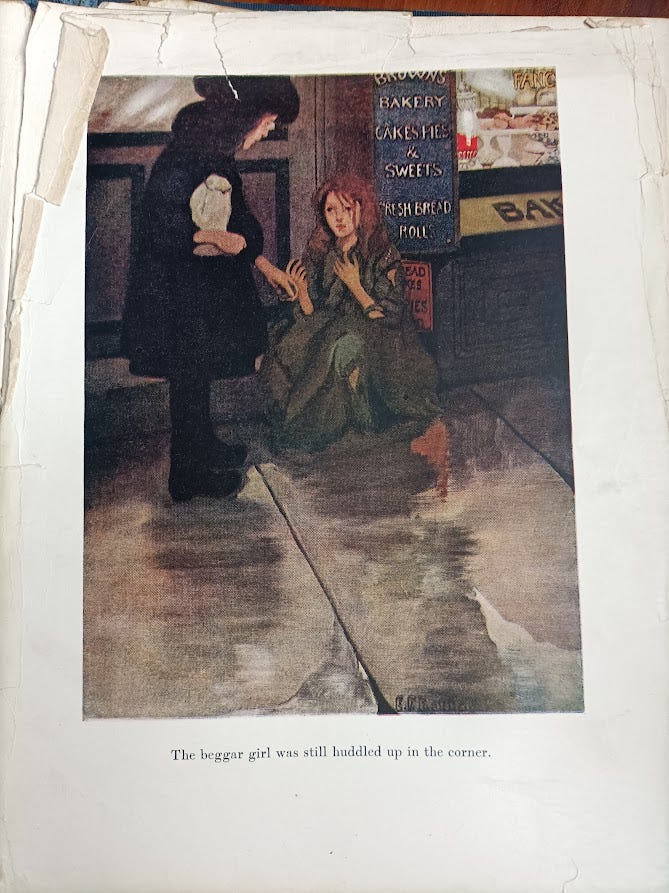
The cover of the book, mine scratched and faded by time, remains a haunting composition. Sarah is dressed in black, as were many of her contemporaries, girls born into “service,” working as maids, doing the lowliest of tasks, making fires, cleaning grates, emptying chamber pots, at the constant beck and call of those they served, lucky if they ever learned to write their name.
On the cover, Sarah’s head is turned from the reader and we barely perceive her profile. In her arms, she clutches her doll, all that remains of her former life. Around her shoulders, a threadbare shawl, her only protection against the cold. She looks up at the sky, a beautiful teal blue, big puffs of white clouds, against which swallows fly. Admiring it, I can almost feel a brisk spring breeze, still cold but with a promise of better times.
Life used to be much harder. Imagine doing the dishes, washing clothes—or yourself, cleaning the floor, if you had no running water in the house. Imagine carrying water from a communal well or gleaning wood or coal, as some of our coal-region ancestors did near the culm banks or along the railroad tracks. Imagine being without food or heat. We don’t have to look so far back in time to find examples of this in our forebearers’ lives.
I play at living in the past just as I play at fire—not to say it doesn’t help me reduce my heating bill. Sometimes I stare at the fire in the evening and it draws me in, better than any series or movie on Netflix. Every day it is different and it speaks in many tongues. A fire is a presence. Notice that “heart” is enclosed within “hearth.”
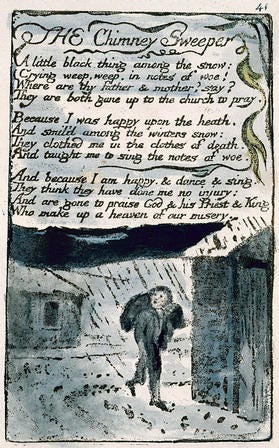
At the end of the 18th century, the English poet William Blake published two poems with the same title, “The Chimney Sweeper,” in his Songs of Innocence and Experience. These poems have the simple rhymes and cadences of a nursery rhyme—and the power to expose the cruelty and hypocrisy of a society that sent children as young as four out to work. The chimney sweeper, of necessity a child, climbed on roofs, climbed down chimneys, his head shaved so his hair would not catch fire. He worked from dawn to dusk for a pittance, often sold by his parents so their other children could eat.
In “hearth” we find “heart;” in “sweep” we hear the echo of children “weeping,” deprived of childhood.
A fire is a source of warmth, a source of wealth. It has a power far beyond that of TikTok, Instagram, Facebook and X combined.
Great writing Nancy. I love all your articles my friend.