

Creating a New Generation of Artists and Environmental Stewards
When we explore nature through art, it makes a lasting imprint on our minds. It also awakens our imaginations to nature’s lifesaving wonders. Through observing, learning, and creating, we come to better understand our environment. More aware, we can make others aware through art.
This is the goal of an ambitious program dedicated to environmental stewardship conceived by Dr. Richard Mackrell, Asst. Director of STEM & Innovative Practices at Luzerne Intermediate Unit #18 in Kingston, PA. It has been put into practice by a talented team of artists and environmentalists, along with the talented students of Pittston Area Middle School and Heights-Murray Elementary School in Wilkes Barre, PA, both located in Environmental Justice Areas, zones where pollution places an unfair burden on inhabitants.
This program, “Engaging School Communities in Environmental Stewardship through the Visual Arts,” financed and supported by the PA Department of Environmental Protection, was launched in January of this year and ended with an exhibit of students’ work at Fine Arts Fiesta in Wilkes Barre in May 2026.
In between the students had the opportunity to work with “Bob and the Gang,” Robert E. Hughes and other members of Eastern Pennsylvania Coalition of Abandoned Mine Reclamation (EPCAMR), a non-profit organization dedicated to reducing health risks around abandoned mine lands while finding ways to put them to productive use. Bob taught students about the history of coal mining, the hard life of miners, and the devastation left behind. His most important lesson: reclamation does not erase damage. It seeks to stabilize and find new uses for land and waste.

Students also met with education specialists from the PA Department of Conservation and Natural Resources, who spoke to them of the essential role of wetlands in preserving all forms of life on Earth—including ours. They also brought samples of macroinvertebrates, small aquatic organisms such as snails, dragon flies and crayfish that live on riverbeds and serve as key indicators of water quality.
Then the artists stepped in, four artist-teachers from the Armature, a center for the arts in Archbald, PA, providing school and community-based programs in dance, music, writing and the visual arts. These four artists, Mark Ciocca, Stephanie Colarusso, Leigh Pawling, and Gina Rice, actively encouraged students to turn history, nature, environmental science, reclamation, and chemistry, into art.
Let’s begin with reclamation and chemistry. Take some iron oxide sourced from mine runoff in the Pittston area. Mix it with nails and vinegar, let the mixture sit for several hours. Filter and drain, simmer, then dry it in an oven. Grind and store it in airtight jars and you’ll get pigments ranging from yellow to red to brown to black. Since the earliest cave paintings known to humankind, this is how artists have been doing it.

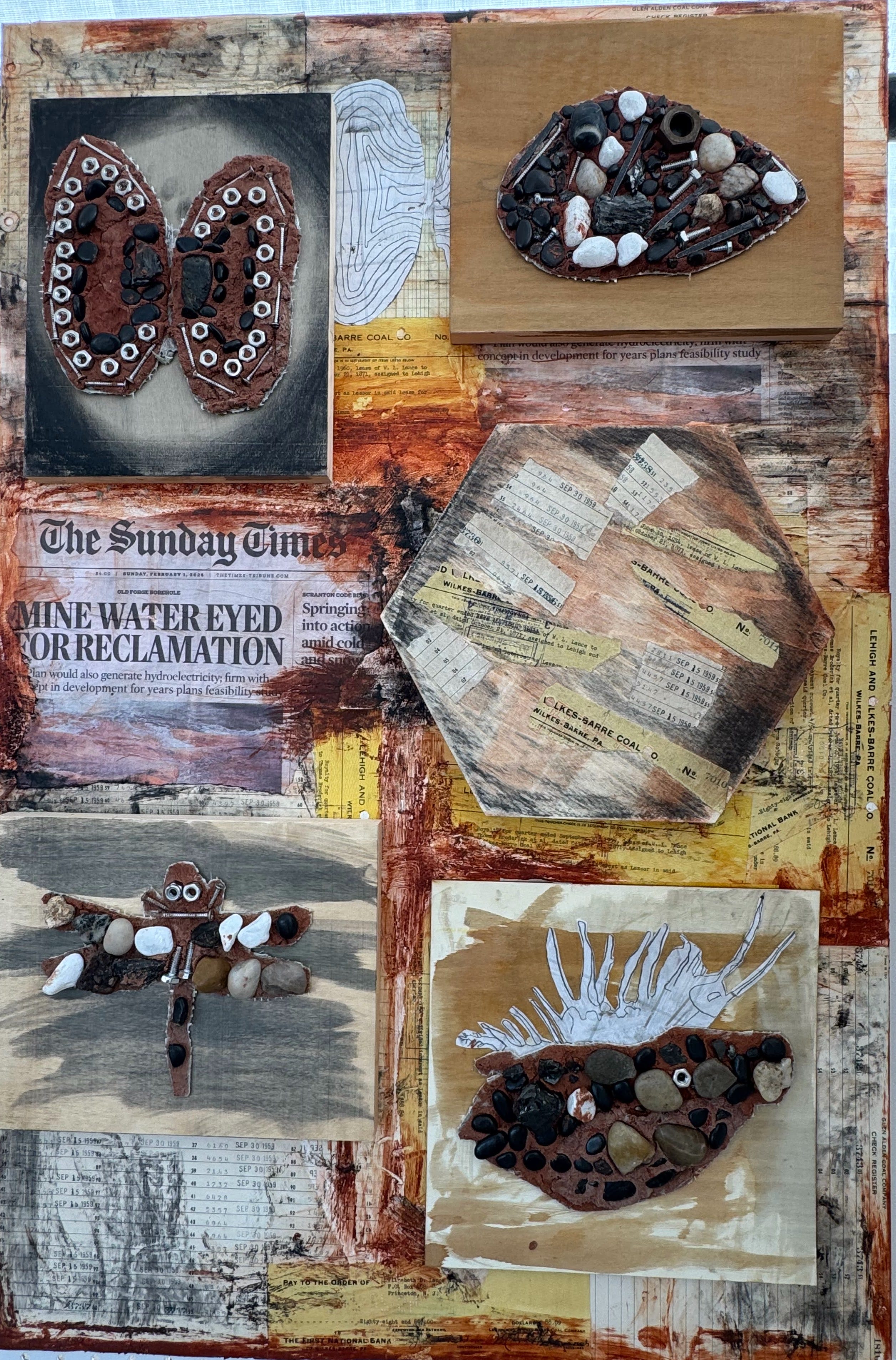
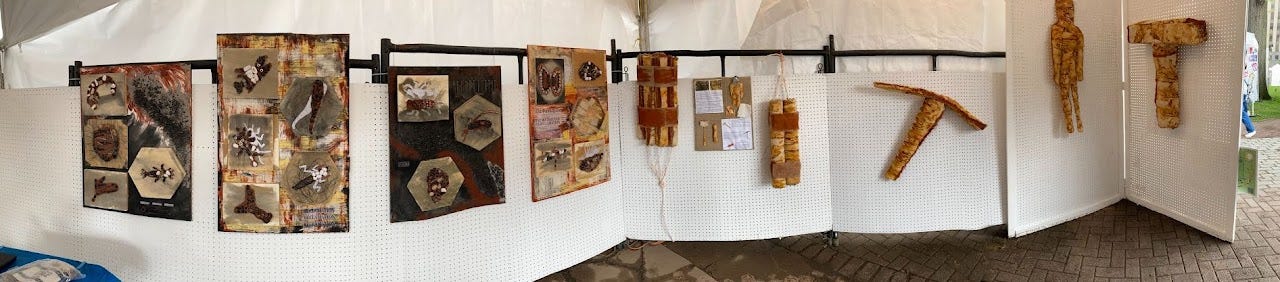
With the help of their teachers, this is how the student-artists in Pittston and Wilkes Barre did it too, and they used their iron-oxide pigments not only as paint but as fabric dye in a “soft sculpture” project that tells the story of coal miners. Working full-scale, students first drew patterns corresponding to tools and supplies used in the mines. They also created breaker boys who started work at about the same age they started school.
Once they cut out the patterns, students placed them on fabric they’d dyed with iron oxide, obtaining a rusty earthtone, a color inseparable from life in and around the mines. They cut, sewed, stuffed, and then stitched the last edges to create three-dimensional soft sculptures of hard objects such as a pickaxes, turned pliable, vulnerable to harm, like the miners who used them underground. In another sculpture, the enlarged photo of a breaker boy’s head sits atop a body wrapped in fabric that, like a straitjacket, imprisons him, robbing him of childhood.
Reclamation can also mean recycling. Nails, scrap metal, bits of coal, the very materials that mirror the pollutants found in contaminated waterways, can be used to make beautiful mosaics of aquatic life. Creating mosaics of macroinvertebrates, students came to better understand these creatures and their crucial role in wetland ecosystems. They mounted their work on panels of different varieties of wood, dying them, once again, in a mixture of iron oxide, noting how each variety reacts. This is also a lesson in how mine drainage, often containing large quantities of iron oxide, can pollute the environment.
As “Bob and the Gang” told students, “What harms an ecosystem can also tell its story.”
Certain ecosystems, such as the wetlands of Nescopeck State Park in Luzerne County, tell another story: how nature, aided by dedicated environmentalists, can repair past damage and contribute to stabilizing a contaminated environment. Students learned about the Nescopeck Creek and Watershed, once ecological disaster areas, and the diversity of life they support today. Inspired by this story, they recreated this natural world in paintings alive with bold colors and forms.
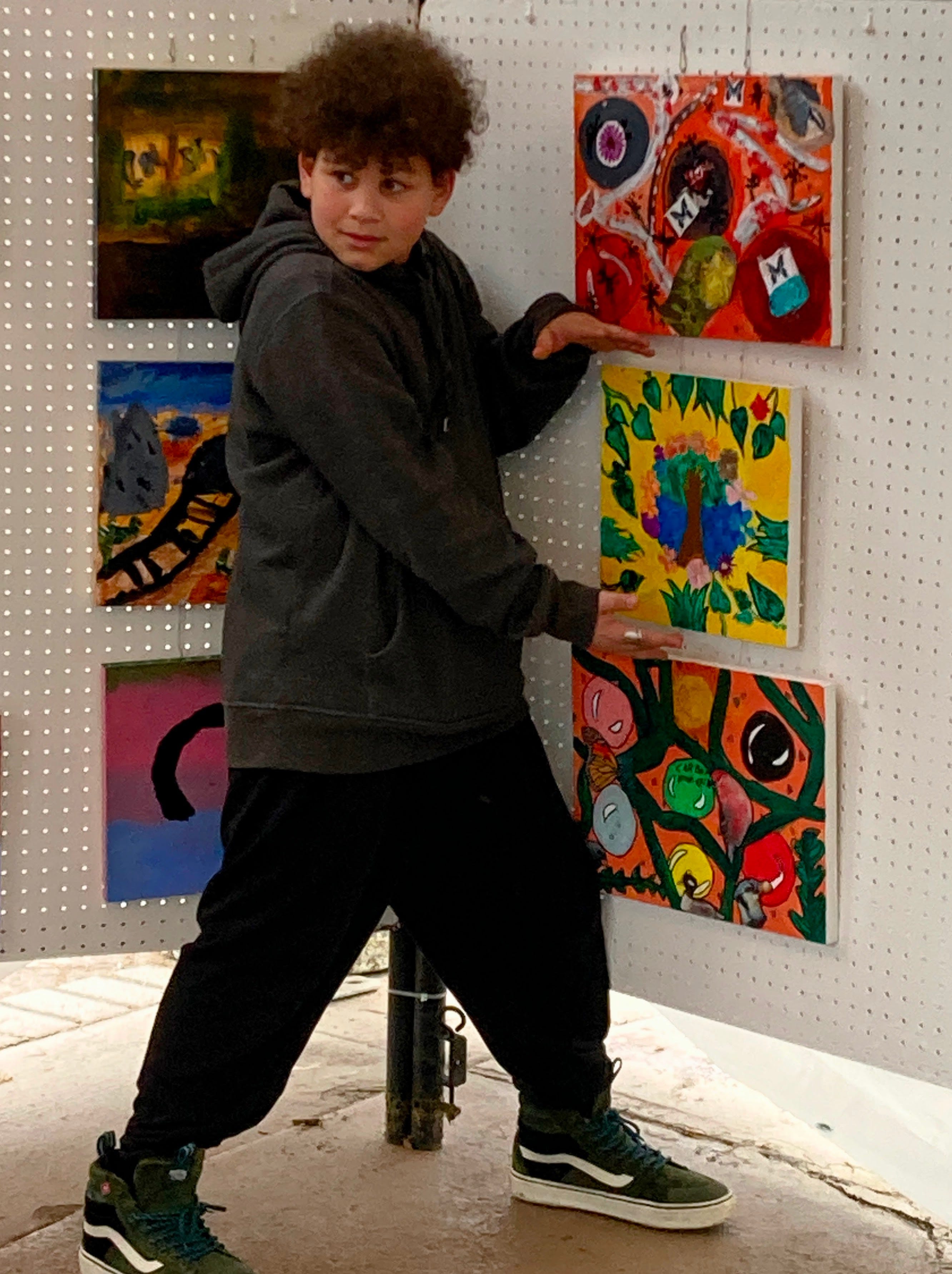
This challenging environmental stewardship program asked a lot of students. It demanded knowledge of chemistry, history, and environmental science. Approaching all three through art, students responded enthusiastically, as their work demonstrates. The program also illustrates that art can create young environmental stewards who return to their communities as guides.
Heatstroke (of the pen)
Where will we go? Who will take us in? What will happen when we become “climate refugees”? Fossil fuels are destroying us, and if we don’t change our ways fast, manmade climate change will drive us from our homes
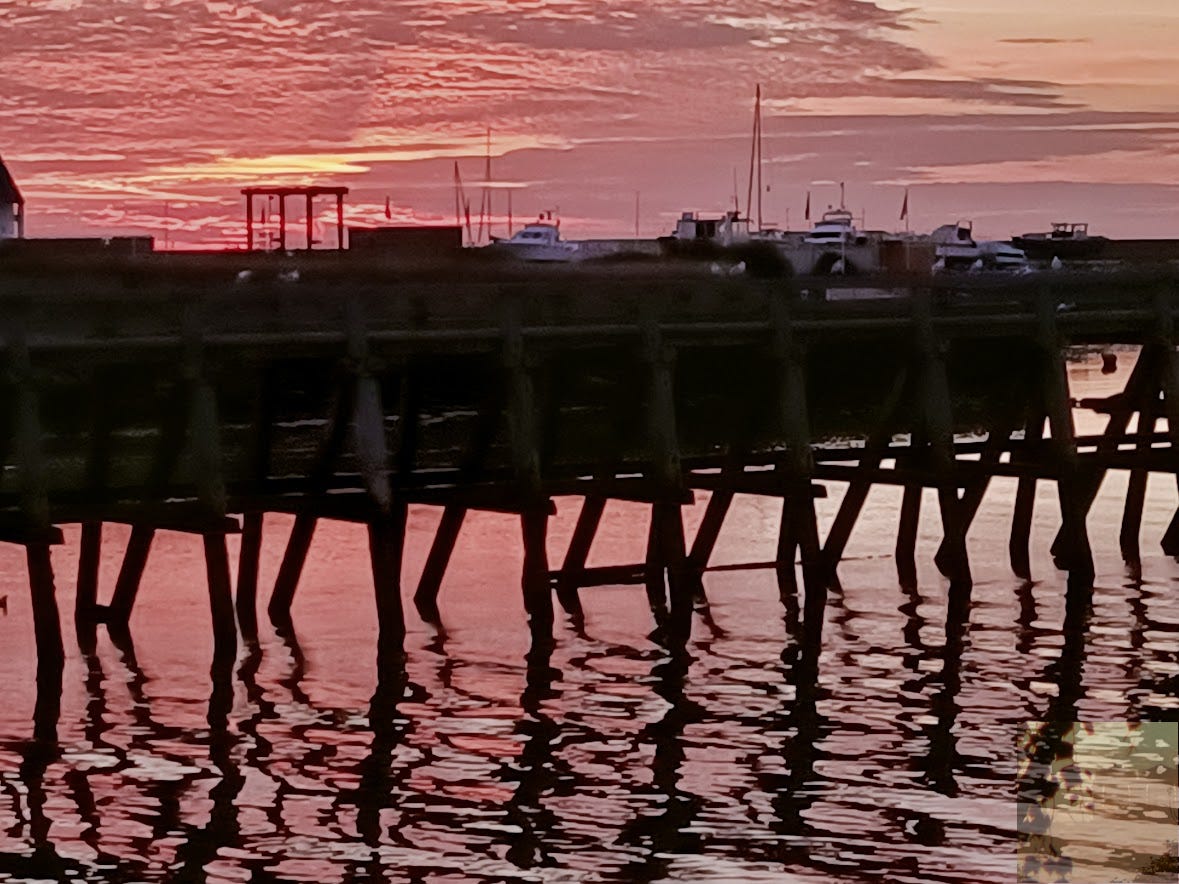
As I write, I cling, a climate refugee from Paris, to the northernmost edge of France. I am in Trouville-sur-mer, on the English Channel. I came to escape the heat, except, as relentless as a bloodhound, it caught my scent and tracked me here. I’m emerging, barely, from a week of temperatures over 100° and with nights in the 80’s, sometimes the high 80’s. I can swim in the Channel, a relief, but the other day the sand burned blisters on the soles of my feet.
There are some escape options, like supermarkets, chain stores along busy highways, a shopping center or two, where you can usually count on air-conditioning. However, few restaurants or hotels have it. And very few French people, until this past week, even owned a fan. Another thing, you just don’t stick an air-conditioner in your bedroom window because French windows do not have sashes. They’re more like double doors of varying heights and widths, opening inwards. There’s no setting an air-conditioner on the ledge and then pulling down the sash. It’s either central AC, a big investment, or a complete rethinking of portable air-conditioners.
Another problem, Europeans just don’t like air-conditioning. For centuries, they have counted on the time-honored method of opening and closing shutters, to let in the cool by night and keep out the sun by day. How many heat domes will it take before people have to seek other options to survive? This current dome has extended its borders to include not only France, but parts of Spain, Switzerland, Italy, Germany, Belgium, the Netherlands, and England, though, unfortunately, France is at its heart, a blazing red blob on weather charts.
The other day, sitting at my desk, looking at the words I’d just written, I realized they no longer made sense. The heat’s intensity had shut down my brain. In the streets, when I do venture out in the daytime, I see construction workers without hats, working in the full sun. When inside, I can hear the sound of ambulances, their sirens blasting, because people are dropping like flies—or drowning in the treacherous waters of the Channel, so calm on the surface, so dangerous beneath.
Predictions differ on where this manmade climate change will lead us, yet scientists agree that what is happening in Europe today would have been impossible fifty years ago when Earth’s temperature was 2°F cooler. Concerning the future, some of the predictions are grim. Northern France will have become a new Sahara and France’s renowned vineyards will have found a new home in Ireland.
In the present, all over France, there have been temporary shutdowns of the power grid. How will it handle the greater demands that come with air-conditioning?
But forget the future. The past week has been grim enough for me.
Yet, if that Sahara arrives and I am still alive, who will take me in? What country, what continent, will open its doors to the climate refugees of France?
An interesting question, becoming less hypothetical by the day. Let’s see. Today the temperature in Paris (in the shade) is 97° (36°C). In Alger, it’s 82° (27°C), and in the southern Moroccan city of Agadir on the Atlantic coast, it’s 73 (22.5C); in Nouakchott, Mauritania, further south, it’s 82 (27), and in Dakar, Senegal, further south still, 84 (28). I mention these places because all were colonized by the French. Do you think their former subjects would welcome us back?
Would you, if the refugees knocking at your door had once considered you an inferior race in need of their “civilizing influence,” if they had first taken your men as cannon fodder and then taken away their military pensions after they had served with great courage in World Wars I and II; if, when your country was still a French colony, you could get yourself killed by simply demanding the same rights accorded French citizens—would you let these people back in?
As the European continent and the United States commit to ridding their shores of immigrants, as immigration control takes a decidedly racist turn, as the United States creates concentration camps and adopts a policy of giving to the rich and taking from the poor, be they citizens or immigrants, I ask you:
The day we seek refuge, who will take us in?
Check out www.education.epcamr.org for more of our educational programs involving our iron oxide pigment and art. Trout puppets too! :)
Talk about Coal Region artists. Just love what Dr. Mackrell is teaching these young artists. Long live self-sufficiency and awareness
All of my French friends in Paris have been melting (except for the one who bought an AC years ago). You were smart to get away.
Most Americans blast their AC. If you need to wear a sweater in the summer inside, you might be doing something wrong.