

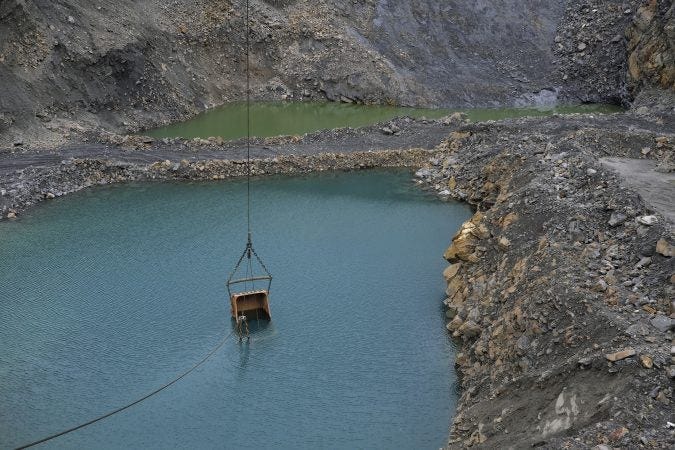
Still water runs deep, a favorite expression of my mother’s. Yes, still water runs deep, like the waters of a stripping hole, like the waters of the stripping hole in “North America,” in the woods beyond Jalappa, off the road to East Mines. We swam there when we were kids. To be honest, I didn’t swim. I dipped my feet. I was afraid. My two friends were much better swimmers, water ballerinas (do you remember the water ballets Mrs. Willard once directed at the JFK swimming pool in Pottsville? Going further back, Eshter Williams and “Million Dollar Mermaid?). They dove in. I feared I might never see them again. Every summer, someone drowned.
Still water runs deep. Kids disappeared. Emergency crews with scuba divers showed up at the scene. Flashing lights, the local police, men in uniform with arms folded across their chests, while the divers did the work. A crowd gathers on the coal-dirt road. Stand back! Stand back! We knew this was not a rescue mission. The divers were looking for the body so the family could have a proper burial.
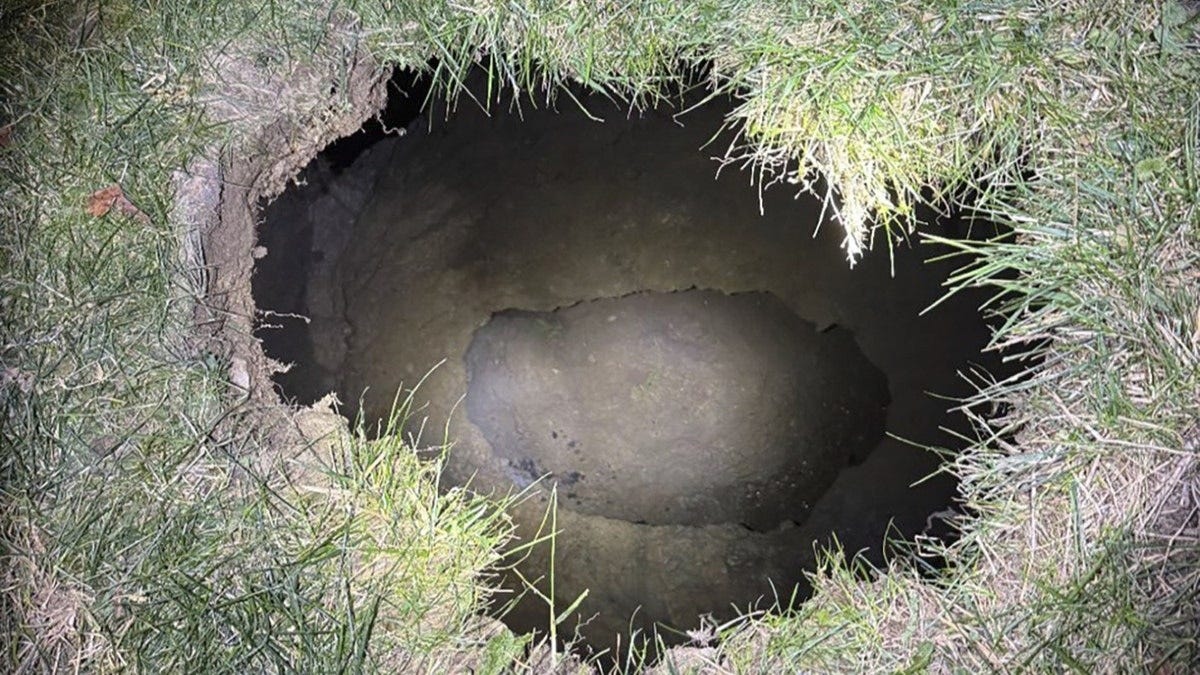
Sinkholes were a danger too. We tiptoed around them the way an astronaut might circle a crater on the moon. We knew the ground beneath our feet was not friendly. It could open its mouth and swallow us up.
Other dangers still. Once, walking along the railroad tracks with my little sister, we saw a man sitting atop a culm bank, his shotgun raised and pointed at us. As we moved further down the tracks, he kept sighting us with the barrel. I said to my sister, stay calm, don’t show you’re scared. Only when we turned the bend did we break into a run.
I blame it all on the Mammoth Vein. The name says it all. No one alive today can say they’ve ever seen a mammoth with its long spiraling tusks and woolly fur, but we have seen the bones. Those of a mastodon, discovered in 1845 on a farm near Newburgh, NY, on view at The Museum of Natural History in New York City. But the real thing? A real mammoth? They disappeared 4,000 years ago.
Mammoths are real yet legendary beasts, much like the Mammoth Vein. Fathomless wealth, there for the taking. Why, just take a look, the coal rises to the surface. Scratch it and you’ll get rich. A land of milk and honey, except here it’s hard and black. You might call it the “Eastern Gold Rush,” right here in Schuylkill County, the same frenzy, the same dreams of instant wealth. Except that, after a few shovelfuls, you come up against a wall of slate and shale.
The Mammoth Vein, still today, is as convoluted as a pair of mammoth tusks.
The Mammoth Vein, water, earth, plants and decay turned to coal after hundreds of millions of years of geology at work. It pops up in Shenandoah and Hazelton, further east in Coaldale. It twists under Mount Carmel and what’s left of Centralia. Riddling the Llewellyn Formation, it heads west towards the banks of the Susquehanna. It runs beneath my mother’s house. She hasn’t lived there in fifteen years and she died in 2012, but that house will always be “her house,” no matter who lives there.
In the woods behind my mother’s house, we liked to sprag our feet on the peaty ground. We were hoping to uncover coal-peas, so shiny-black they glowed. Shards of the Mammoth Vein, rising to the surface before it reverses course and plunges deep beneath the earth, zigzagging across Schuylkill County. A diagram of its thrusts, tears and reversals looks like the path of a roller coaster or a Crazy Mouse.
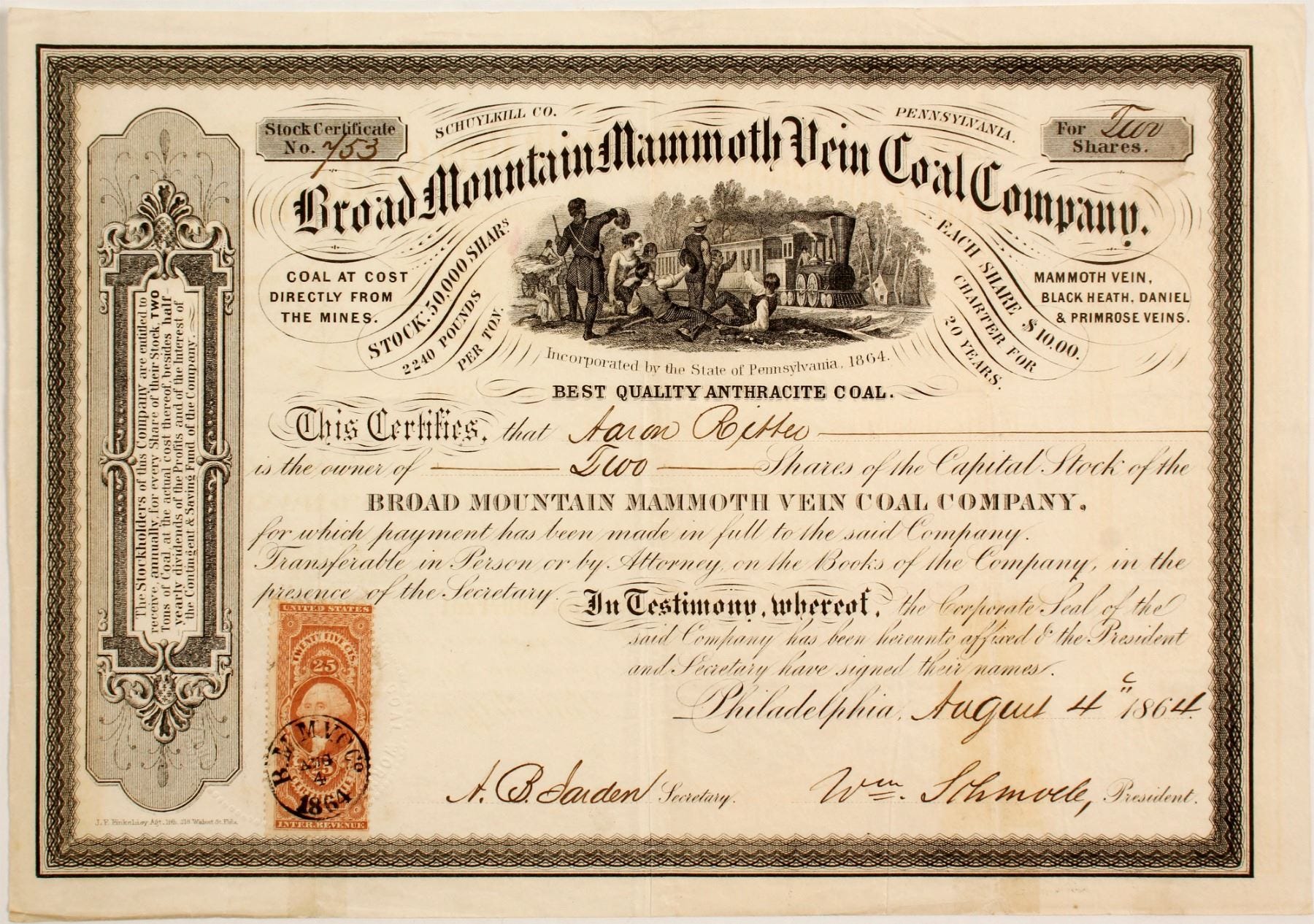
Growing up atop the Mammoth Vein, its riches coveted by many, accessible still today to few (but with greed on an exponential rise in the 21st century, someone will soon get to it), I’ve developed a worldview of life as a shaky affair, here today and gone tomorrow, carpe diem, the best philosophy. My mother owned her house, but she did not own the mineral rights to what lies underneath. Best to seize the day while it’s yours for the taking.
Already in the early 19th century, experienced geologists knew that the coal beneath the ground in Schuylkill County was best left where it was. Serious investors stayed away, and the region became a magnet for speculators, gamblers and rogues. You’ve got to admire them. Many, even most, lost the shirt off their backs, from the early 19th century and well into our own. Anthracite’s a lot like fool’s gold. You see it glittering at the surface. You set to digging and come up with a handful of shale and sandstone.
My father and his sister Mildred loved to gamble, on horses, the numbers, or at a game of cards. The Irish Sweepstake or any raffle offered other possibilities, as did bingo at the hosey or a neighborhood block party. That’s how I learned to gamble myself. As soon as my nose reached counter level, I began playing the numbers at the Greenwood Hill block party. No age restrictions in those days.
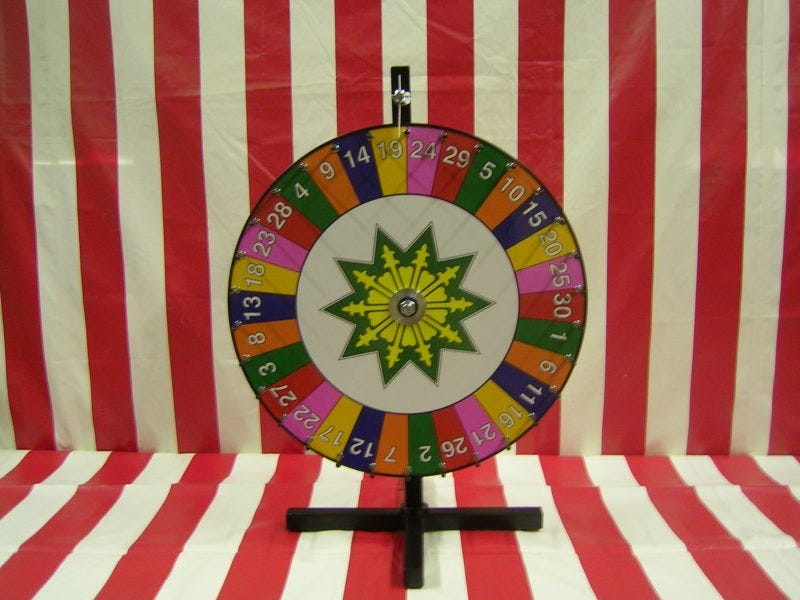
The gambling wheel, do you remember it? You place a ticket on a number on the counter (on tiptoe, I could see the board). Then the man behind spun the wheel, shiny, bright and threatening (its circumference was pierced with what looked like nails protruding outwards). The wheel was attached to a pole and at its top, a flexible spike hung down. The man gave the wheel a lusty spin, it spun fast, click, click, click, against the vertical spike. Then slower, click, click, then slower still, click, till it stopped. On a number. It if was mine, I’d soon have a water pistol or a jump-rope in my hands. Back in those days, there were even Kewpie Dolls. I lost more often than I won, but when I did, the elation was worth any loss. Something for nothing (the feeling), something (the water pistol) my parents would never place in my hands.
It made me a gambler for life, and yes, I’ve lost most of the time.
Dostoevsky was a gambler. Cervantes gambled for salvation. Casanova began life as a professional gambler and then moved on to higher stakes, gambling for his life. That’s me. I have gambled with life, a heady occupation, where stability, financial or other, is not the end result.
Not a profession for women, especially those born in the 1950’s. Not for those born at any time. We women are always fighting an uphill battle, mostly against men. Look at the way things are going today: back to the kitchen and the nursery, more babies (especially if they’re white), and whyever would mothers need to vote? Soon data surveillance might even be used (I’m not making this up) to monitor women’s menstrual cycles.
At my advanced age (no menstruation for me), perhaps I should switch from gambling to becoming a downright revolutionary! Down with Big Data! Down with social media! Up with books and libraries, with slow reading and concentration, with beauty and philosophy!
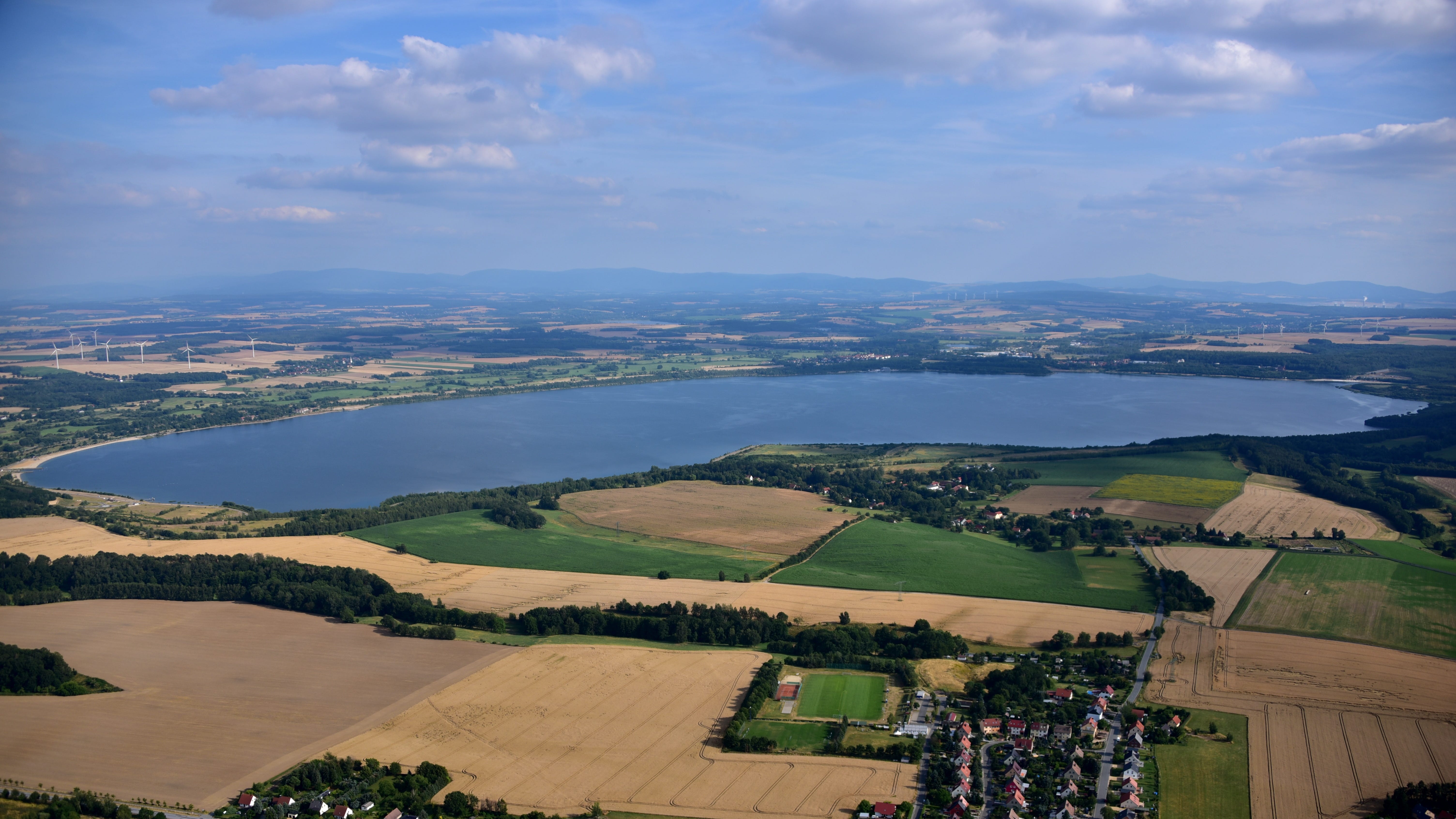
Which brings me back once again to the Count. When I visited him at his ancestral castle in the town of Berthelsdorf, a few miles from the Czech and Polish borders of eastern Germany, I stayed in Görlitz. Though I’d never been there before, I was overcome with a strong sense of déjà vu. I knew this place. I knew the people. It was uncanny and I could not figure it out. I pushed these feelings into the background, I let them settle. Now, through the Mammoth Vein, I’m coming back to them.
A century ago, the biggest glass-producing industry in the world, the largest aluminum mill in Europe, foundries, plants and mechanical engineering firms throughout the region, producing mining supplies and transport; power plants supplying electricity far beyond the region’s borders. And mining, not coal, but lignite, some of the biggest open pits in Germany. This was Görlitz and Upper Lusatia.
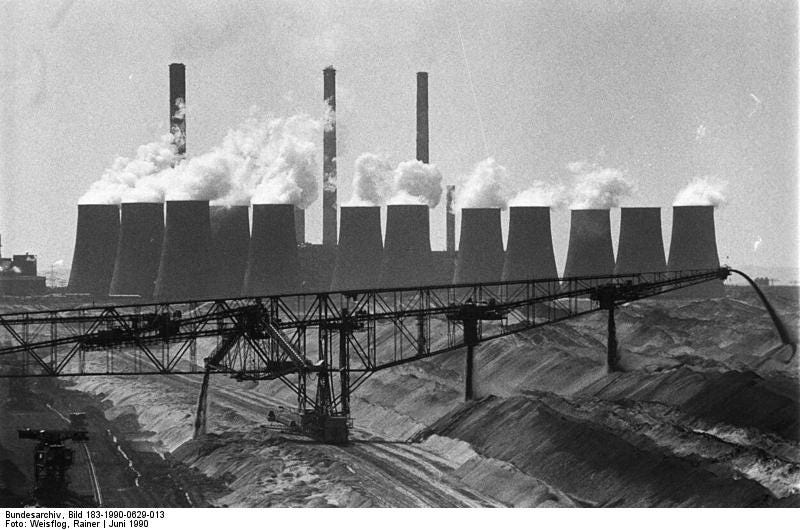
By the 1980’s, the Görlitz region had the largest lignite-based power plant in Europe, Kraftwerk Boxberg. It is still generating power today at a much smaller scale and was recently bought by Czech billionaire Daniel Kretinsky, a man who buys what nobody else wants and then, more often than not, turns it into gold. It will take a long time to convert this polluter to renewable energies, Kretinsky claims, though conversion had been one of his arguing points for buying the place.
Déjà vu. Raped and abandoned. First, promises. Then greed. Then after violation, get out while the going is good.
I am astounded Count Zinzendorf led me to Görlitz: Schuylkill County, Upper Lusatia, cautionary tales already told, at a time when the ultrawealthy and the powerful are determined to rape democracy and reduce us to their pawns.
That’s terrifying about the man with the gun pointed at you and your sister! Traumatizing, actually.
My father told me he would break my arms if I ever swam in the Greenie, a stripping pit-turned-lake near Shenandoah. Of course, I swam all the way across it, realizing it was a bad idea when I reached the halfway point. I walked the railroad tracks, too, and I collected countless fossils. I woke up watching stream rise from the mountains from our window — it wasn’t mist; it was the mine fire. It was a strange place to grow up