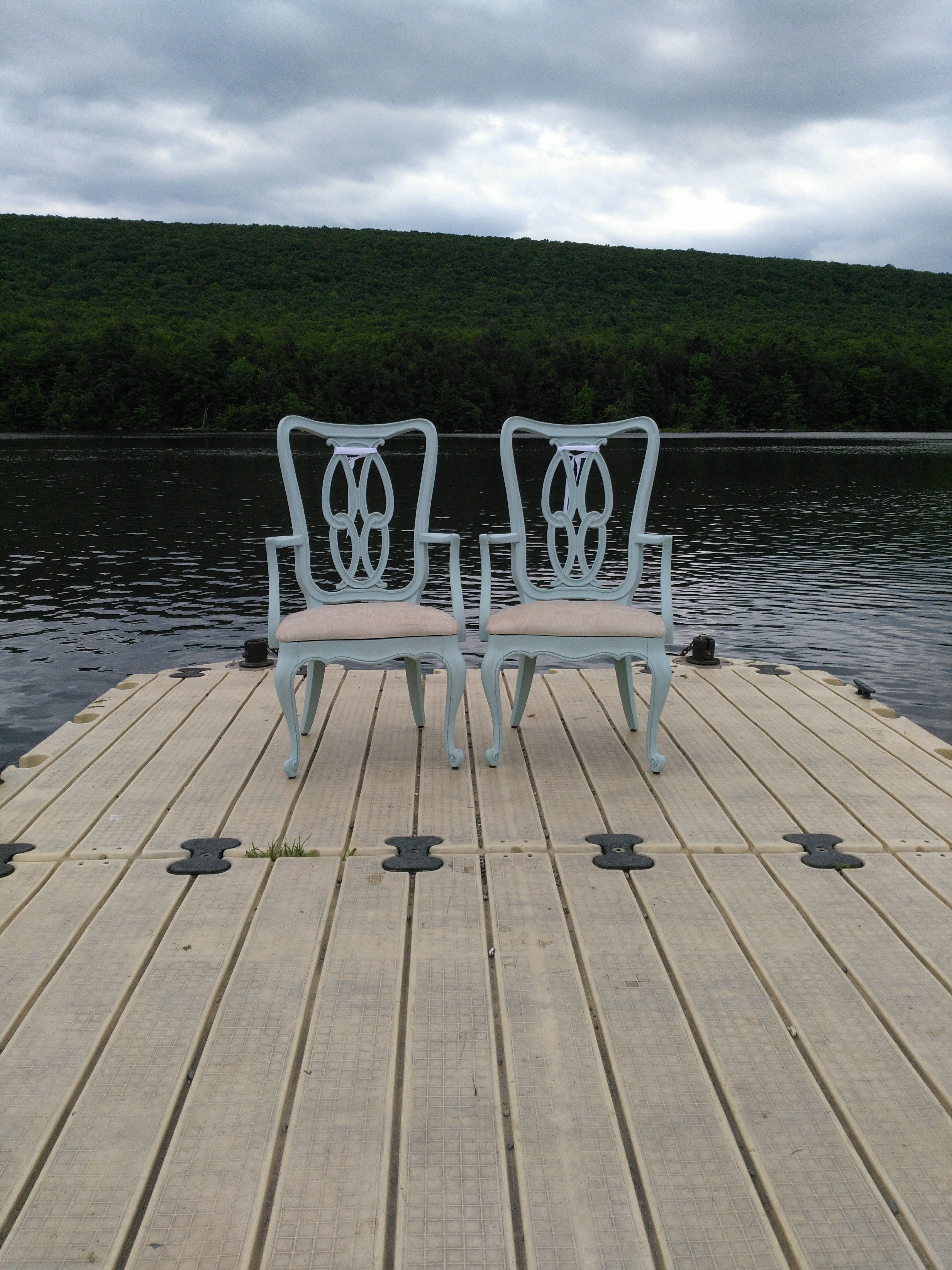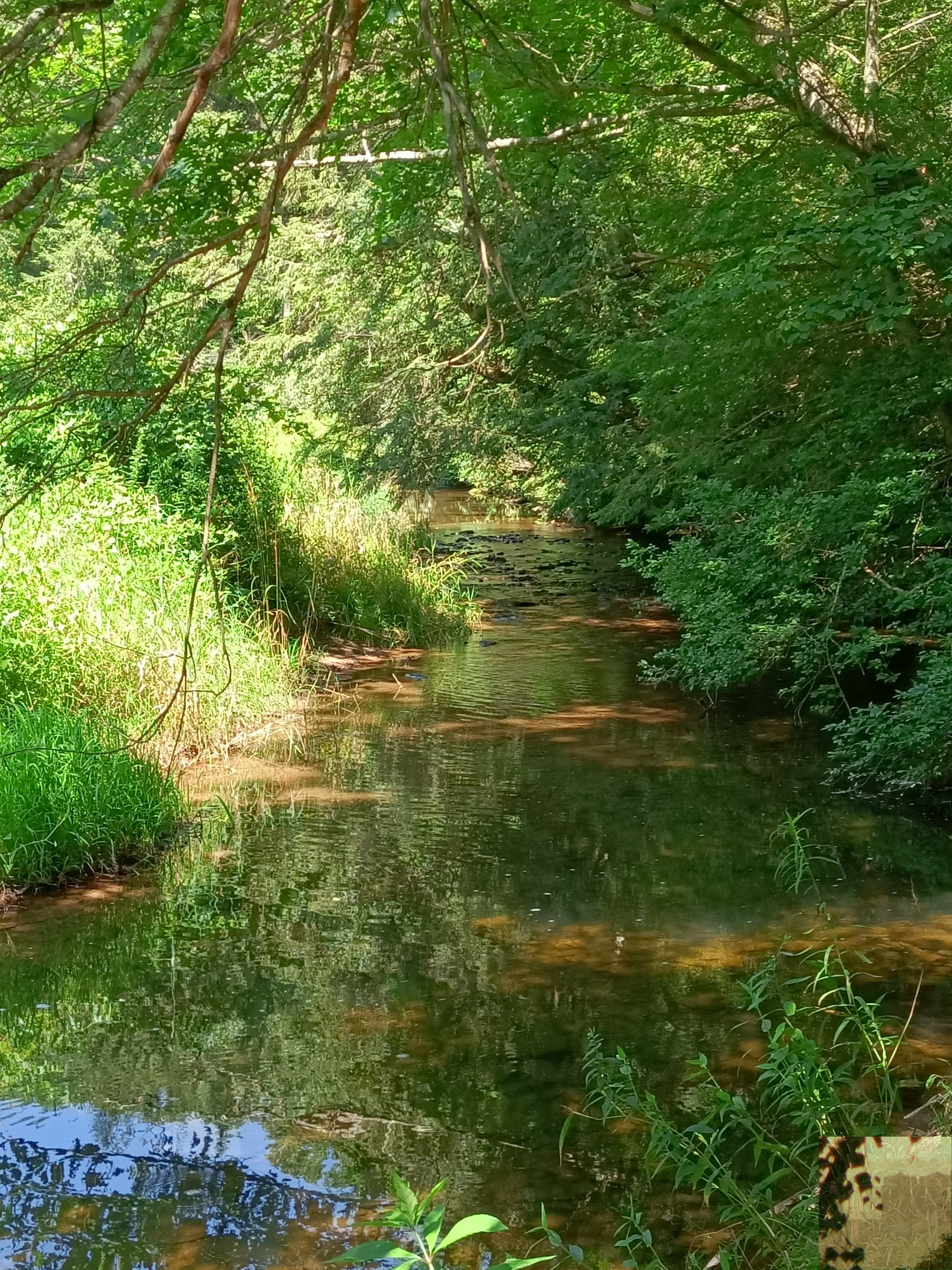
I stand on the banks of the Schuylkill. It is summer, the sky glows orange, the sun has not yet risen above Blue Mountain, but the air is already thick with heat and midges. I stand on a railroad bridge, looking down at the water where wisps of morning mist, like so many djinns, twist and writhe as they rise towards the sun and then disappear into thin air. Not yet 6 AM, but all the signs of a hot humid day are in place.
Summer in the Skook.
On each bank of the river, in low-lying marshland, where night still cradles in the high grass, deer graze before taking cover for the day. Their big brown eyes watch us but we do not see them. Even Day-glo, a gawky standard poodle suffering from epilepsy and a testicle that never dropped, has no time to sniff them out before we see the white bobtails disappear into the brush.
In the early morning, standing on the railroad bridge, looking upstream, I try to imagine this bend in the river three centuries ago. This was Lenni-Lenape land before the first Europeans arrived. The Dutch explored and named the river Schuylkill, “hidden,” “refuge,” “sheltered” creek. The first Europeans to head upstream and settle were the Germans looking for good earth to farm. The Lenni-Lenape were happy to trade with settlers downstream, the Finns, the Swedes, the Dutch, but they were hostile to the takeover of the land they farmed themselves and the forests where they hunted and gathered food.
In school we learned how these first settlers wrested the land from the wilderness, removed boulders, the debris of ice-age glaciers, burned tree stumps, hewed logs, built homes, made their mark on the land. They turned wasteland, a synonym of wilderness, into bountiful, fertile soil.
“Wilderness” is a word associated with the creation of the American nation. The first settlers conquered the wilderness, vast expanses of lands inhabited by wild beasts, devoid of human presence. Land for the taking, land to be conquered, soil to be wrested from Mother Nature’s virgin hold.
Already in the 13th century, the word “wilderness” applied to tracts of land uncultivated and uninhabited by human beings. The 17th century English philosopher John Locke went one step further, justifying the human takeover of such land, for the wilderness has no value until it has been labored by human hands. In that way, the wasteland becomes the garden and property of those who cultivate it.
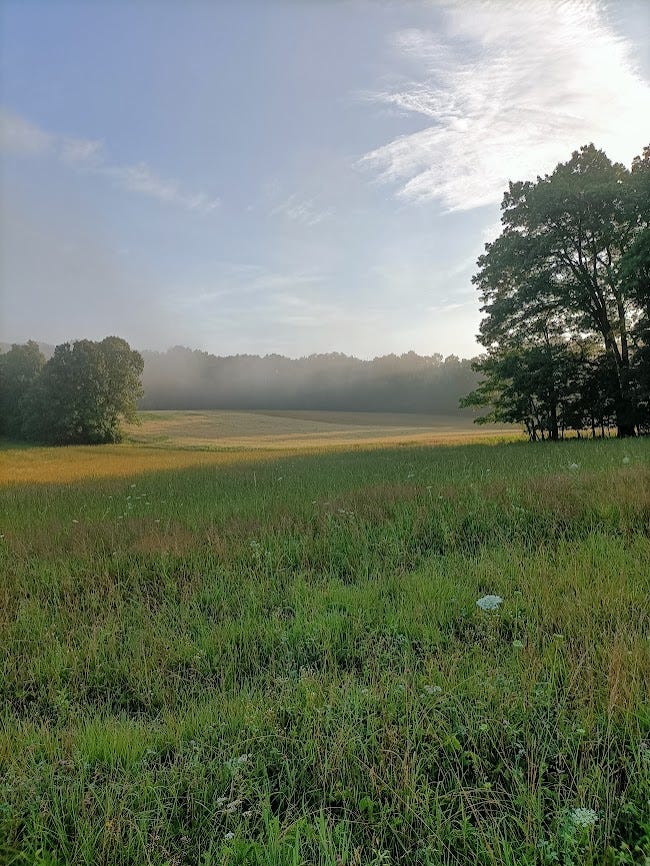
Were the tracts of land claimed by the first settlers truly “wilderness”? Native Americans would say no. They were a human presence and they were a part of the land they cultivated, but they did not consider it property. They moved from place to place, according to the seasons, their needs and the needs of the land.
Further to the north, the Puritans also observed their new neighbors and made some discoveries that set them on edge. The Wampanoags of Massachusetts lived like English aristocrats. They made frequent “removals,” to use the English term for what Americans call “moving.” They packed up and transported their lives from place to place, a privilege of class.
Anyone who has read Jane Austen knows this to be true. When Elizabeth Bennet first visited Pemberley House, Mr. Darcy’s country estate, she did not expect to find him there. English aristocrats moved frequently between town and country, removing themselves and their belongings from home to home. With even greater ease, the Wampanoags pulled up roots and put them down again, truly noble, always respecting the land with which they shared life.
For English aristocrats like Mr. Darcy in possession of wealth and property, free movement was a prerogative of class and wherever he went, comfortable lodgings and an attentive domestic staff awaited him. Others who moved about freely were considered vagrants and rogues, subject to vagrancy laws, fines and often imprisonment. This included beggars, prostitutes and itinerant merchants, any and all who could not provide proof of a fixed address.
Is it any wonder the Puritans felt troubled and threatened by the Native Americans who considered the Earth their home? Where were the borders? Who owned what? War and disease decimated the Native American population of New England. For those who remained, the Puritans made sure they settled down, living in one place, living almost like the Europeans who, after cultivating the land, now considered it their own.
The Puritans also made them Christians, bestowing upon them a great blessing, they believed, for in doing so, they made them human, freeing them from the inhumanity of the wilderness.
In the early morning, when the mist lies on the river, at the peak of summer when trees along its banks are so lush with foliage they seem to bow down to lap the water, I can imagine this land before coal, before iron, before industrial pollution, more than two hundred years ago. For over 10,000 years the Lenni-Lenape inhabited the lands that are now Pennsylvania.
At the end of the 19th century, this land, Schuylkill County, was second only to Lackawanna County in the production of coal and these two counties between them fired industry all over the United States.
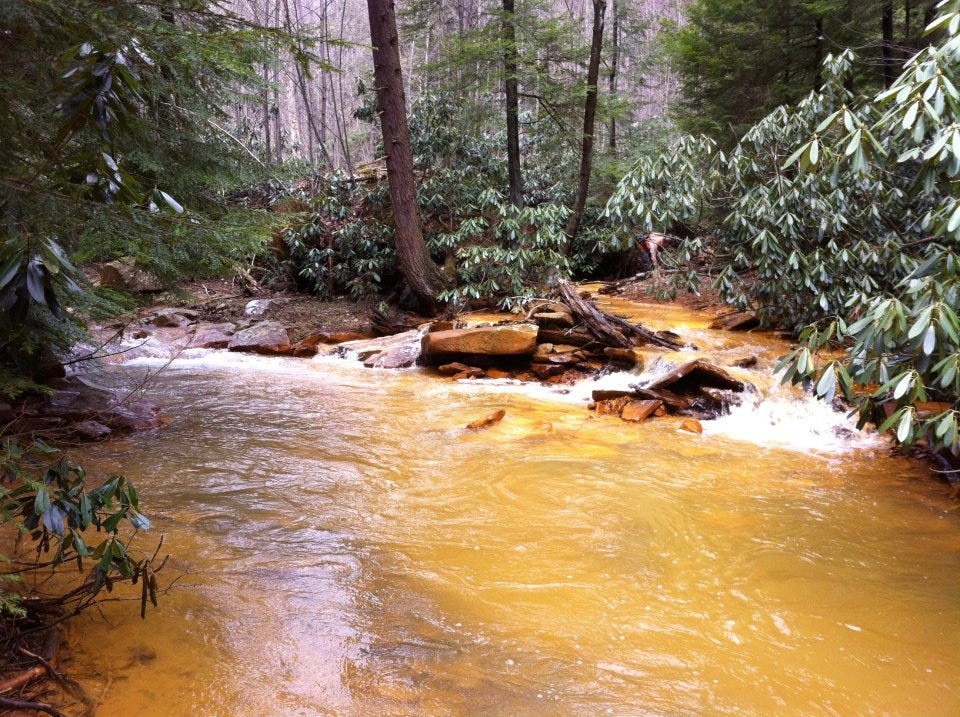
It took one generation to fill their rivers with sulfuric acid, killing the fish, and turning the banks into barren wasteland. So writes Peter Roberts in 1904. When I was a child, we were afraid of the Schuylkill River, afraid a finger dipped in would come out bone, eaten away by the acid that turned the river orange.
Schuylkill County is an achingly beautiful place. I call it the beauty of wrack and ruin and I believe few parts of the United States display this beauty with such poignancy. I may be partial to the place I was born, yet I believe that time and place, events and geography collided here for a brief period that extended from 1825 to the 1920’s, creating an explosion of innovation and wealth, of growth and progress in adversity, until it all imploded.
“Paris on the Skook” is my way of looking backwards, to 1825, the opening of the Schuylkill Canal, once the busiest waterway in the United States, to the 1920’s, when oil became the nation’s preferred fuel, and forwards to the future, from my vantage point on the other side of the Atlantic, my writing irrigated by the deep currents that carry me back to the place where I was born.